
Last updated November 15, 2026
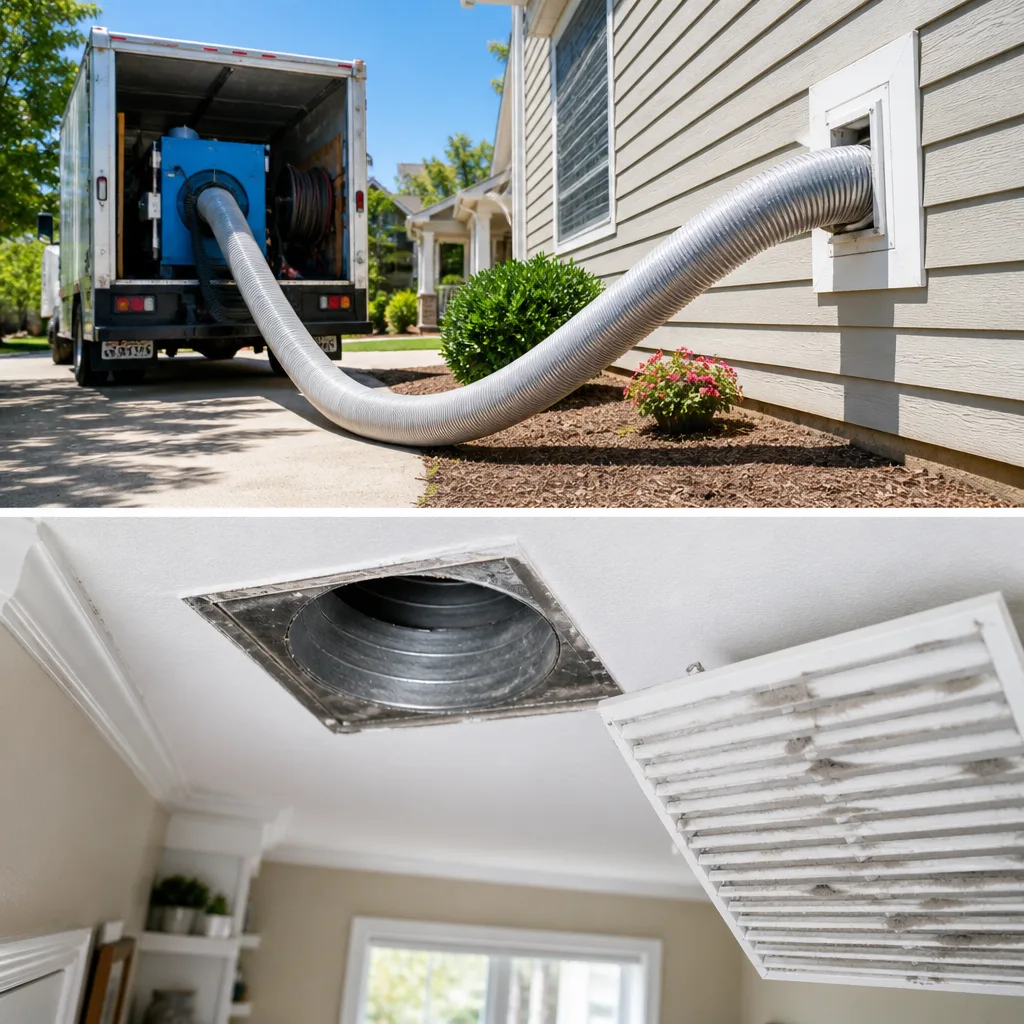 Whole-home duct cleaning
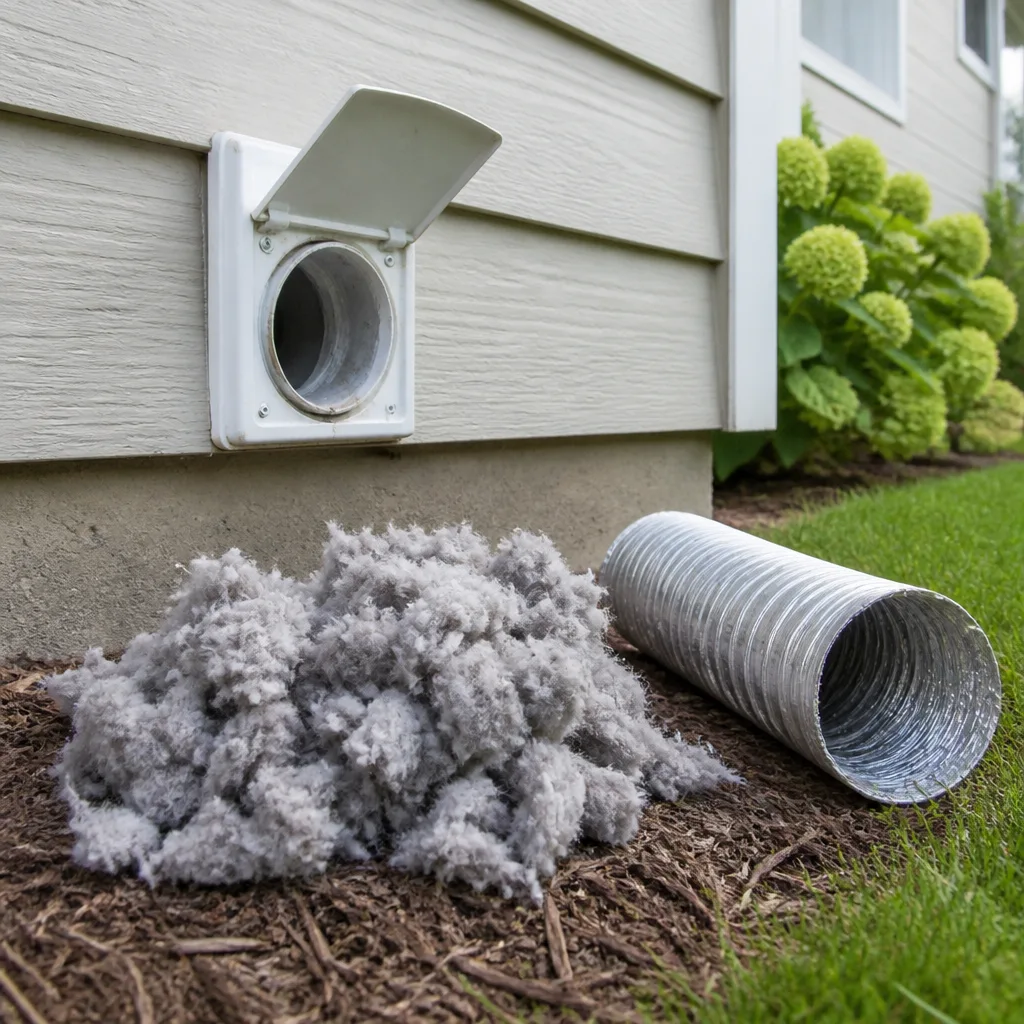 Dryer vent cleaning
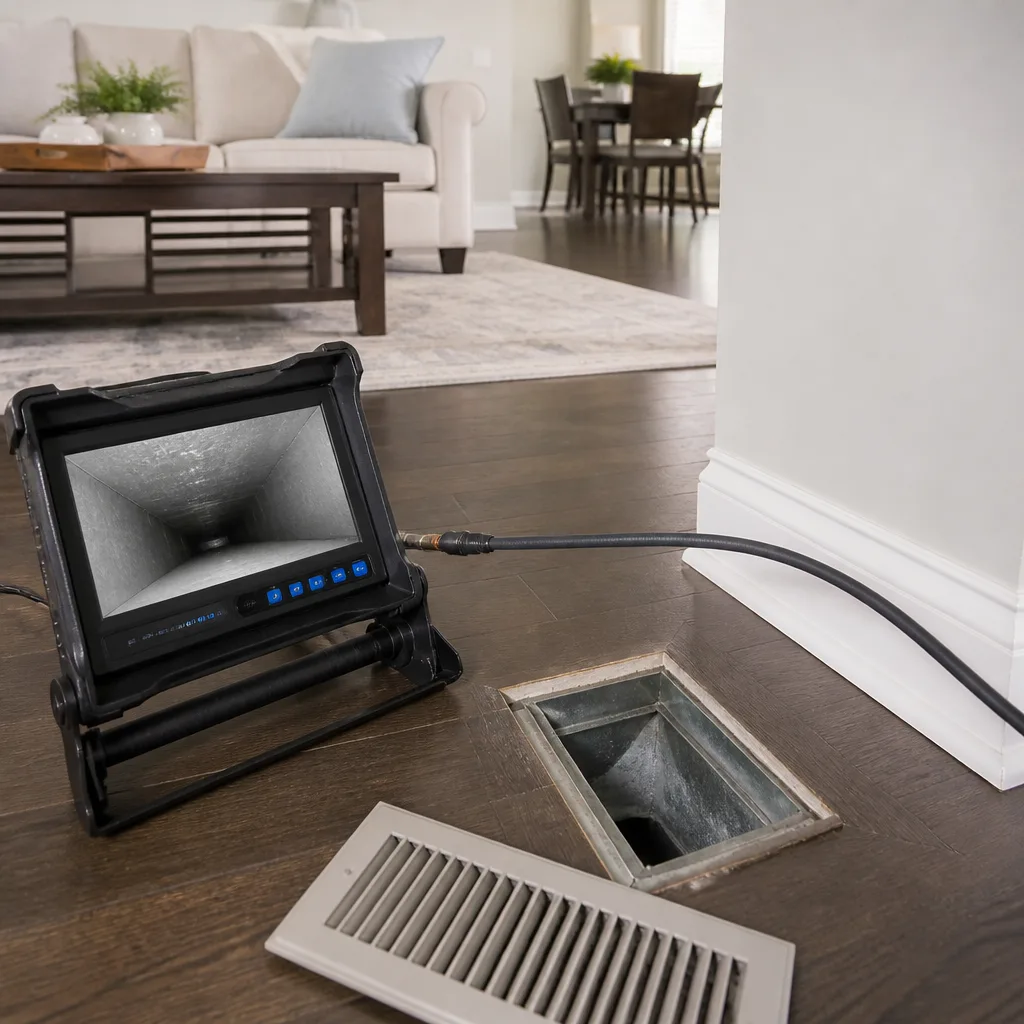 Camera inspection
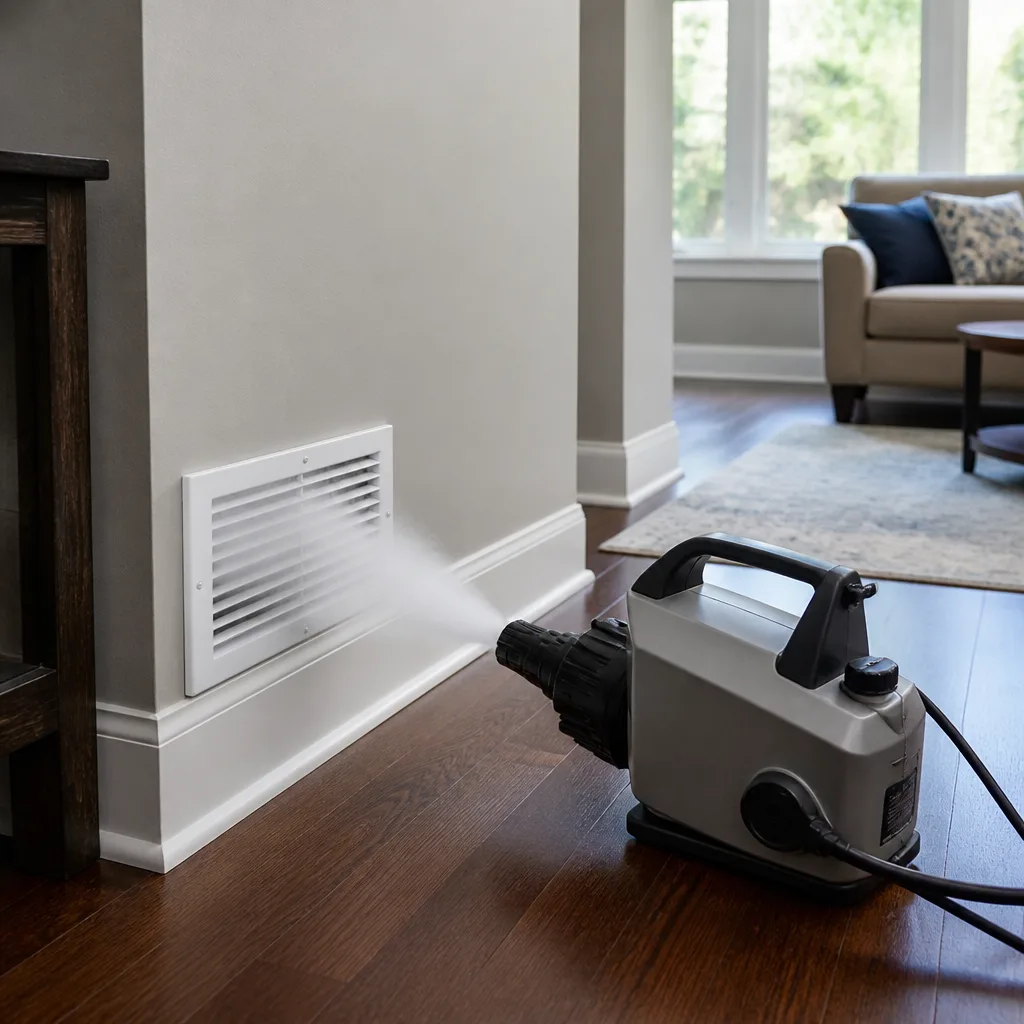 Sanitizing & deodorizing
Whole-system duct and dryer vent check with before-and-after photos - you see exactly what came out of your vents
That "$99 whole-house special" is a bait ad - the real number appears once they are in your hallway, or the "clean" is a shop-vac at the register. We photograph the inside of your ducts before and after instead.
The Complete Guide to Air Duct Cleaning in St. George
Most people assume duct dust is just dust. In St. George it usually isn’t. The fine material that settles into ductwork here is largely silica ground off the surrounding desert floor by wind, and it behaves like an abrasive, not like lint. It scours blower wheels, packs into the seams of flexible duct, and clings to anything damp in the system. That changes how the work should be done, and it’s why a method borrowed from a wetter, greener climate can leave a home here worse off than before. This guide covers what makes St. George ductwork different, what a real cleaning involves, and how to check the job yourself.
Quick Answer
Air duct cleaning in St. George is a whole-system job, not a vent-by-vent sweep: it means cleaning the supply and return runs, the air handler coil, the blower, the plenum and the drain pan with contact brushing and HEPA vacuum capture strong enough to hold fine desert particulate. Call (855) 419-9402 for a free estimate. You’ll get one flat price per system agreed before any work starts, plus before-and-after photos of your own ducts.
Styles & brands we work with
- Whole-home duct cleaning
- Dryer vent cleaning
- Camera inspection
- Sanitizing & deodorizing
Table of Contents
- Why St. George Dust Is an Abrasive Problem
- New Construction and Drywall Dust in Washington County Homes
- The Equipment Threshold: Vacuum Capture vs. Redistribution
- Full-System Scope: What a Complete Job Actually Touches
- Signs Your St. George Home Needs Duct Cleaning
- How to Verify the Cleaning Was Actually Done
- How Often Ducts Really Need Cleaning in This Climate
- What Air Duct Cleaning Costs in St. George
Why St. George Dust Is an Abrasive Problem
Wind moves constantly across the open desert floors around St. George, and it carries the finest fraction of that ground cover with it: silica particles small enough to stay suspended for hours. They travel through open windows, door gaps and return-air intakes, and once inside a duct system they act like very fine sandpaper. That is the central fact of duct work in St. George, and it’s a different problem from the pet hair, lint and carpet fiber that dominate national duct-cleaning advice.
Inside ductwork, silica does three things ordinary household debris doesn’t. It abrades the blower wheel and housing, slowly wearing the moving parts that push air through your home. It embeds in the rough interior surface of insulated flexible duct, where a light vacuum pass won’t lift it. And it accumulates at seams, joints and the base of vertical runs, where airflow slows and drops its load.
Here’s the part most people get wrong: standard brush agitation applied to a dry, silica-heavy duct can throw the fine fraction back into the air stream instead of removing it. Without strong negative pressure at the same time, you’re grinding the particles loose and letting them recirculate through the house. That’s the difference between contact cleaning and a blow-and-go pass.
St. George homes also see wide day-to-night temperature swings through the year, and HVAC systems here run hard in summer. A system that runs more pulls more dust through the filter and past the filter’s edges. If you’ve noticed fine grit collecting on the return grille face faster than you’d expect, that’s the desert talking. You’ll find more on our air duct cleaning service page about how we handle it.
New Construction and Drywall Dust in Washington County Homes
Washington County has built fast, and that changes what’s sitting in a lot of ductwork. New homes routinely have their HVAC systems run during construction, before the interior is finished. That means drywall dust, sawdust, drywall mud particles and general debris get pulled straight into the supply and return runs from day one. It’s one of the most common things we find in St. George homes that are only a few years old: a nearly new system with a duct network that’s been contaminated since before the owners moved in.
Drywall dust is its own challenge. It’s alkaline, it clumps when it meets any moisture in the system, and it settles into the air handler, the coil fins and the blower assembly. Left there, it reduces airflow, strains the blower motor and can build up on the evaporator coil until the system can’t move enough air to cool the house properly in July.
Signs a newer St. George home may have construction-era contamination:
- White or gray dust on the supply registers and around the grille screws
- A chalky film on the inside of the return grille
- Drywall grit visible in the first foot of a flex run during a filter change
- Airflow that feels weak in the rooms farthest from the air handler
- Filters that load up much faster than they should for a home with no pets and no smokers
If your home was finished in the last several years and has never had a documented full-system cleaning, a thorough job that includes the air handler, coil and drain pan is worth considering. We work across the area, and our St. George page covers how we handle homes here specifically.
The Equipment Threshold: Vacuum Capture vs. Redistribution
The single biggest variable in duct cleaning is not the price. It’s whether the vacuum can actually capture what the brush dislodges. Fine desert particulate needs real negative pressure and true HEPA filtration to be removed rather than stirred up. A shop vac in the yard and a spinning whip will move dust. It won’t hold it.
We use professional-grade equipment for exactly this reason. Rotobrush contact-cleaning systems use a rotating brush inside the run combined with high-volume vacuum capture, so the material loosened at the brush head is pulled out of the duct as it’s agitated, not after. Nikro HEPA vacuum systems hold the fine fraction, including the respirable particles silica breaks down into. And Abatement Technologies equipment gives us the capability for containment-level work, which matters in older homes and rental properties where contamination may have accumulated for years.
What to ask any duct cleaner before you hire them, whether it’s us or anyone else:
- What vacuum system do you use, and is it HEPA-filtered?
- Do you use contact brushing, an air whip, or compressed air? (Air-only methods redistribute.)
- Will you photograph the inside of the ducts before and after?
- Does the price cover the air handler, coil, plenum and drain pan, or only the visible runs?
- Is the price per system or per vent, and is it in writing before work starts?
That second question is the one that separates operators. Air whips and blowers break dust loose and hope it lands somewhere convenient. Contact cleaning with HEPA capture removes it. If a quote doesn’t mention what equipment is coming into your home, that’s your answer. Ironwood Air Duct Cleaning was built around that threshold, not around the lowest bid.
Full-System Scope: What a Complete Job Actually Touches
Cleaning the supply ducts and skipping the air handler is like washing a car and leaving the engine bay full of dust. In St. George’s dry, dusty conditions, the air handler is where contamination does the most damage, because that’s where airflow and heat meet.
A complete job on a St. George system covers:
- Supply runs: every branch from the plenum to the register boot, contact-cleaned and vacuumed
- Return ducts and grilles: the largest dust collectors in most homes
- Return plenum and supply plenum: where silica and construction dust concentrate fastest
- Air handler cabinet: interior surfaces cleaned, not just wiped
- Evaporator coil: cleaned so the system can transfer heat properly again
- Blower wheel and motor housing: where abrasive dust does its slow damage
- Drain pan and drain line: cleared so standing moisture doesn’t turn into a growth problem
- Registers and grilles: removed and cleaned, then reinstalled
That’s a lot of ground, and it’s why a whole-system job takes hours, not minutes. Cleaning that skips the coil and drain pan is an incomplete job in any climate. In a place where summer systems run for months on end, it’s barely a start. We also work with Honeywell and Aprilaire filtration and indoor air quality systems, so if your home already has upgraded filtration, we can talk through how cleaning and filtration work together rather than against each other.
It’s also worth noting what cleaning can’t fix. Disconnected, crushed or sagging ductwork is a structural problem, not a dirt problem. When we find a run that’s come apart at a joint or a flex duct collapsed in the attic, cleaning it just means it will leak again next season. That’s why duct repair is a core service for us, not an add-on. If your system has a leaking run, the fix is repair first, then clean, not the other way around.
Signs Your St. George Home Needs Duct Cleaning
Dust in a desert town is normal. Dust that keeps coming back no matter how often you clean, from the same registers, is a system problem. Here are the signals we look for:
- Fine grit or a chalky film on the register face within days of wiping it down
- A visible dust plume when the system first kicks on after a filter change
- Filters loading faster than the manufacturer’s schedule suggests
- Musty or stale odors that show up only when the HVAC runs
- Allergy-type symptoms that are worse indoors, and worse still when the system is on
- Visible dust trails around the seams of accessible ductwork
- A house recently finished, remodeled or flipped, with no record of a system cleaning
- Reduced airflow at the far registers compared with the near ones
Any combination of these is worth a look. One dusty register is a filter issue. Every register in the house is a duct issue. And if you have a rental property, the equation is the same but the stakes are higher: a tenant complaint about dust or odor is much cheaper to solve with a real cleaning than with a turnover and a lost lease.
One more service worth mentioning in the same breath: dryer vents. Lint buildup in a dryer vent is a documented household fire hazard, and it’s the kind of thing that gets forgotten until it becomes serious. If we’re already in your home for ducts, it’s a sensible thing to check. Our dryer vent cleaning service covers it.
How to Verify the Cleaning Was Actually Done
This is where a lot of homeowners get burned, and it isn’t a matter of trust so much as not knowing what to look for. A duct cleaning can be convincingly “done” and leave half the system untouched. You can verify the work yourself with a few simple steps once the crew has packed up.
- Look at the before-and-after photos. A professional job includes photos of the same duct interior before and after. The “after” should show clean metal or liner, not a slightly less dusty surface.
- Open a register boot and look inside with a flashlight. Point the light up into the first foot of the supply run. You should see clean duct material, no caked dust at the seams, and no loose debris sitting at the bottom of the run.
- Remove the return grille and check the plenum. The return plenum is the biggest collector. If it’s still coated, the job wasn’t finished.
- Check the filter slot and the air handler cabinet. If the inside of the cabinet still has dust piled in the corners, the handler wasn’t cleaned.
- Look at the drain pan. It should be clean and draining, not holding standing water or silt.
- Run the system for 15 minutes and watch a register. A distinct puff of dust right after cleaning is common as residual particles settle. Continuous blowing dust for days afterward is not.
- Ask for the written summary. What was cleaned, what was found, what was repaired, what wasn’t cleaned and why.
Any honest operator will hand over the photos and point you to the areas to check. If the answer to “can I see photos?” is vague, pay attention to that. Our technicians have up to 10 years of experience, and the verification steps above are the same ones we expect any homeowner to use on us.
How Often Ducts Really Need Cleaning in This Climate
There’s no single number that fits every home, and any cleaner who gives you one without looking at your system is guessing. That said, St. George conditions push the answer toward the frequent end of the range rather than the sparse end. The combination of wind-driven silica, wide temperature swings, and long cooling seasons means ducts here load up faster than the same system would in a humid climate.
What actually governs the answer:
- Dust load: how much fine particulate enters the system through returns, and how well the filter catches it
- Construction or remodeling: any recent work in the home resets the clock, sometimes to zero
- Pets, occupants and flooring: carpet and animals add to the load
- Moisture: any damp in the system means more frequent attention, not less
- HVAC runtime: longer cooling seasons mean more air moved and more dust pulled through
In practice, that means a routine cleaning interval for most homes here, and a full evaluation sooner after a renovation, a move-in, or a system repair. If you’re unsure, a visual inspection with a camera is the fastest way to know. Dry climates don’t do you favors with dust. They just make it harder to see until it’s thick.
What Air Duct Cleaning Costs in St. George
Air duct cleaning in St. George is typically priced per system, not per vent, and the price is set by the written estimate after the system has been looked at. Whole-system cleaning usually runs in the several-hundred-dollar range for a standard home. Larger homes, multiple systems, heavy construction dust or added repair work push the total higher. Below is a sense of what drives the number.
| What’s included | Typical range (estimated) |
|---|---|
| Standard whole-system cleaning (supply, return, plenum, handler, registers) | $400 – $800 |
| Larger home or second system | Adds roughly 60 – 90% of the base cleaning price per additional system |
| Heavy construction or drywall dust remediation | Higher than standard, quoted after inspection |
| Air duct repair (disconnected, crushed or leaking runs) | Quoted per repair after inspection |
| Dryer vent cleaning | Quoted per vent run after inspection |
The written estimate is the final word on price. We agree one flat price per system before any work starts, and before-and-after photos of your own ducts come with the job. There’s no per-vent pricing and no teaser coupon that grows on the invoice. If a quote looks unusually cheap, ask what’s actually included and what vacuum system shows up. You’ll usually find the answer: the air handler and coil aren’t covered, or the equipment can’t capture fine particulate. Free estimates are available for any home in St. George, and we’ll tell you honestly if your system doesn’t need cleaning yet. Call (855) 419-9402.
Common Mistakes to Avoid
- Hiring on price alone. The cheapest quote usually reflects the smallest equipment and the shortest scope. It’s the same reason a $99 duct ad and a real whole-system cleaning aren’t the same service, even though both are called “duct cleaning.”
- Skipping the air handler and coil. In St. George’s dusty conditions, the handler is where contamination does the most damage. Cleaning the runs and leaving the coil coated is a half-job.
- Accepting an air-only “cleaning”. Blowing air into ducts redistributes silica rather than removing it. In a home with fine desert dust, that can make indoor air worse in the short term.
- Believing per-vent pricing is normal. Ductwork is a connected system. Charging by the vent rewards the cleaner for doing less on the runs they don’t touch.
- Cleaning before repairing. If a run is disconnected or crushed, cleaning it just means it leaks again. Repair comes first, then clean.
- Forgetting the dryer vent. Lint buildup is a fire hazard, not just a nuisance. It’s often overlooked when the focus is on HVAC ducts.
- Not asking for photos. You shouldn’t have to take the job on faith. Before-and-after photos of your own ducts are the standard, not a favor.
See the difference
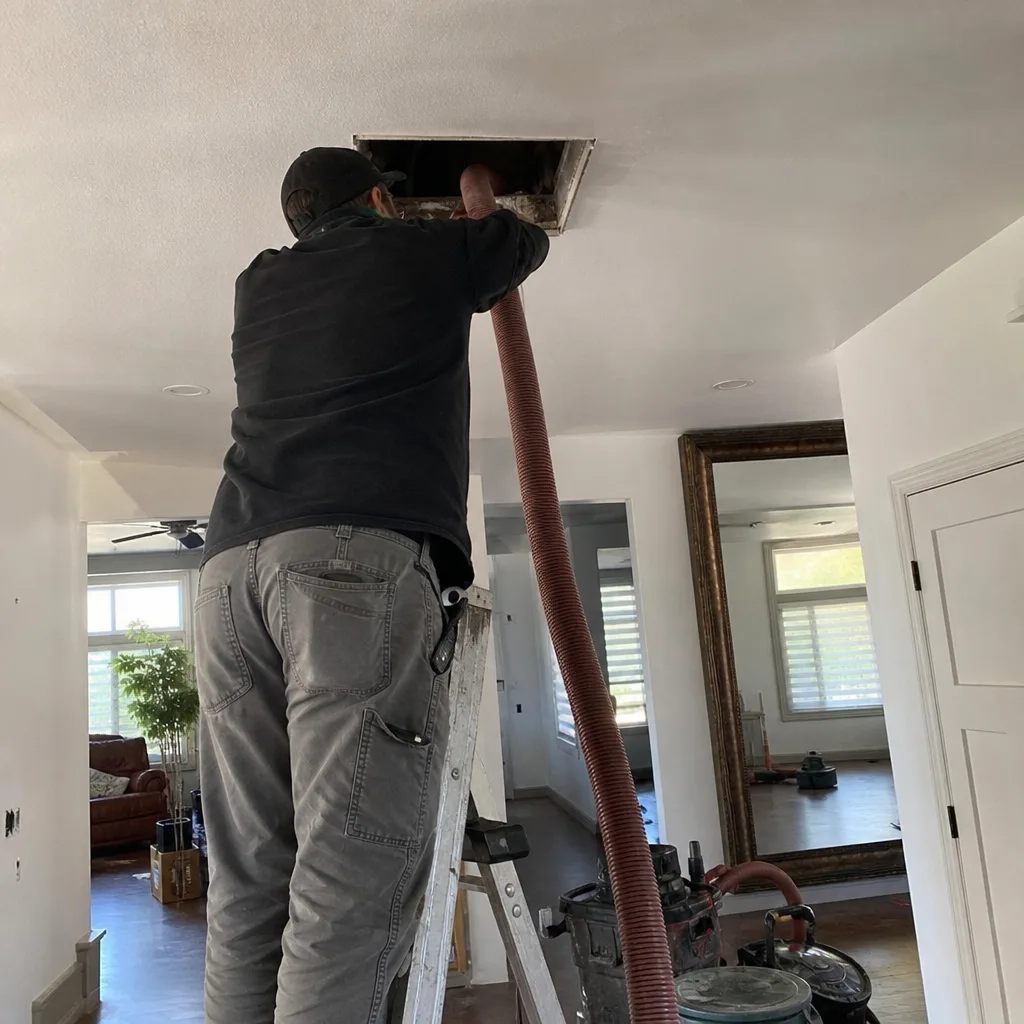 Before
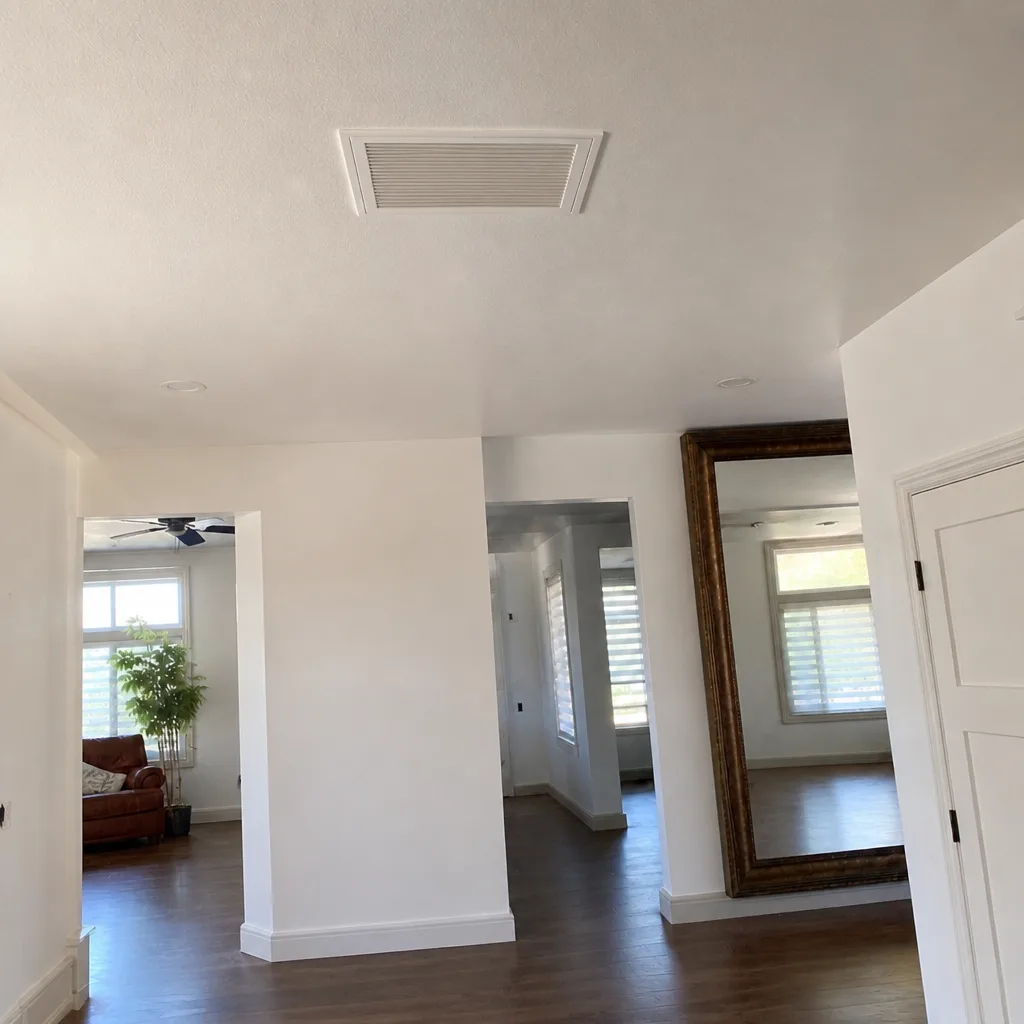 After
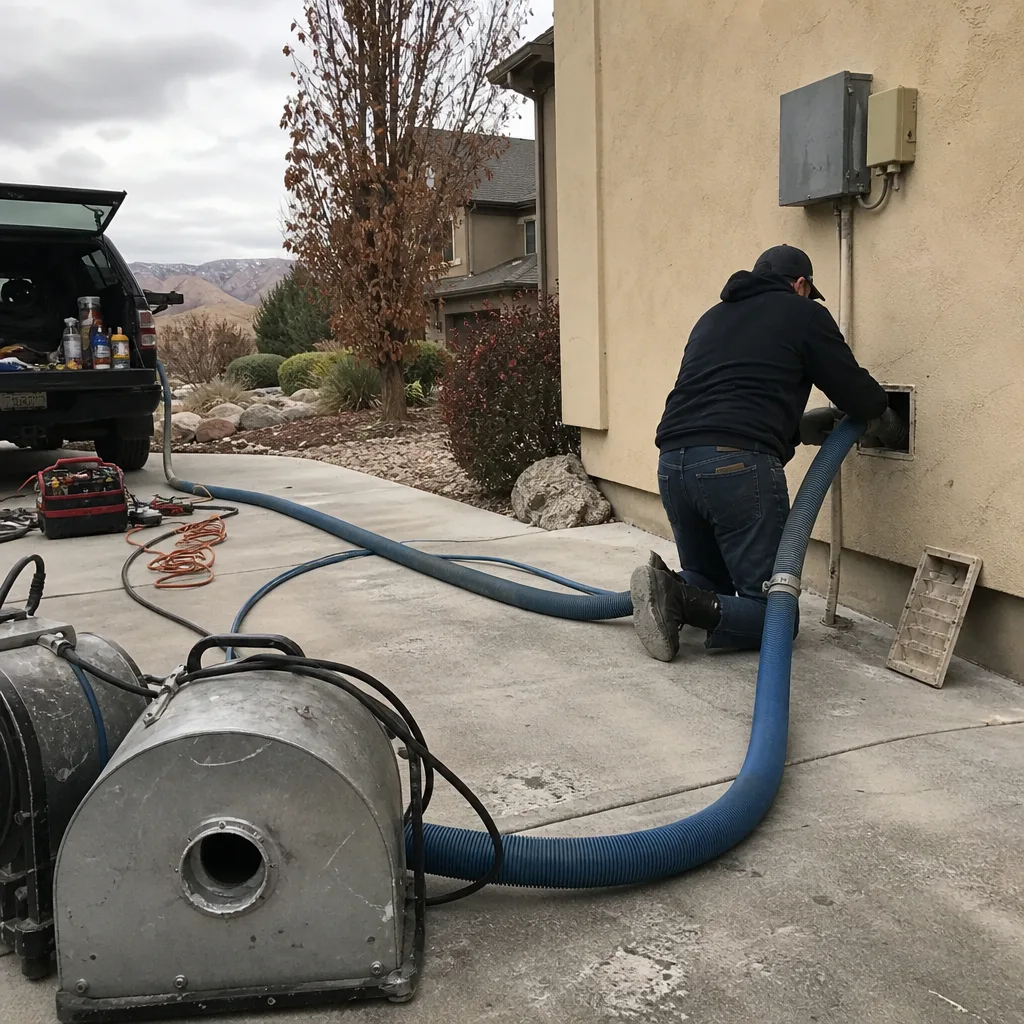 Before
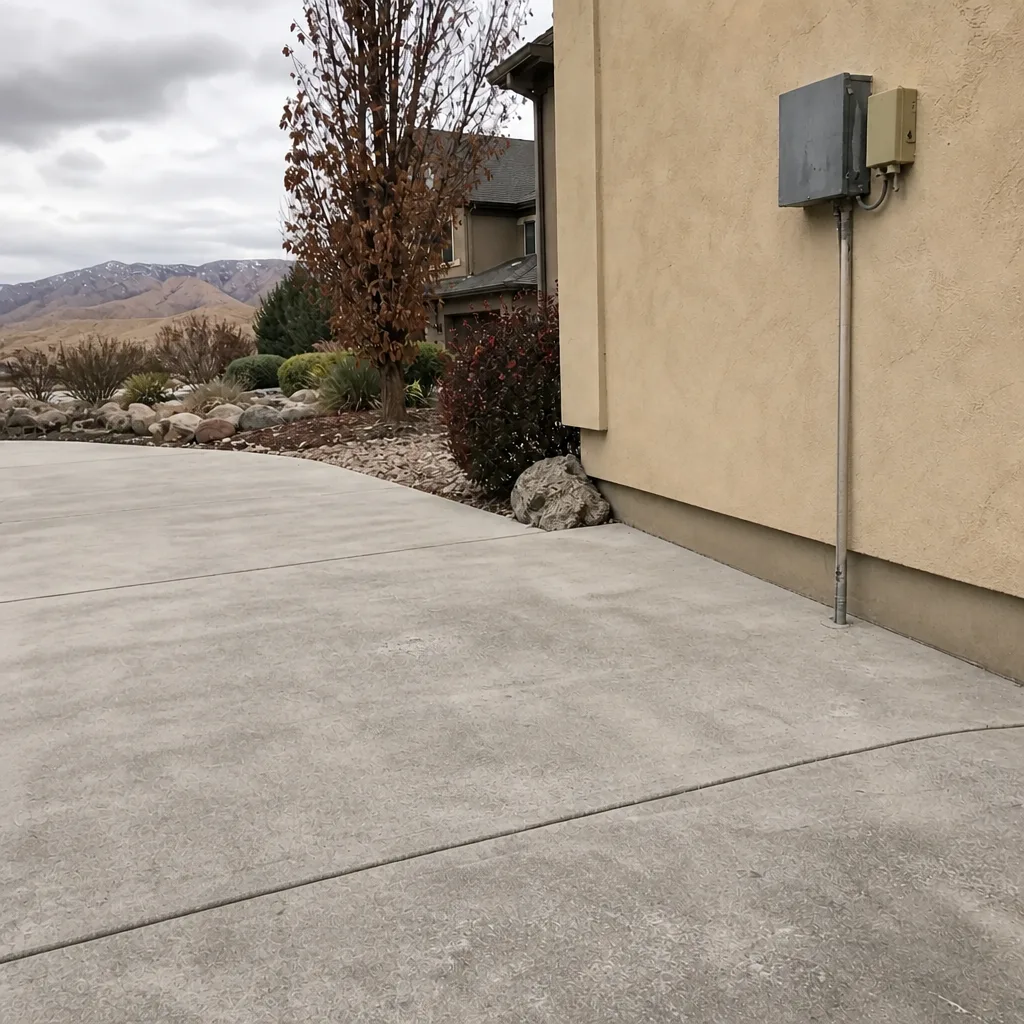 After
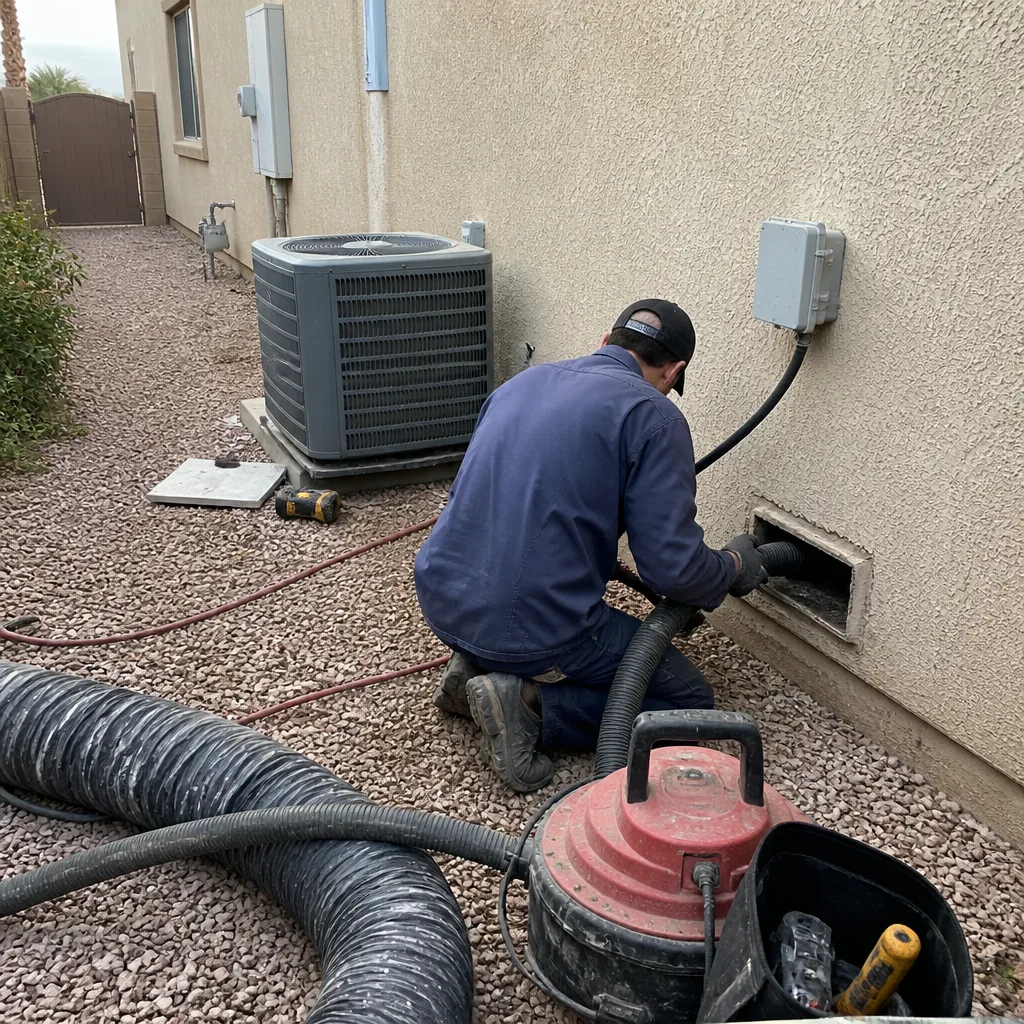 Before
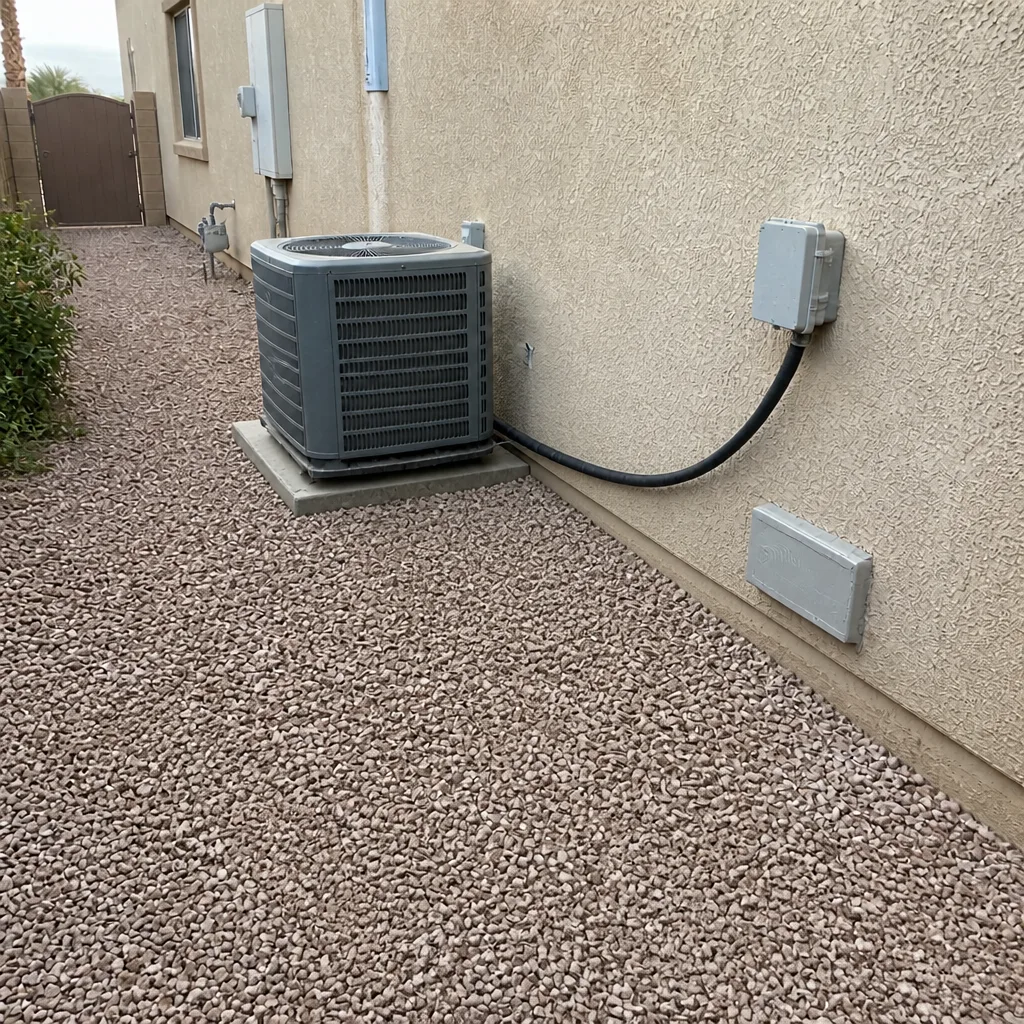 After
When to Call a Professional
Call a professional if you see dust returning to every register within days, if your home was recently built or remodeled and has never had a documented system cleaning, or if you notice a musty odor that only appears when the HVAC runs. Reduced airflow at the far rooms, a filter that loads unusually fast, or allergy symptoms that worsen indoors are all worth a look. If you’ve found disconnected or crushed ductwork in an attic or crawlspace, don’t clean first: repair first. And if your dryer is taking longer to dry loads or the vent run feels warm, that’s a safety issue worth checking.
Ironwood Air Duct Cleaning offers free estimates in St. George. Call (855) 419-9402. We answer 24/7. Fast dispatch from 7am to 7pm, Sunday through Friday. We’re closed Saturdays.
Frequently Asked Questions
Whole-system cleaning in St. George typically falls in the $400 – $800 range for a standard home, with the exact price set by the written estimate after we look at your system. Larger homes, second systems, heavy construction dust and duct repair push it higher. The key point: it’s one flat price per system, not a per-vent charge, so you know the number before work starts. Call (855) 419-9402 for a free estimate.
Because they’re for a different service. Cheap quotes usually mean a small vacuum, air-only agitation instead of contact brushing, and a scope that stops at the visible runs and misses the air handler, coil, plenum and drain pan. In a dust-heavy climate like St. George, that leaves the biggest contamination sources untouched. Ask what vacuum system and what scope the price covers, and the gap usually explains itself. Call (855) 419-9402 for an honest comparison.
Look at the before-and-after photos of your own ducts, then check for yourself: open a register boot with a flashlight and look into the first foot of the run, pull the return grille and check the plenum, and look inside the air handler cabinet and drain pan. If those areas are still coated, the job wasn’t finished. A professional will hand over the photos without being asked. Call (855) 419-9402 if you’d like to book an inspection.
There’s no single interval that fits every home, but St. George’s wind-driven silica, long cooling seasons and construction activity push most homes toward more frequent cleaning than in wetter climates. A recent remodel or new build resets the clock, so a home finished in the last few years may need a full-system cleaning sooner than the owners expect. A visual inspection is the fastest way to know. Call (855) 419-9402 for a free estimate.
Often, yes. Construction dust, drywall mud and general debris routinely get pulled into ductwork before a house is finished, which means a nearly new system can have a contaminated network from day one. In St. George’s build-heavy market, a full-system cleaning that includes the air handler and coil is worth considering for any home without a documented cleaning. Call (855) 419-9402 and we’ll tell you honestly what we find.
Yes. Air duct repair is one of our three core services, alongside cleaning and dryer vent cleaning. Disconnected, crushed or leaking runs aren’t a dirt problem, and cleaning without repairing them just means the leaks come back next season. We quote repairs per job after inspecting the system. Call (855) 419-9402 to have it looked at.
The Bottom Line
Duct cleaning in St. George is a whole-system job done with equipment that can hold the dust it dislodges. The material in local ductwork is largely fine desert silica that acts like an abrasive, and it deserves contact brushing plus real HEPA capture, not an air whip. Newer homes in Washington County often carry construction dust from before move-in, which pushes cleaning earlier than most owners expect. If you hire anyone, get the scope in writing, confirm the equipment, and ask for before-and-after photos of your own ducts. If you’re not sure whether your home needs it, ask us.
Call (855) 419-9402 for a free estimate in St. George. We answer 24/7. Fast dispatch from 7am to 7pm, Sunday through Friday. One flat price per system agreed before work starts, before-and-after photos of your own ducts, and an honest answer about what your system actually needs.
Written by the team at Ironwood Air Duct Cleaning.