
Last updated November 15, 2026
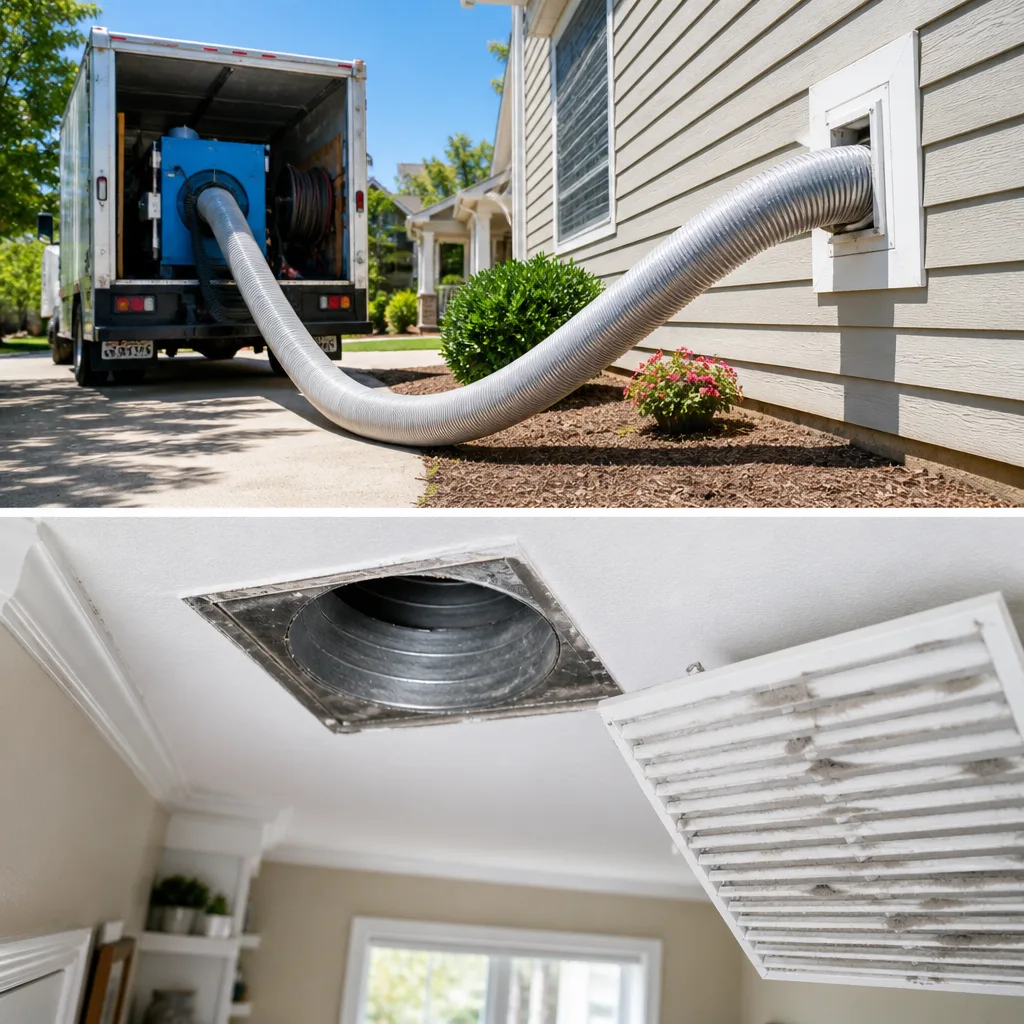 Whole-home duct cleaning
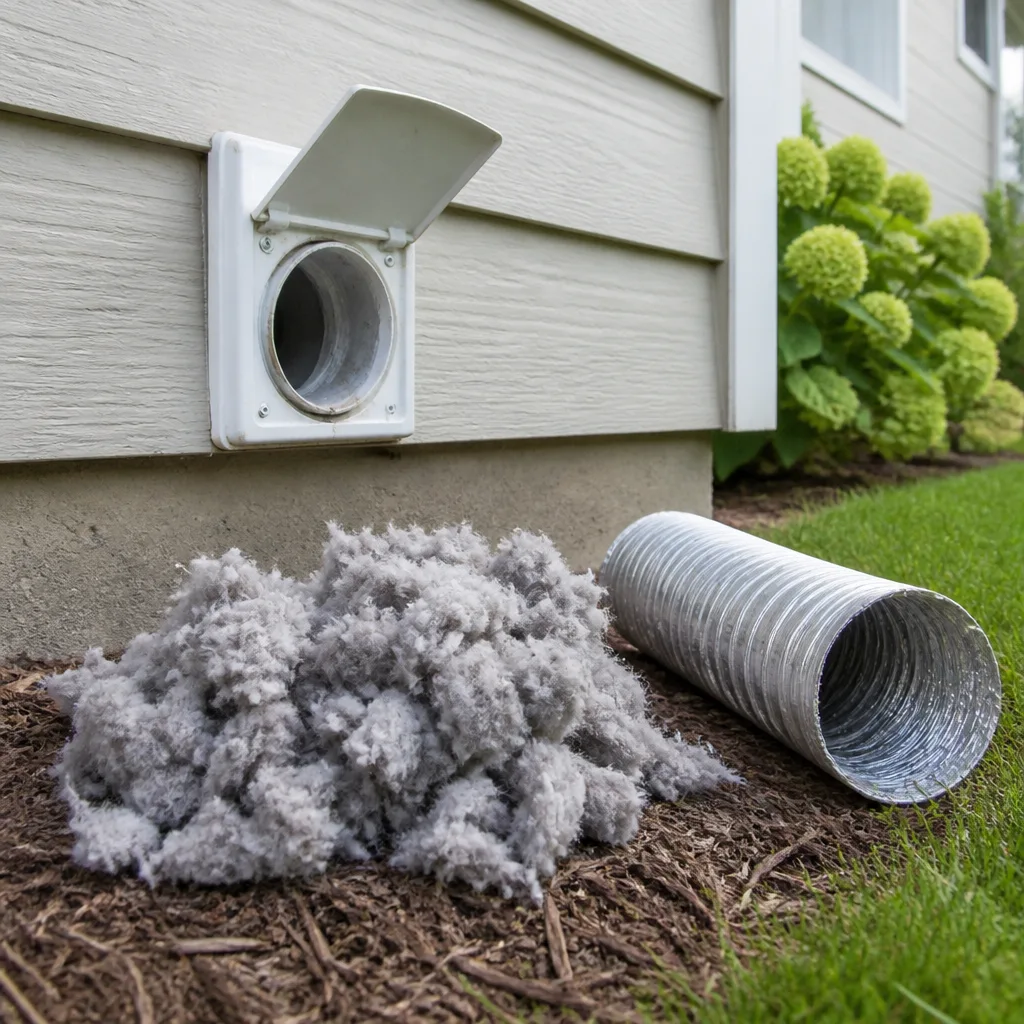 Dryer vent cleaning
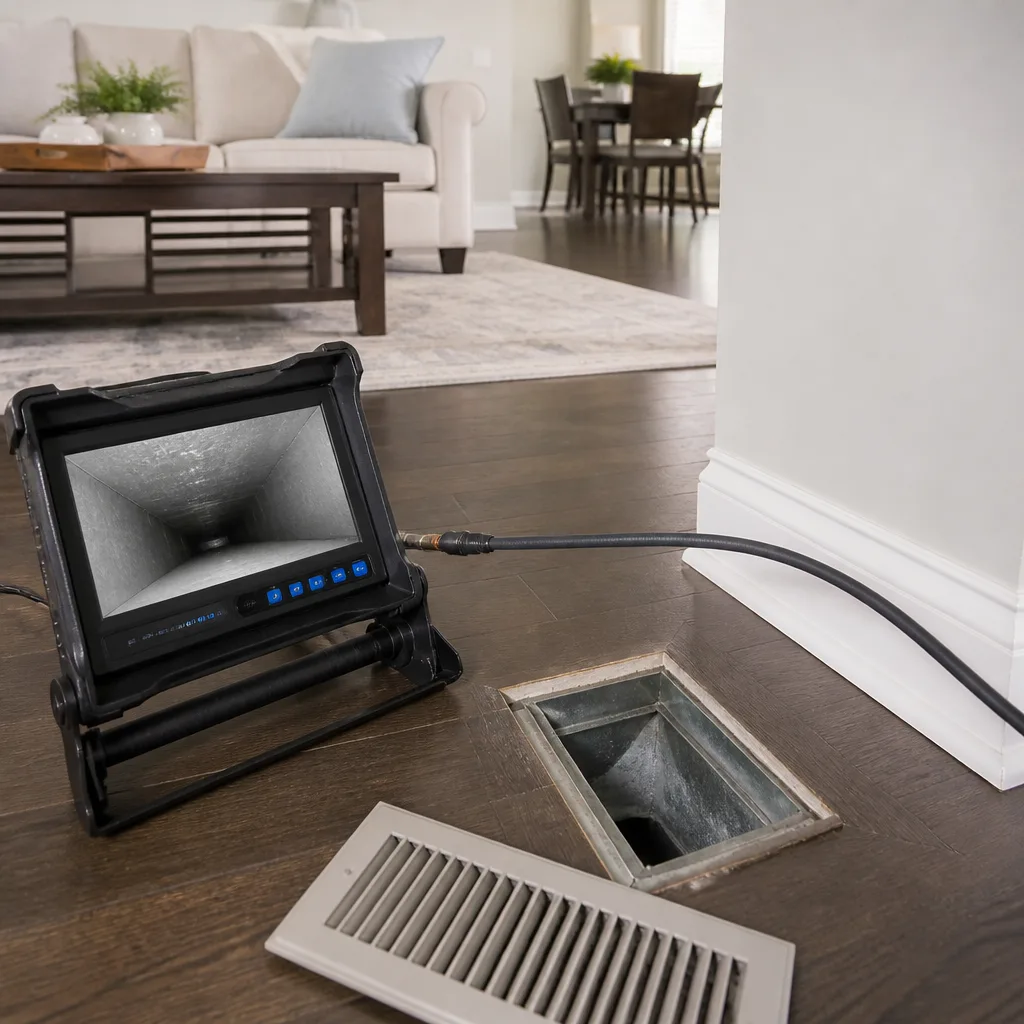 Camera inspection
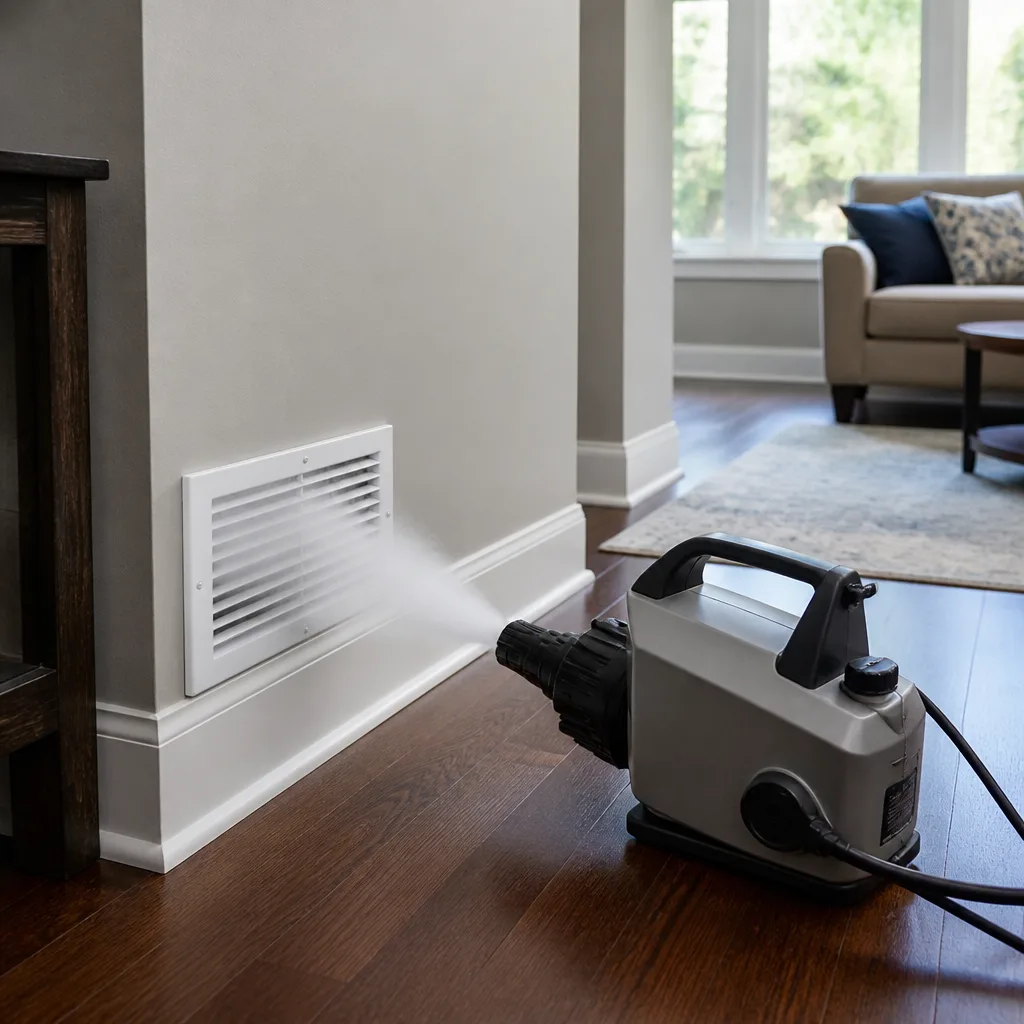 Sanitizing & deodorizing
Whole-system duct and dryer vent check with before-and-after photos - you see exactly what came out of your vents
That "$99 whole-house special" is a bait ad - the real number appears once they are in your hallway, or the "clean" is a shop-vac at the register. We photograph the inside of your ducts before and after instead.
Choosing the Right Air Duct Cleaning Brand: A Buyer’s Guide for St. George
There is no Michelin Guide for air duct cleaners. Most St. George homeowners choose a company the same way they choose a restaurant: by scanning star ratings on a phone screen. That metric measures customer satisfaction, and satisfaction is easy to manufacture when no one can see inside the ducts. A crew can leave a customer grinning without ever having cleaned the system properly, because there is nothing to inspect once the truck pulls away. This guide is about the things you actually can inspect before you book: the equipment a company invests in, how it handles repairs, what its credentials do and do not guarantee, and the three-minute phone conversation that tells you more than fifty reviews. You’ll finish knowing what separates a duct cleaning brand from a duct cleaning business.
Quick Answer
The right air duct cleaning brand in St. George is the one that can show you professional-grade contact-cleaning equipment (a rotary brush system paired with a HEPA vacuum, not a shop blower), discloses whether it cleans with a portable unit or a truck-mounted system, and offers duct repair and sealing as a real service rather than an upsell. Reputation matters, but it is the third filter, not the first. Start with equipment and method, confirm repair capability, and then weigh credentials and reviews.
Styles & brands we work with
- Whole-home duct cleaning
- Dryer vent cleaning
- Camera inspection
- Sanitizing & deodorizing
Table of Contents
- Why Star Ratings Don’t Tell You Whether Your Ducts Got Clean
- What Company Websites Reveal About Real Equipment Investment
- Credentials Ranked by What They Actually Guarantee
- Evaluating Repair and Sealing Capability, Not Just Cleaning
- Local Company vs. National Franchise in St. George
- Why St. George Dust and Dry Air Changes the Evaluation
- The Quote Call: Questions That Reveal Competence in Three Minutes
- Common Mistakes to Avoid
Why Star Ratings Don’t Tell You Whether Your Ducts Got Clean
A review tells you whether someone felt respected, whether the technician arrived when promised, and whether the final invoice matched the quote. Those are real and worth something. What a review cannot tell you is how much dust came out of the return trunk, whether the supply runs were brushed or merely blown, or whether the contractor sealed a leaking joint on the way out. The customer wasn’t there for any of it. In our experience, the gap between “happy customer” and “clean system” is often the gap between a blown-out register and a properly contact-cleaned duct.
That gap widens in a place like St. George, where fine desert dust finds its way into return air and settles into run after run. A blow-and-go visit can stir that settled dust into the air, satisfy the customer with a visible puff at the vent, and leave the duct walls coated. The homeowner notices nothing until the dust settles again.
So how do you evaluate a brand when the primary consumer signal is unreliable? You weight it correctly:
- Reviews tell you about scheduling, courtesy, and billing honesty. Useful, but narrow.
- Method and equipment tell you whether the work actually cleans a duct. This is the decisive factor.
- Repair capability tells you whether problems get fixed or merely vacuumed around.
- Local accountability tells you who answers when something goes wrong three months later.
Read the reviews, then set them aside and do the technical homework. That’s what the rest of this guide is for.
What Company Websites Reveal About Real Equipment Investment
A company’s website is an inventory disclosure if you know how to read it. Generic phrases like “state-of-the-art equipment” and stock photos of a smiling technician holding a hose tell you nothing. Specific brand names, method descriptions, and honest limitations tell you a lot. When you see the manufacturer names of professional cleaning systems spelled out, along with the method they use, someone on that team knows what they own.
Here’s what to look for, and what the alternative looks like:
- Contact cleaning named directly. Rotary brush contact cleaning means the duct wall is physically brushed while a vacuum holds the loosened material. A website that describes brush-and-vacuum action is describing real work. A website that talks only about “powerful air pressure” or “negative pressure” is describing air movement, which is not cleaning.
- HEPA vacuum equipment identified. HEPA capture is what keeps the material you dislodged from blowing back into the living space. Brands like Nikro make that equipment. Listing the vacuum line matters because it shows the contractor thought about where the dust goes, not just how to get it off the wall.
- Portable vs. truck-mount disclosure. Both are legitimate. A portable unit works fine for many homes, and truck-mounted systems offer higher sustained airflow for bigger or heavily soiled systems. What matters is that a company tells you which one it uses and why, rather than dodging the question.
- Containment-level capability. Abatement Technologies is a name associated with professional air-quality abatement work. If a company references that class of equipment, it signals it can handle air quality problems beyond routine maintenance.
- Protective and finishing products. Guardsman-line products in a duct cleaner’s toolkit point to a crew that finishes the job with protection rather than leaving freshly cleaned surfaces bare.
A website full of stock photos and zero equipment specifics is a signal in itself. It usually means the crew uses a shop vacuum and a blower. That’s not a reason to be rude to anyone, but it is a reason not to book.
Credentials Ranked by What They Actually Guarantee
Every credential you’ll see on a duct cleaning website has a real purpose, and each one stops short of guaranteeing quality. Understanding which is which keeps you from overweighting a logo and underweighting a method.
- Method and equipment disclosure (highest relevance). This isn’t a badge, but it’s the most predictive signal available. Named contact-cleaning systems and HEPA vacuums correlate directly with how well a system gets cleaned.
- NADCA-related training and standards awareness (high relevance). The National Air Duct Cleaners Association publishes cleaning standards and offers training. A company that references those standards probably sources its methods from somewhere better than habit. A credential alone doesn’t prove the work, but the standard behind it gives you language to check against.
- Repeatable inspection practice (high relevance). Before-and-after photos and a willingness to show you what came out are worth more than most certificates. If a company can’t show its own work, ask why.
- Licensing and insurance (baseline relevance). Being licensed and insured is the floor, not the ceiling. It protects you if something is damaged. It says nothing about whether the duct was cleaned.
- BBB standing (moderate relevance). A BBB listing reflects complaint handling and business practices. It tells you whether a company resolves disputes, not whether its technicians clean properly.
- Review scores (moderate relevance). Ratings measure customer experience, which is real but indirect. High ratings plus generic equipment talk should prompt more questions, not fewer.
- Paid directory badges (low relevance). Some seals are marketing associations with no training requirement. Ask what a badge certifies before you let it influence you.
The honest rule: a credential is a question to ask, not an answer on its own. When you call, ask what training a crew has and how it inspects finished work. The answer will tell you more than the badge.
Evaluating Repair and Sealing Capability, Not Just Cleaning
Cleaning and repairing are different trades, and a cleaning-only operator is a different category of business than a full-system specialist. A cleaner removes debris from ducts. A specialist also fixes the things that caused the debris problem in the first place: disconnected runs, crushed flex duct, leaking joints, and loose connections at the air handler or register.
Why does this matter in a buyer’s guide for St. George? Because duct failures are common in any system, and a cleaner who can’t fix them will clean around the problem. You can get a perfectly brushed duct in a house with a disconnected bedroom run, and that bedroom will stay uncomfortable. The cleaning was done. The system wasn’t fixed.
Here’s how to tell a cleaning-only operator from a full-system one:
- Ask what happens if a duct run is disconnected. A full-system company describes the repair. A cleaning-only operator will say the cleaning is separate.
- Ask about sealing. A specialist can talk about mastic or tape at joints and plenum connections, and knows which connections are usually the leaks.
- Ask about inspection. A proper technician looks at the system before quoting, not after the deposit is paid.
- Ask what tools they carry for repair. A crew that carries only a vacuum and a brush is not equipped for anything but cleaning.
A full-system company gives you one visit for cleaning, repair, and protection rather than handing you off to a separate contractor. That’s a different service model, and it’s the one worth hiring.
Local Company vs. National Franchise in St. George
Most national duct cleaning brands operate through local franchisees, and some rely on subcontractors in markets beyond their core footprint. That structure looks identical on a website banner but behaves differently in practice. When a job is slow or a crew is short, the subcontractor model has no particular local technician with a reputation to protect. The brand’s name is on the truck. Someone else may be doing the work.
Here’s what that means for you:
- Accountability stays local. A locally operated company answers to its local customers for its local work. A franchise’s equipment investment and quality are ultimately in the hands of whichever franchisee or subcontractor shows up.
- Equipment varies by owner. A national brand logo tells you nothing about the specific machine that arrives at your door. Ask directly.
- Repair capability is often grafted on. Franchise systems that are set up around cleaning frequently struggle to handle structural repair, because their model is built around a task, not a system.
- Scheduling is less predictable. Not because franchises are unreliable in every case, but because the crew who shows up may be a team whose local calendar and reputation aren’t directly tied to the brand you booked.
None of that makes a franchise automatically wrong. It does mean you evaluate the local operator behind the national name, not the name itself. When you’re choosing between duct cleaning brands in St. George, the question to answer is who actually performs the work, with what tools, and who answers the phone if something needs attention afterward.
Why St. George Dust and Dry Air Changes the Evaluation
Duct cleaning is not the same job here as it is in a humid climate. St. George sits in a high desert, and the air carries fine mineral dust much of the year. That dust settles into return boxes, coats blower wheels, and works its way into supply runs. The dry air also affects how the dust behaves once it’s disturbed: it becomes airborne easily and stays suspended longer, which is exactly why HEPA capture matters more here than in a more humid place.
What this means when you’re evaluating a local company:
- Ask whether the vacuum is HEPA-filtered. In a dry climate, the fine fraction of the dust is the part you’ll notice. HEPA capture keeps it out of the air you’re breathing.
- Ask about the return side. Desert dust concentrates in return air and the blower. A company that only cleans supply registers is doing half the job.
- Ask about filter fit and filtration upgrades. Filtration and indoor air quality systems are a natural companion to cleaning here. A company that can speak to filtration knows the system beyond the ducts.
- Ask about the season. Cleaning before a heating season gets most St. George homes ahead of the dust that accumulates indoors during the cooler months.
An operator who has never thought about fine dust and dry air will answer these questions vaguely. An operator who has a method will answer them quickly, because it’s the same work every time.
The Quote Call: Questions That Reveal Competence in Three Minutes
The quote call is the highest-value part of your evaluation, and you can run it in about three minutes. A competent company answers technical questions directly and specifically. A bluffing one talks about price and scheduling and pivots when the conversation gets technical.
- “What equipment will you bring?” A real answer names the system and describes the method (rotary brush with HEPA vacuum, for example). A weak answer is “professional equipment.”
- “Do you clean the returns and the blower, or just the supplies?” Listen for a complete-system answer. This question alone filters out most low-bid operators.
- “Is your vacuum HEPA?” A direct yes or no, followed by an explanation. Evasion is your answer.
- “What happens if you find a disconnected or crushed run?” A full-system company describes the repair. A cleaning-only operator deflects.
- “Will I see before and after photos of my own system?” A company that documents its work will say yes without hesitation.
- “How is the price set, and is it one price for the whole system?” You want one flat price per system, agreed before work starts, not per-vent pricing that grows once the crew is in the driveway.
Three minutes of these questions tells you more than an hour of review reading. And a company that answers them well probably wants the same thing you do: a clean system, done once, done right.
Common Mistakes to Avoid
- Booking by coupon price. A teaser price often becomes a bigger invoice once the technician is on site. Ask for the full-system price before you book, and ask whether it’s one price for the whole system.
- Treating a star rating as technical proof. Reviews measure the visit, not the method. A happy customer can still have dirty ducts.
- Skipping the return and blower questions. A company that cleans only supply registers will leave the dustiest part of a St. George system untouched.
- Assuming cleaning removes debris from an unsealed system. If the ducts leak or a run is disconnected, a cleaning alone won’t fix the dust problem. Repair and sealing are part of the answer.
- Overlooking the dryer vent. A clogged dryer vent is a documented fire hazard, and many cleaning companies leave it out of the quote. Ask whether dryer vent cleaning is part of the service.
- Choosing a brand by logo rather than equipment. A national name tells you nothing about the specific machine and crew that will show up at your door in St. George.
- Never asking for documentation. If a company can’t show its own before-and-after photos, you’ve learned something worth knowing before you pay.
See the difference
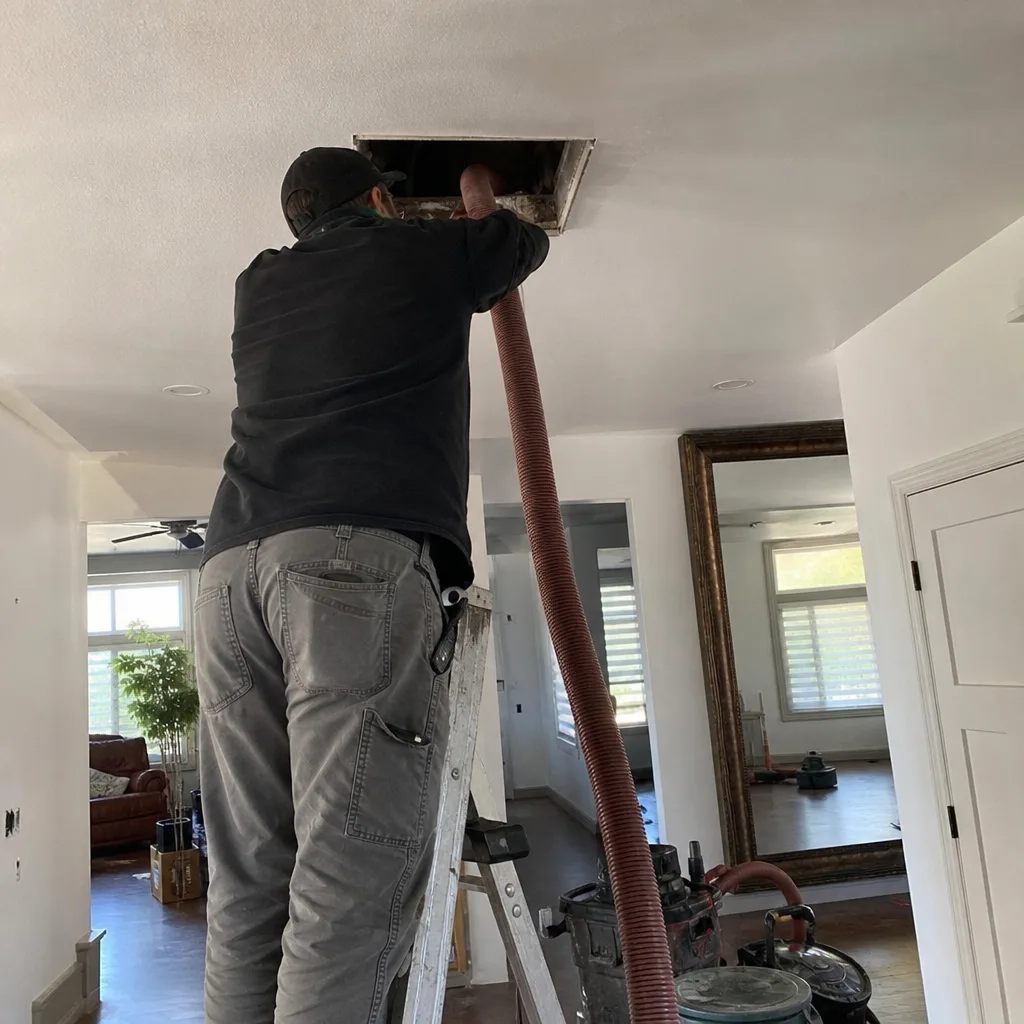 Before
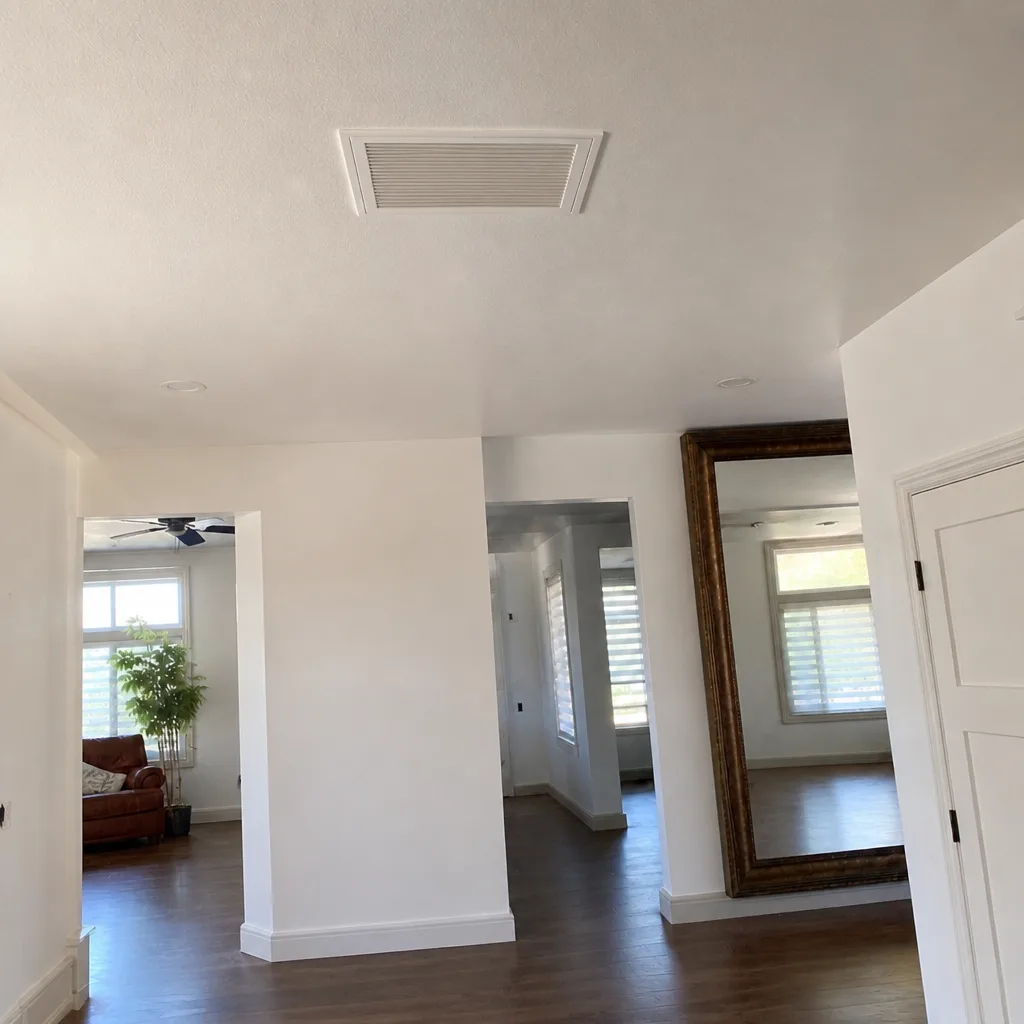 After
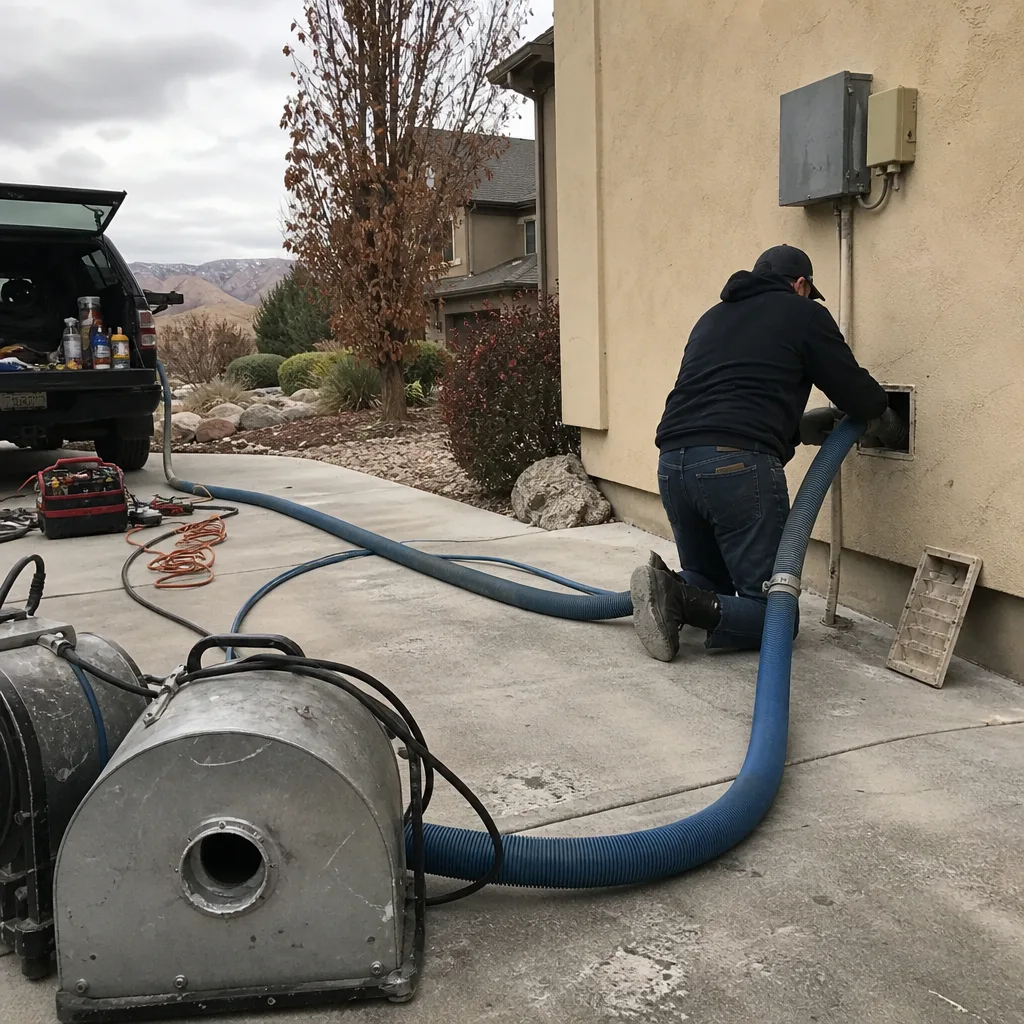 Before
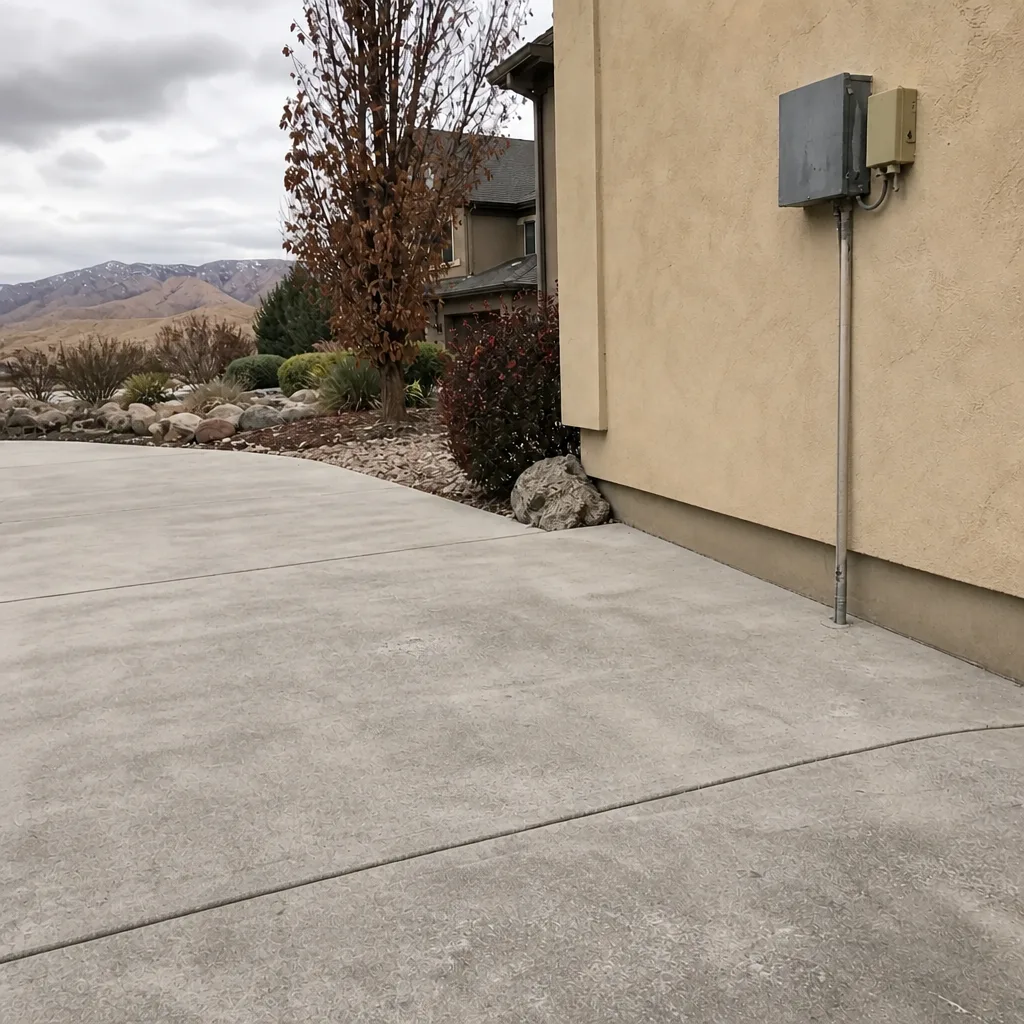 After
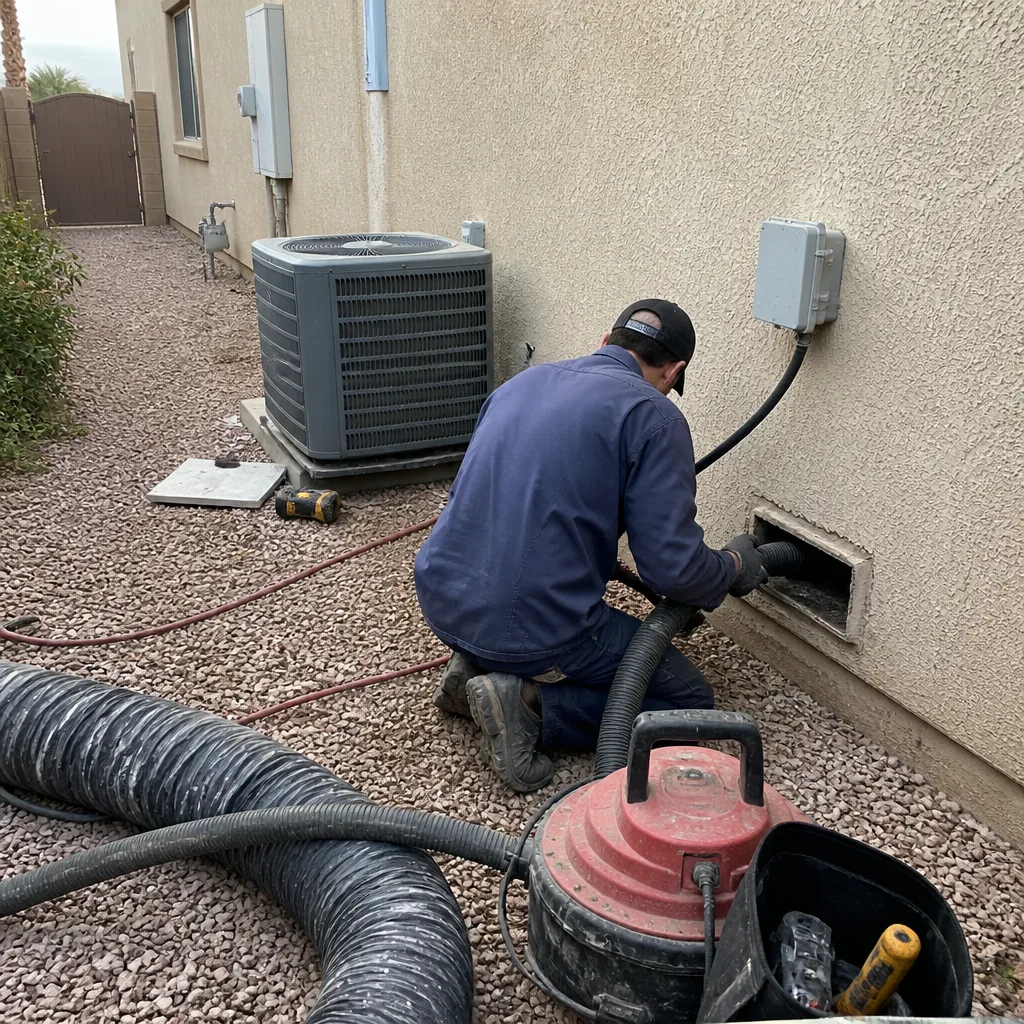 Before
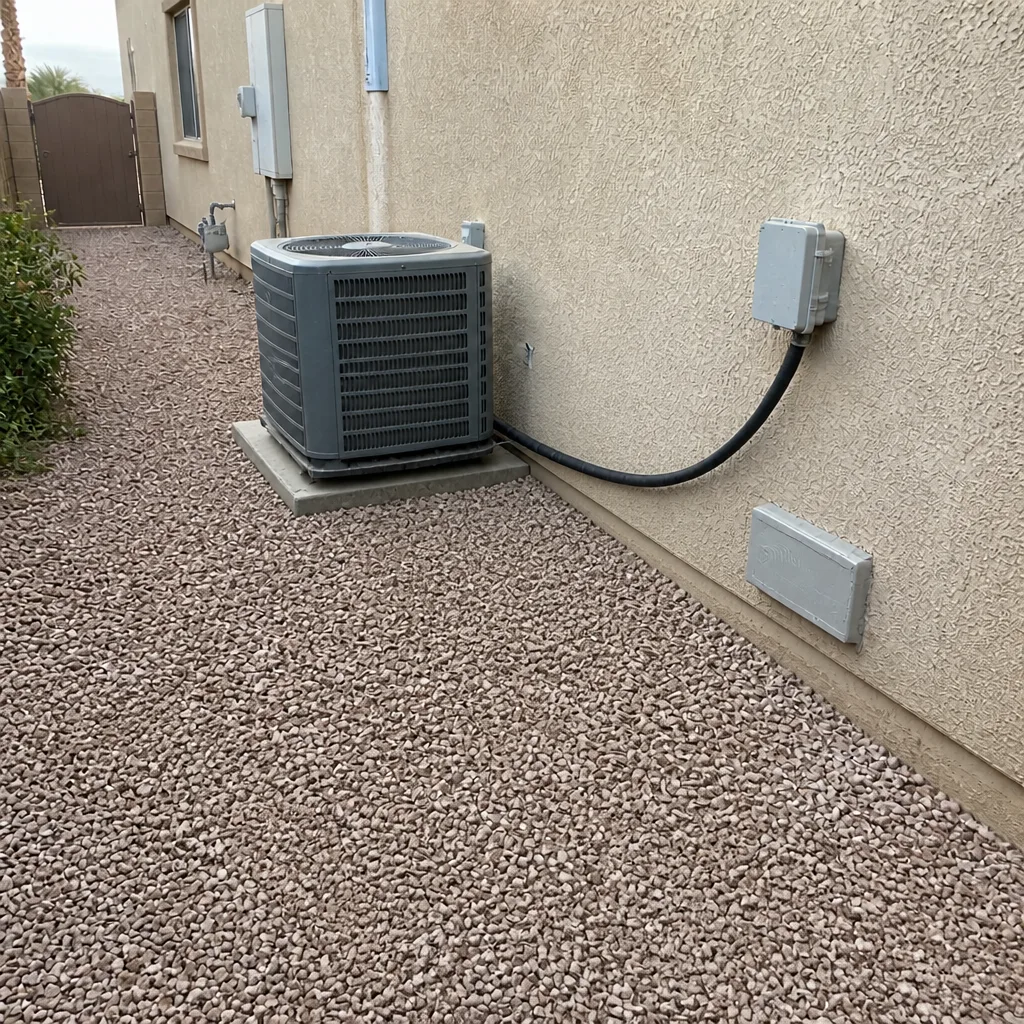 After
When to Call a Professional
Some duct problems announce themselves, and some hide inside the system until they’re expensive. Call a professional when you notice visible dust blowing from registers right after a filter change, a persistent musty smell when the system starts, rooms that never heat or cool while others are fine, or a dryer that takes longer than it used to. Those are the signals that something in the system has changed. A duct cleaning visit and a thorough inspection settle the question. Ironwood Air Duct Cleaning offers free estimates in St. George – call (855) 419-9402. We answer 24/7. Fast dispatch from 7am to 7pm, Sunday through Friday. If you’d rather start with the service details, read more about Ironwood Air Duct Cleaning and what a visit covers.
Frequently Asked Questions
Choose based on equipment, method, and repair capability first, then confirm credentials and reviews. Ask what machine the crew brings, whether the vacuum is HEPA, whether the returns and blower are included, and whether the company can repair a disconnected run. A company that answers those questions clearly has the method to back up its name. A company that pivots to price has told you something too. Call (855) 419-9402 for an exact quote – estimates are free.
Pricing is set per job by a written estimate, because a small single-system home and a larger home with multiple returns are genuinely different jobs. Be cautious with a low teaser price: it’s often a starting number that grows once the crew is on site, or it reflects a blow-and-go visit without contact cleaning. The rule to hold a company to is one flat price per system, agreed before work starts. Call (855) 419-9402 for an exact quote – estimates are free.
Cheaper quotes usually reflect cheaper equipment and a shorter method. A blow-and-go visit uses a blower or shop vacuum to move air and dust, which doesn’t clean the duct wall. A contact-cleaning visit uses a rotary brush with a HEPA vacuum to brush the wall and capture what’s loosened. The difference shows up in time, equipment cost, and what’s still on your duct walls after the crew leaves. Call (855) 419-9402 for an exact quote – estimates are free.
Ask for before-and-after photos of your own system, and ask to see the collection chamber when the crew is done. A company using proper containment and HEPA capture can show you what came out. If a company can’t document its own work, treat that as a reason to keep looking.
Yes, in some homes more. Cleaning removes debris, but a disconnected or crushed run, a leaking plenum joint, or a loose register connection will keep letting dust and wasted air into the system. A full-system company cleans and repairs in one visit; a cleaning-only operator leaves the cause in place.
It changes the emphasis. The high-desert dust is fine and easily resuspended, so HEPA capture matters, and return-side cleaning matters more than in a humid climate. Dry air also means airborne dust lingers. A company familiar with local conditions will include the returns and the blower as a standard part of the job, not an add-on. Learn more about air duct cleaning and what a full-system visit includes.
The Bottom Line
The right duct cleaning brand in St. George is verifiable before you book. Look for professional-grade contact-cleaning equipment, a disclosure of portable versus truck-mounted systems, HEPA vacuum capture, and a company that treats repair and sealing as part of the job rather than a separate trade. Weight the equipment and method above the star rating, and use the quote call to test technical competence in three minutes. Ask for one flat price per system, agreed before work starts, and before-and-after photos of your own ducts. Do that and the choice becomes obvious. It also helps to cover the safety side of the trade – dryer vent cleaning for fire safety – so ask about that in the same call. For a free estimate, call (855) 419-9402. We answer 24/7. Fast dispatch from 7am to 7pm, Sunday through Friday. Our technicians have up to 10 years of experience.
Written by the team at Ironwood Air Duct Cleaning.