
Last updated November 15, 2026
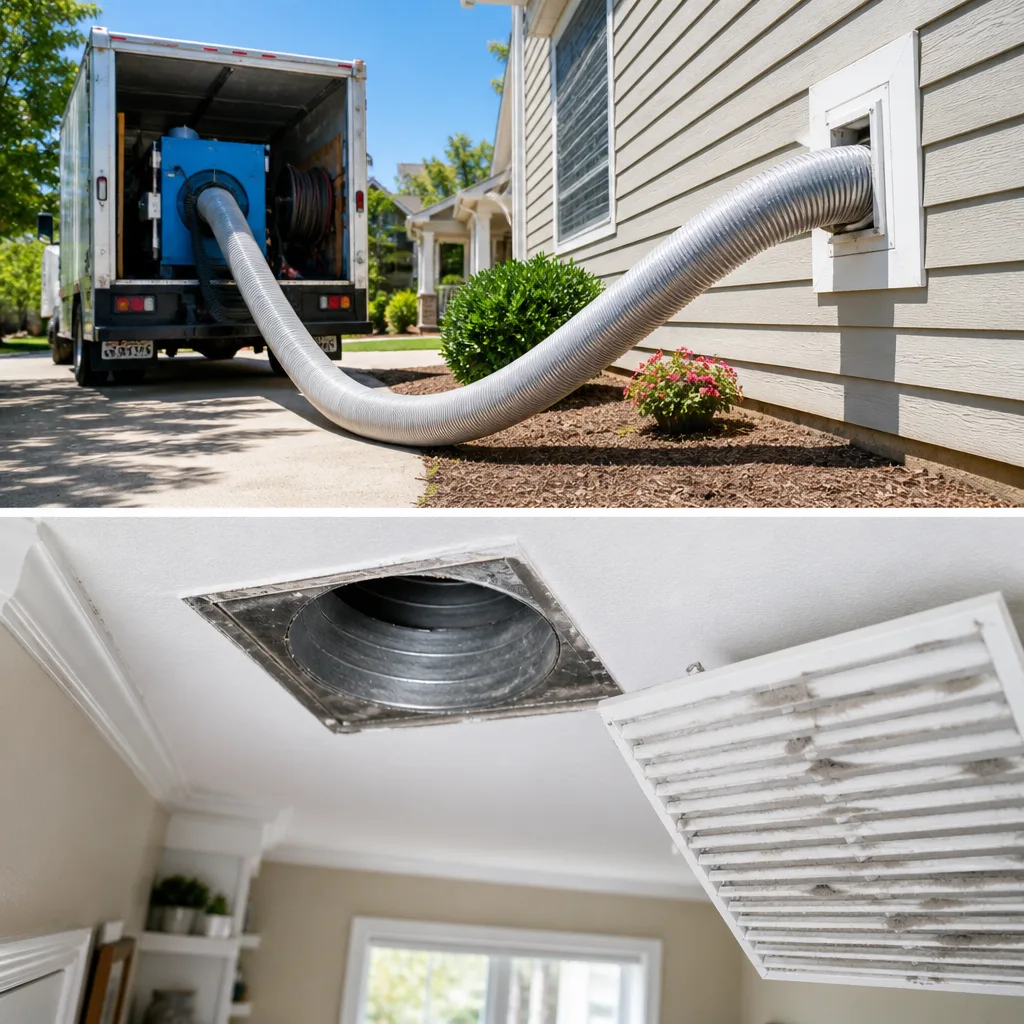 Whole-home duct cleaning
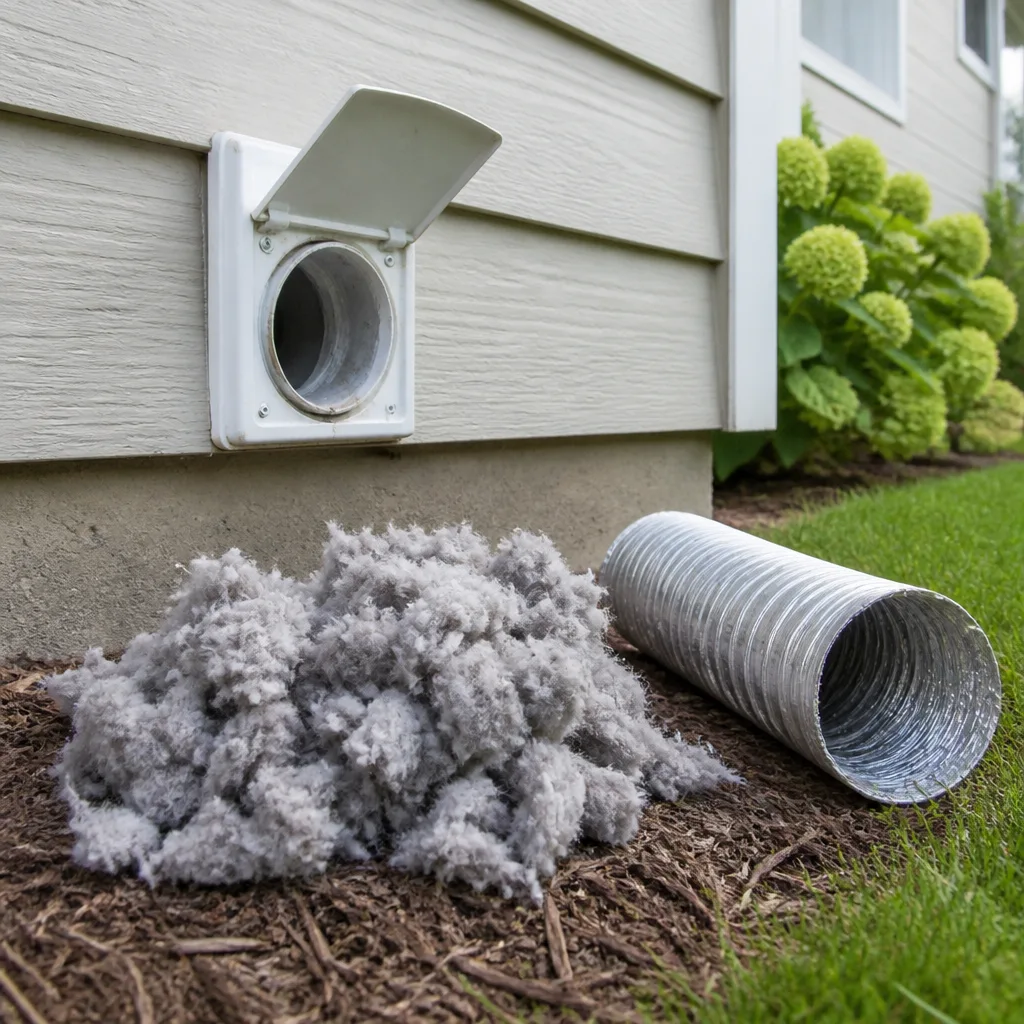 Dryer vent cleaning
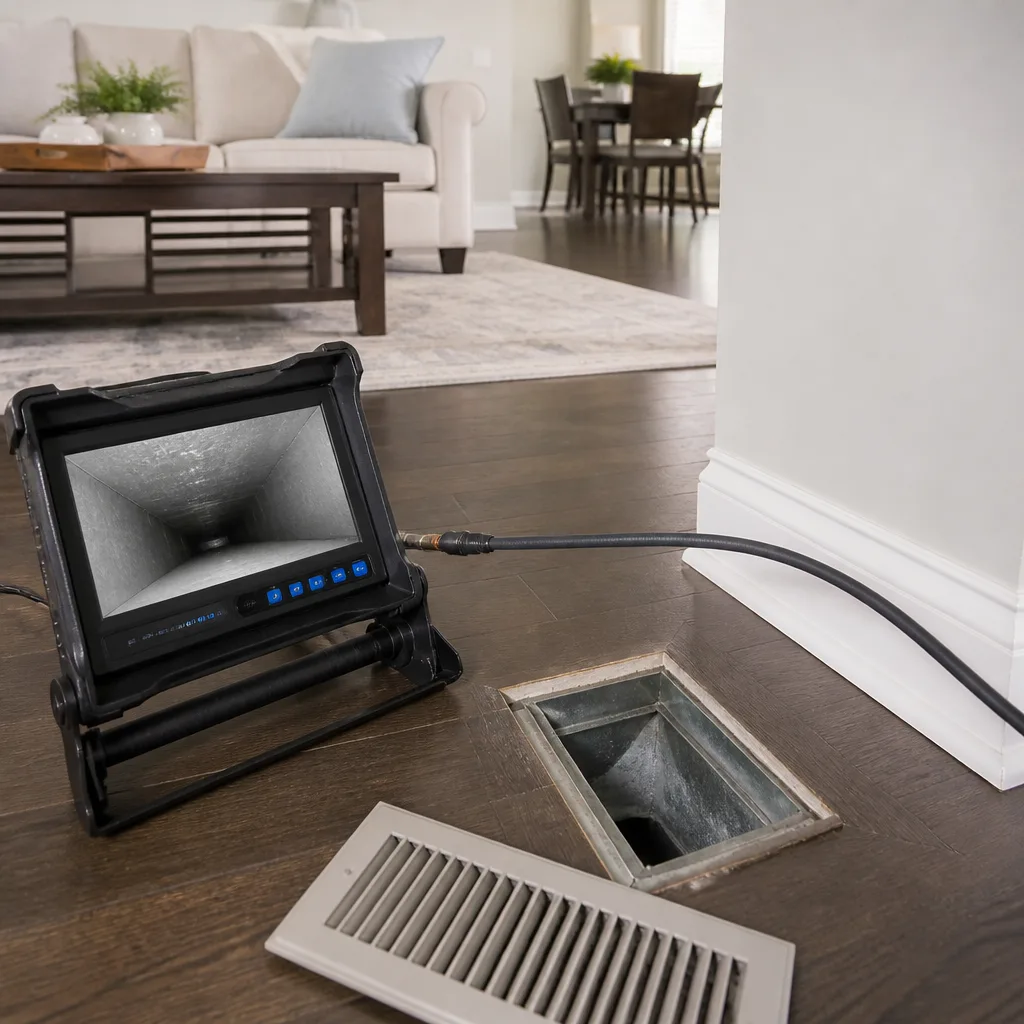 Camera inspection
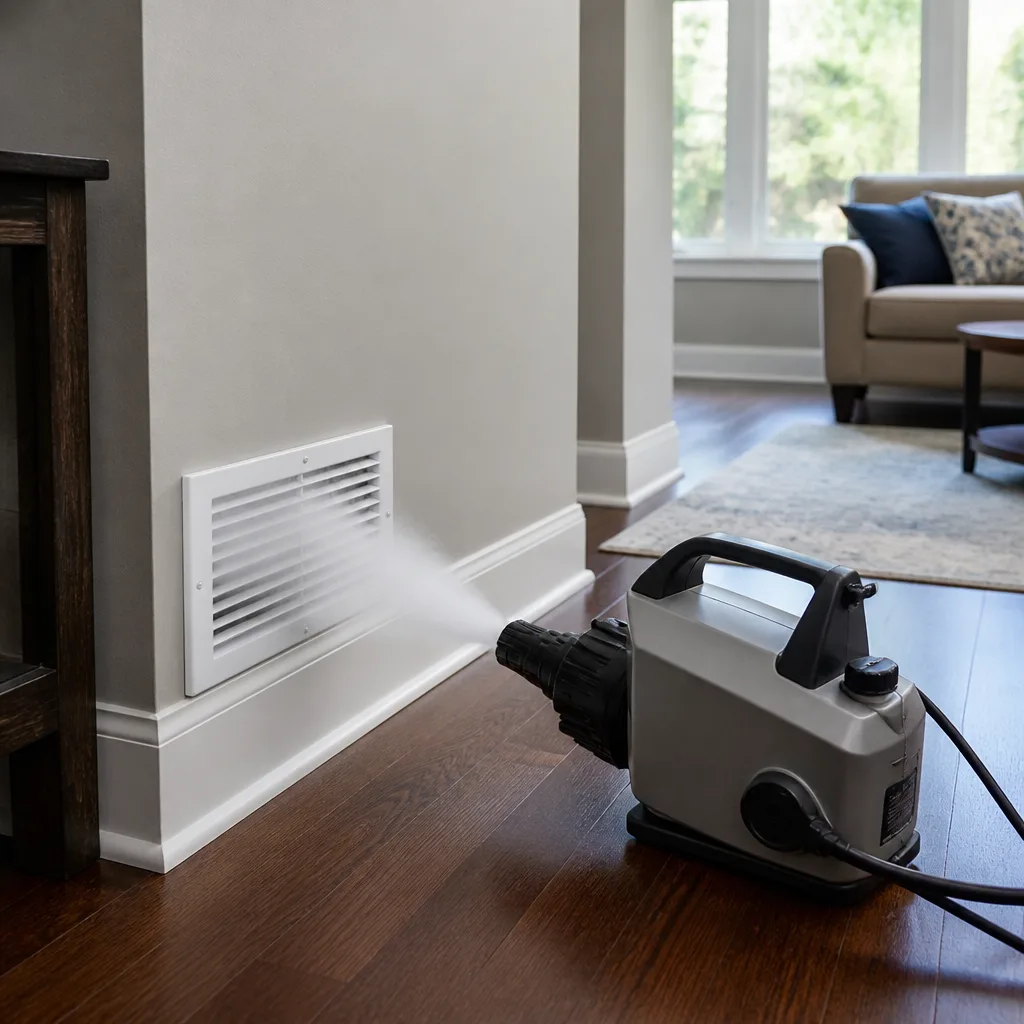 Sanitizing & deodorizing
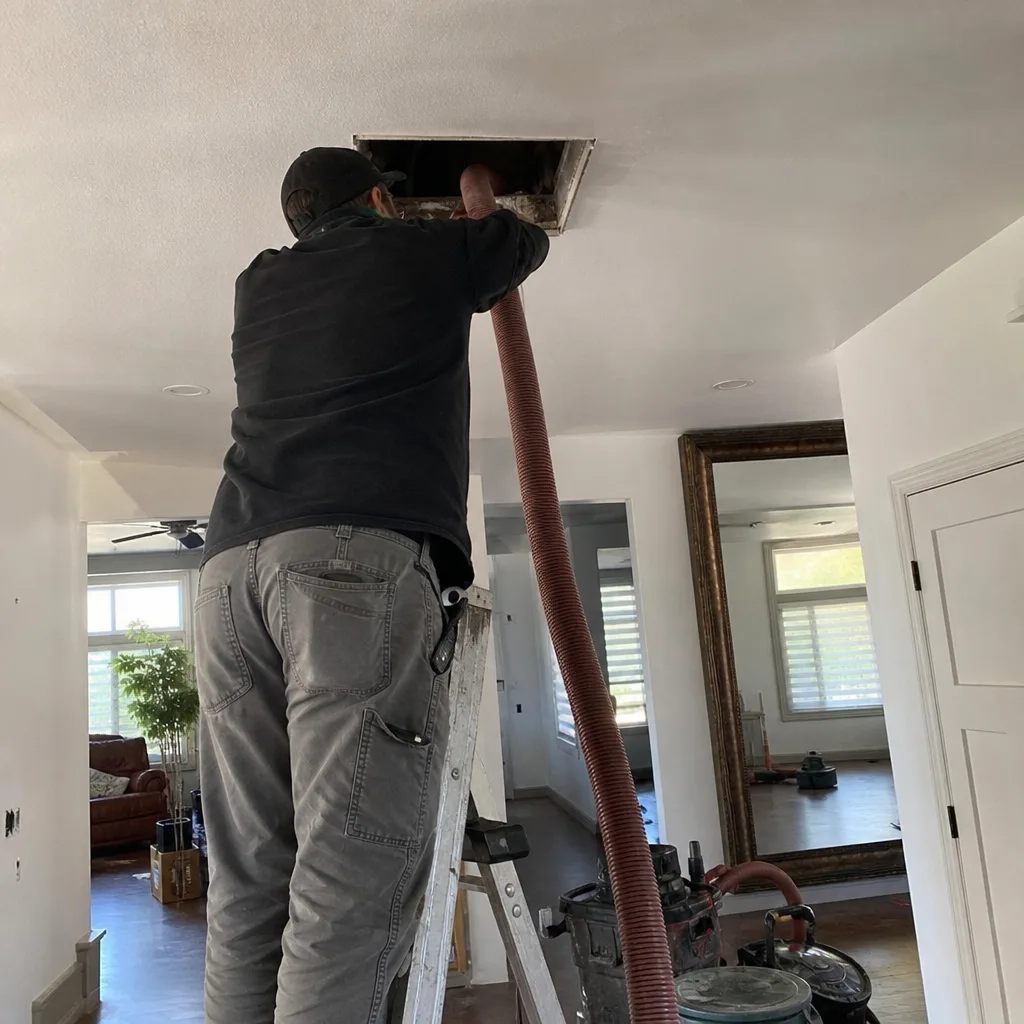
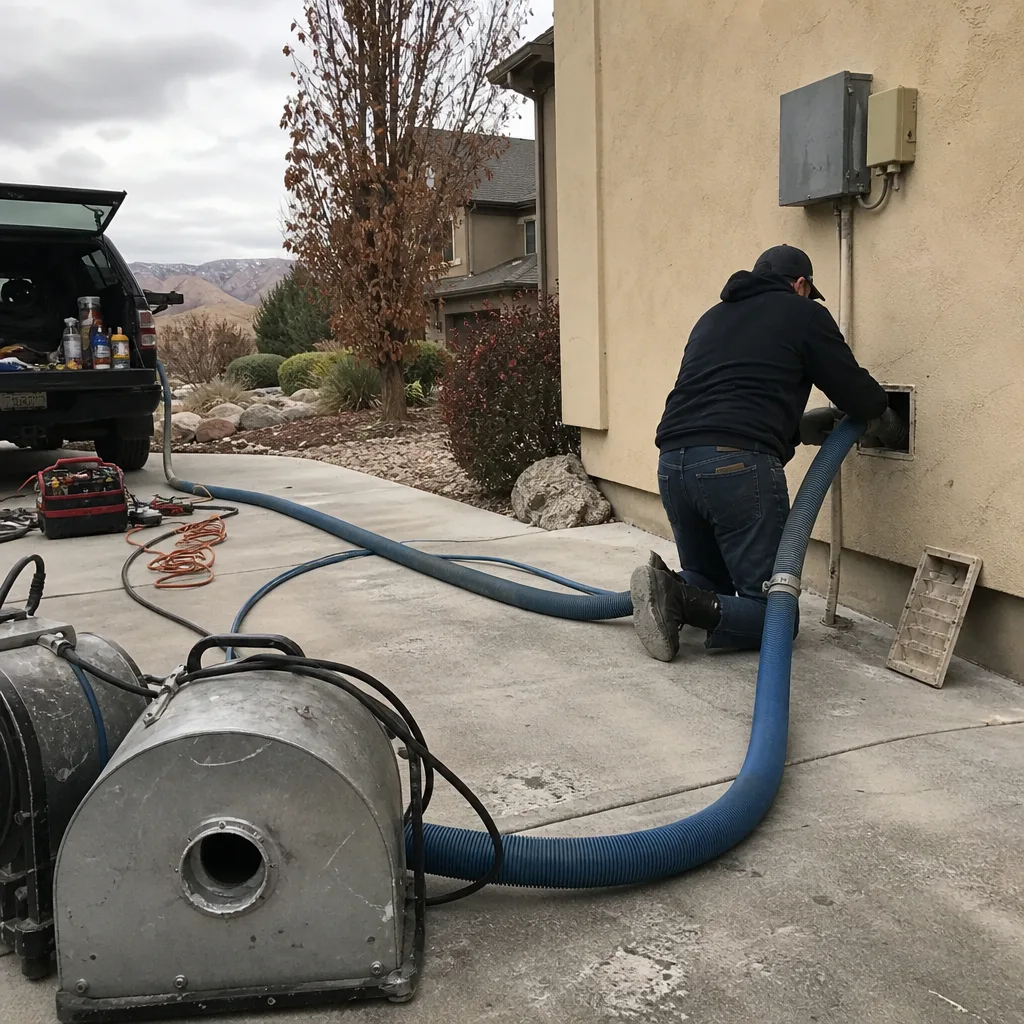
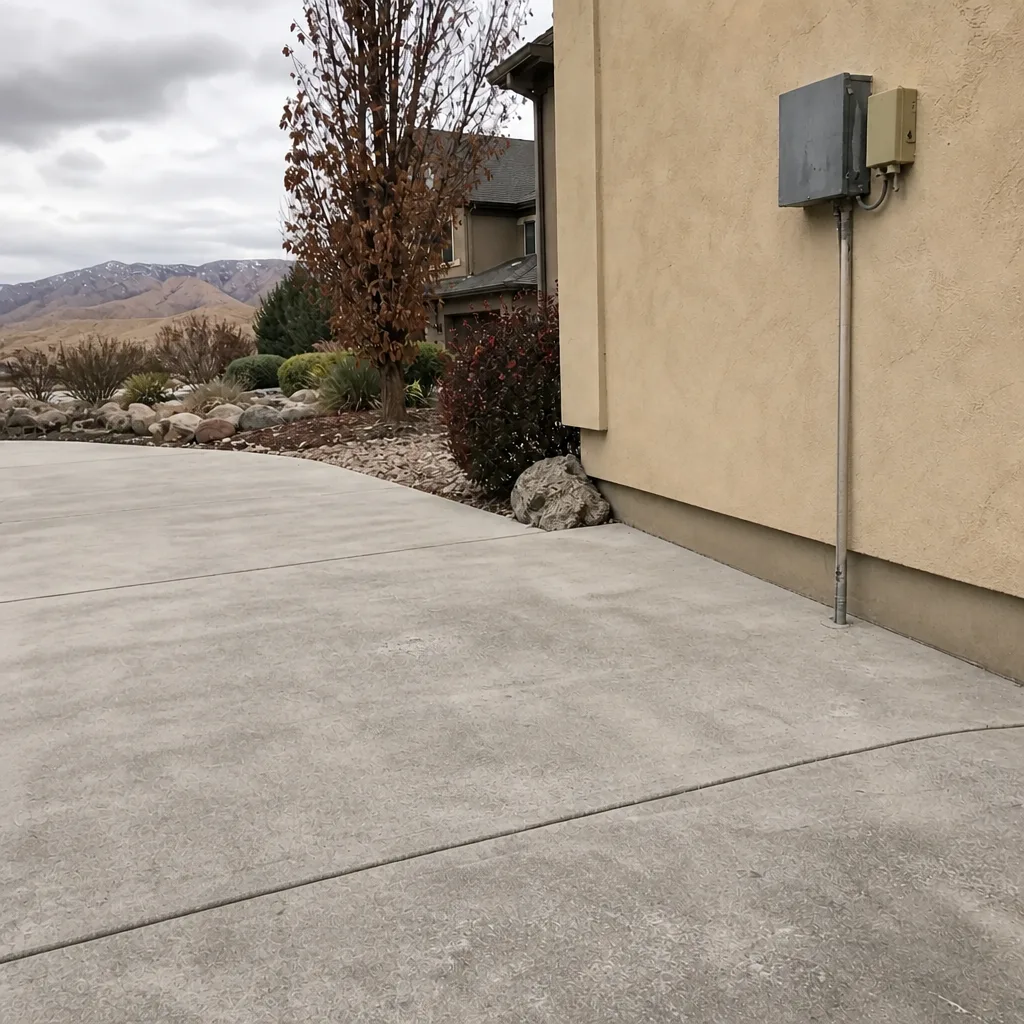
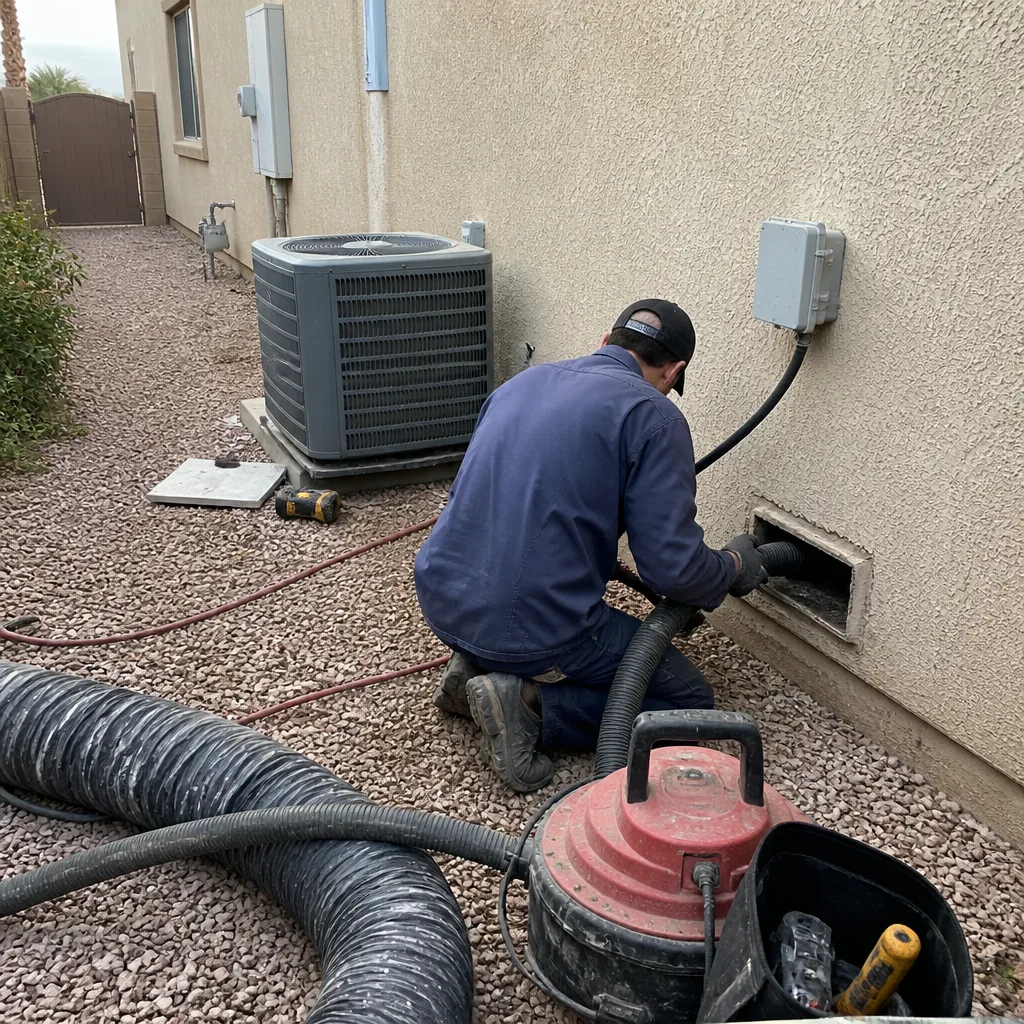
Whole-system duct and dryer vent check with before-and-after photos - you see exactly what came out of your vents
That "$99 whole-house special" is a bait ad - the real number appears once they are in your hallway, or the "clean" is a shop-vac at the register. We photograph the inside of your ducts before and after instead.
Air Duct Cleaning Troubleshooting in St. George: Common Problems and How to Fix Them
If one room in your house is always hotter than the rest, there’s a good chance the problem lives inside your ductwork, not your thermostat, your AC unit, or your insulation. Most homeowners in St. George assume a weak airflow means a failing compressor or a dirty filter. Often it’s a duct run that’s come apart in the attic, or a blockage that no amount of cleaning will touch. This guide walks through the real problems we troubleshoot in St. George homes: how to tell a dirty duct from a broken one, what a breached duct looks like in our attic heat, and how to map which branch lines are underperforming before you spend a dollar. You’ll learn what cleaning can actually fix, what only a repair can solve, and how to avoid paying twice for the wrong service.
Quick Answer
Most airflow complaints in St. George trace back to the duct system, not the HVAC unit. A dirty duct needs contact cleaning with a rotary brush and HEPA vacuum; a collapsed, disconnected, or breached duct segment needs structural repair, and cleaning alone won’t restore airflow. The way to tell them apart is to test register airflow with a tissue paper and check the attic runs for separation or crushing. Do that diagnosis first, before you book anyone, and you’ll avoid paying for a service that can’t fix your actual problem.
Styles & brands we work with
- Whole-home duct cleaning
- Dryer vent cleaning
- Camera inspection
- Sanitizing & deodorizing
Table of Contents
- Dirty Ducts vs. Broken Ducts: How to Tell the Difference
- Why Attic Duct Breaches Hit St. George Homes So Hard
- Dirty Duct or Dirty Evaporator Coil? How the Smell Gives It Away
- The Tissue Paper Test: Mapping Your Underperforming Branch Lines
- How St. George’s Red Desert Dust Creates Compaction Blockages
- When Repair Replaces Cleaning (And Why Cleaning First Can Waste Money)
- The Dryer Vent Problem Most Homeowners Miss
- Preventing Repeat Problems in a Desert Climate
Dirty Ducts vs. Broken Ducts: How to Tell the Difference
The most expensive mistake in this trade is booking a cleaning for a duct system that’s actually broken. Cleaning clears what’s inside a connected, functioning duct. It does nothing for a duct that’s come apart at a joint, crushed under attic insulation, or sagging on a loose hanger. The vacuum runs, the technician collects dust, and the room still gets no air. Cleaning a broken system is money spent on the wrong problem.
Here’s how the two present, side by side:
- Dirty duct symptoms: dust streaks around supply registers, visible dust puffing when the air kicks on, musty or stale smell, and airflow that’s slightly weak but consistent across the same rooms every day.
- Broken duct symptoms: one or two rooms that are dramatically off from the rest, air blowing warm in the room when the system is cooling, a room that never reaches setpoint no matter how long the system runs, or a sudden change in one room’s comfort after attic work or a remodel.
- The tell for a breach: airflow that’s completely dead at one register while the duct run above it in the attic is visibly disconnected, crushed, or pulled off its boot.
In our experience across St. George, the single most common broken-duct call is a flex run that’s slipped off its collar in the attic. Attic heat is ferocious here, and duct tape and mastic that held in a milder climate can dry out and let go. That’s a repair, not a cleaning. If you want the full picture of what a professional cleaning actually covers, our air duct cleaning page walks through the whole-system method we use.
Why Attic Duct Breaches Hit St. George Homes So Hard
St. George attics get brutally hot in summer. A duct run that loses its seal doesn’t just leak cool air into the attic. In August it does something worse: it pulls superheated attic air into the duct and dumps it into the room. That’s why a breached duct in this climate shows up as a room that runs warmer than the rest even when the AC is going full blast. It reads like an insulation problem or a failing unit, when the real culprit is a gap in the run.
What a breach looks like in a St. George attic:
- A flexible run pulled off the metal collar at the plenum or the ceiling boot, held on now only by a shred of old tape.
- A run crushed under a heavy layer of blown insulation or pinched where a truss crosses it.
- A sagging run that collects heat and creates a low spot, so the cooled air can’t push uphill to the register.
- Torn outer jacket on insulated flex, exposing the liner and dumping conditioned air into the attic before it reaches the room.
Distinguishing a breach from a dirty duct starts with location. Breaches are almost always in the attic, at the joints and the boots. Dirt is everywhere, throughout the whole connected system. If the airflow problem is in one basement or hallway register and the run above it is intact, that points toward blockage or dirt. If the run is separated, crushed, or off its collar, no cleaning will help until it’s reconnected and sealed. Our Ironwood Air Duct Cleaning team treats repair as a core service for exactly this reason: the fix is structural, and it belongs in the same visit as the cleaning.
Dirty Duct or Dirty Evaporator Coil? How the Smell Gives It Away
Smell is the most misread symptom in duct troubleshooting. Homeowners call about a smell, assume the ducts are full of dust, book a cleaning, and the smell comes right back. Usually the smell wasn’t coming from the ducts at all. Two different parts of your system produce two different smells, and knowing which is which saves you a repeat service call.
What a dirty duct smells like
Dust in the ducts smells dry, dusty, and slightly stale, like an old cardboard box or a forgotten closet. It tends to be strongest when the system first kicks on, then fades as the air moves. If dust is the issue, contact cleaning with a rotary brush and a HEPA vacuum captures and removes the debris. Professional tools like Rotobrush contact-cleaning systems are built to scrub the duct walls and pull the loosened material into a sealed vacuum, so it doesn’t recirculate into the room and back onto your furniture.
What a dirty evaporator coil smells like
A dirty evaporator coil smells damp, musty, and sometimes sour, like wet laundry left in the washer. The coil sits wet during the cooling cycle, and airborne dust that sticks to it grows a biofilm. That smell is persistent, doesn’t rise and fall with the blower, and comes back fast after any duct cleaning that doesn’t address the coil itself. It’s an HVAC service issue, not a duct cleaning one. Confusing the two sends you in circles: you pay for the ducts, the smell returns, and eventually someone pulls the coil cover and finds the real source.
A quick way to tell them apart
- Turn the system off for an hour so the house air settles. Note whether a smell lingers in the duct openings.
- Turn the fan on without cooling. If the smell kicks up hard as air starts moving, the ducts are the likely source.
- Look near the air handler. A sour, damp smell strongest there, not at the registers, points toward the evaporator coil.
- If dust and a dry smell dominate everywhere, start with duct cleaning. If it’s damp and sour, get the coil checked.
If you run filtration or IAQ gear, whether that’s Aprilaire or a Honeywell setup, a clean duct system and a clean coil together are what keep those products doing their job. A media filter can’t fix a smell that’s growing on the coil downstream of it.
The Tissue Paper Test: Mapping Your Underperforming Branch Lines
Before you call anyone, you can map the problem yourself with a single square of tissue paper. This is one of the few diagnostic steps a homeowner can do safely, and it tells a professional a lot about where the airflow is failing. The goal is a room-by-room picture of which branch lines are strong, weak, or dead.
- Turn the system fan to ON so it runs continuously while you test.
- Hold a single square of tissue paper flat against each supply register, one at a time. Note whether it holds, flutters, or falls straight down.
- Record the result on a sketch of your floor plan. Strong hold, weak flutter, and dead are your three categories.
- Test the return grilles the same way. A strong return and a weak supply on the same branch points toward a blockage or a crushed run.
- Repeat at the room that feels hottest and the room that feels coolest, so you have a side-by-side comparison.
What the results mean in practice: if every register holds firmly and only one room feels warm, the problem may be layout or insulation, not the ducts. If one register is completely dead and the others are strong, that branch is blocked or disconnected. If every register flutters weakly, the whole system is choked, whether by dirt, a clogged main trunk, or an air handler issue. A dead register at the end of a run is the strongest signal of a separation, while weak airflow everywhere points to a system-wide restriction. The tissue test gives you the map before anyone touches your system.
Bring that sketch to the call. A crew that knows which branch is dead before it arrives can check the right attic run first instead of hunting for hours. And if the branch supplies a room off your St. George kitchen remodel, that room’s run is the first suspect.
How St. George’s Red Desert Dust Creates Compaction Blockages
Dust is not the same in every climate, and it doesn’t clog ducts the same way. In wetter parts of the country, the main debris in ducts is fibrous: pet hair, lint, insulation fibers, and dust that binds together loosely. In St. George, the red desert dust that blows in from the surrounding open basins is fine, mineral, and abrasive. It behaves differently. It packs.
Three things make desert dust a different animal:
- It compacts. Fine mineral dust settles dense and hardens into a crust on duct walls and at the drop-offs in sagging runs, rather than staying loose and fluffy.
- It collects at the low points. Where a run sags, the dust settles and builds a crust that narrows the pipe like a clogged artery. That’s a compaction blockage, and it’s the reason a weak branch in a St. George home can be identical in feel to a broken run.
- It’s abrasive. Over time, the grit wears at seals and fosters small breaches, which then let more dust in. That cycle is why St. George homes often need both a repair and a cleaning in the same visit.
Because desert dust packs, a blow-and-go operator who simply blasts air through the system often fails against it. The crust needs contact cleaning, meaning a rotary brush brought down the run to break the buildup loose, paired with a HEPA vacuum to capture it as it’s freed. That’s the method behind Rotobrush contact systems and Nikro HEPA vacuum equipment, which pull the dislodged material into a sealed unit rather than blowing dust into the living space. Compacted mineral dust is also a good reason to check a run for a physical restriction before assuming the whole system just needs a cleaning. Dirt in St. George has a different signature than dirt in a humid climate, and matching the method to the dust is half the job.
When Repair Replaces Cleaning (And Why Cleaning First Can Waste Money)
Cleaning and repair solve different problems, and the order matters. Cleaning removes what’s inside a functioning duct; repair restores a duct that’s lost its integrity. If a run is disconnected or crushed, cleaning it first means paying for a service on a system that air can’t travel through. Once you know what’s actually wrong, the sequence becomes obvious.
Repair is the answer when you see:
- A run pulled off its collar or ceiling boot, or hanging loose.
- Torn or missing insulation jacket on an attic run, letting heat in.
- A crushed flex section where something’s been set on top of it or a truss pins it down.
- Sagging runs that drop below the register, collecting dust and losing pressure.
- A structural separation between the trunk and branch lines that leaves a room dead.
Cleaning is the answer when the runs are intact but loaded with dust, the registers show it, and airflow is weak in the same proportion everywhere. In a lot of St. George homes, you get both at once: an underside-of-the-attic breach plus compacted dust behind it. That’s the case for a full-system approach, where one company can reconnect, seal, and clean in the same visit rather than handing you from a cleaning crew to an HVAC contractor and back again. If you’re not sure which you’re looking at, the tissue test from the section above tells you whether airflow is failing at one branch or across the whole system.
The Dryer Vent Problem Most Homeowners Miss
Duct problems aren’t only in the supply and return runs. The dryer vent is a duct, and it’s the one with the sharpest safety stake. Lint builds up in the vent and turns a clothes dryer into a heat trap, and a clogged vent is a documented household fire hazard. Most homeowners never think about it until the dryer stops drying in one cycle, the top of the machine runs hot to the touch, or the outside flap stays closed while the dryer runs.
Signs your dryer vent needs attention:
- Clothes take two cycles to dry when they used to take one.
- The dryer body or the wall behind it feels unusually hot.
- The exterior vent flapper doesn’t open fully when the dryer runs.
- Lint is visible around the outside vent or packed behind the dryer.
In St. George, the dry air means lint gets brittle fast and packs harder, so a vent that seemed fine a couple of seasons ago can clog more quickly than you’d expect. We treat dryer vent cleaning as part of a full-system service because it’s the same principle as duct work: clean the run, protect the home, and clear the hazard in the same visit. If a home has never had its dryer vent cleaned, that’s one of the first maintenance items worth booking.
Preventing Repeat Problems in a Desert Climate
Duct problems in St. George tend to come back if the root cause isn’t addressed. A cleaning without a repair leaves the breach that pulls desert dust in. A repair without a cleaning leaves the compaction behind it. The way to stop the cycle is to look at the whole system and the environment it lives in, then schedule the fixes in the right order.
A workable prevention routine for a St. George home:
- Change your filter regularly. A dirty filter strains the blower and lowers pressure, which makes weak rooms weaker. Check it monthly during cooling season and swap it when it’s loaded.
- Walk the attic after any major work, roof replacement, or HVAC service. Flex runs come loose during remodels and roof jobs more often than people realize.
- Keep the system sealed. Reconnect and reseal any run that’s pulled off its collar; a bead of mastic and a proper tie go a long way against desert grit.
- Watch the tissue test a couple of times a year. A register that was strong last season and is dead now is a broken run, not a dirty duct.
- Clean the dryer vent on a schedule, and inspect the exterior flap when clothes start taking longer to dry.
- Address the evaporator coil separately from the ducts so a smell doesn’t get misdiagnosed and chased for a season.
If you’re thinking about filtration upgrades to help with dust, knowing the difference between your options matters. Media filters from lines like Aprilaire or a Honeywell setup can help, and our crew can talk through how filtration interacts with cleaning, though neither one replaces a structural repair when a run has failed. The point of prevention is to catch the small failures before they turn into the expensive ones. For a St. George home in an open, dusty basin, a yearly look at the system is a lot cheaper than a midsummer emergency. Our team works across St. George and knows this climate’s dust and attic heat well, which means we check the right things first.
Common Mistakes to Avoid
- Booking a cleaning to fix a broken duct. If one room is dead and the others are strong, you have a separation, not a dirt problem. Cleaning won’t restore airflow to a run that isn’t connected, so the money goes to the wrong service.
- Assuming a weak AC means a failing unit. In St. George’s attic heat, a breached run dumps superheated air into the room and reads like a bad compressor. Check the ducts before you call for a refrigerant charge.
- Confusing a coil smell with a duct smell. A damp, musty smell that returns right after cleaning usually means the evaporator coil is the source. Chasing it with repeated duct cleanings is a loop that never ends.
- Skipping the tissue test. Testing register airflow before you call anyone takes ten minutes and gives the technician a map. Without it, you’re guessing at which branch is failing.
- Trusting a blow-and-go cleaning against desert dust. Compacted mineral dust needs contact cleaning with a rotary brush and HEPA vacuum. Air washing alone often leaves the crust behind, and it comes back fast here.
- Forgetting the dryer vent. Homeowners maintain the HVAC ducts and ignore the one duct in the house with a fire-safety stake. Lint buildup is worth checking on its own schedule.
- Skipping the attic walk after a roof job or remodel. Work overhead is the most common reason a run comes loose. A quick look at the attic runs after major work catches a breach before the next hot month.
See the difference
 Before
 After
 Before
 After
 Before
 After
When to Call a Professional
Some duct problems are predictable enough to handle the maintenance side yourself: filters, the tissue test, and a quick attic look after a remodel. The rest are worth calling for. If one room runs dramatically hotter than the others and the tissue test shows a dead register, that’s a likely separation that needs professional repair. If every register flutters weakly, you may have compaction blockages that contact cleaning equipment is built to clear. If you smell damp mustiness that returns after cleaning, the coil needs checking. And if your dryer takes two cycles to dry, the vent needs professional cleaning. Chasing these with guesswork costs more than a diagnosis. Ironwood Air Duct Cleaning offers free estimates in St. George. Call (855) 419-9402. We answer 24/7. Fast dispatch from 7am to 7pm, Sunday through Friday.
Frequently Asked Questions
A dead register while the others are strong points to a broken duct; weak airflow in proportion everywhere points to dirt. The tissue paper test on each register sorts this out in about ten minutes. If one branch fails completely and the run above it in the attic is separated or crushed, it’s a repair, not a cleaning. When you’re unsure, call (855) 419-9402 for a free estimate; we’ll diagnose before recommending any service.
A room that runs consistently hotter than the others usually has a failing branch of ductwork feeding it, most commonly a run that’s slipped off its collar or come apart in the attic. In St. George’s summer attic heat, that gap pulls superheated air into the room even when the AC is cooling. The fix is a repair to the run, not a new thermostat or a bigger unit. Call (855) 419-9402 and we’ll walk the attic runs to find the breach.
A musty, sour smell that returns after cleaning almost always comes from a dirty evaporator coil, not the ducts themselves. The coil stays wet during cooling, and dust that sticks to it grows a biofilm. Duct cleaning can’t fix a smell growing on the coil. Get the coil checked before booking another cleaning. If you’re not sure, call (855) 419-9402 and we’ll help you sort it out.
Yes. Desert mineral dust packs into crusts and settles in the low points of sagging runs, so it needs contact cleaning with a rotary brush and a HEPA vacuum, not a blow-and-go air wash. The brush breaks the compacted crust loose, and the vacuum captures it before it recirculates. That’s the method behind our Rotobrush and Nikro equipment. Call (855) 419-9402 for a free estimate on a cleaning built for this climate.
There’s no single number that fits every home; it depends on your dust load, pets, recent remodels, and how well the system is sealed. In St. George’s dusty environment, an annual check is a reasonable rhythm for most homes, with cleaning scheduled when the system shows it needs it. Watch your registers and the tissue test as your guide. Call (855) 419-9402 and we’ll assess what your system actually needs.
Attic duct work involves crawling through a hot, cramped space with sharp edges, and a loose run can usually only be reconnected and sealed properly with the right materials and technique. A wrong connection just comes apart again. That said, a separated supply run is one of the most common and most fixable problems in St. George homes, and a professional repair in the same visit as the cleaning saves you a second trip. Call (855) 419-9402 to get it sorted.
The Bottom Line
Most of the air problems homeowners in St. George blame on their HVAC unit are really duct-system failures: separated runs, compaction blockages from desert dust, and breaches in the attic that pull heat into the house. The tissue paper test tells you whether the failure is local or system-wide; the attic walk confirms a breach; and the smell tells you whether the coil is the real source. Do the diagnosis first, match the fix to the problem, and you’ll avoid paying twice for the wrong service. Cleaning, repair, and protection belong in the same visit from a team that knows this climate’s dust and attic heat. Contact Ironwood Air Duct Cleaning for a free estimate on your St. George home. Call (855) 419-9402. We answer 24/7. Fast dispatch from 7am to 7pm, Sunday through Friday.
Written by the team at Ironwood Air Duct Cleaning.