
Last updated November 15, 2026
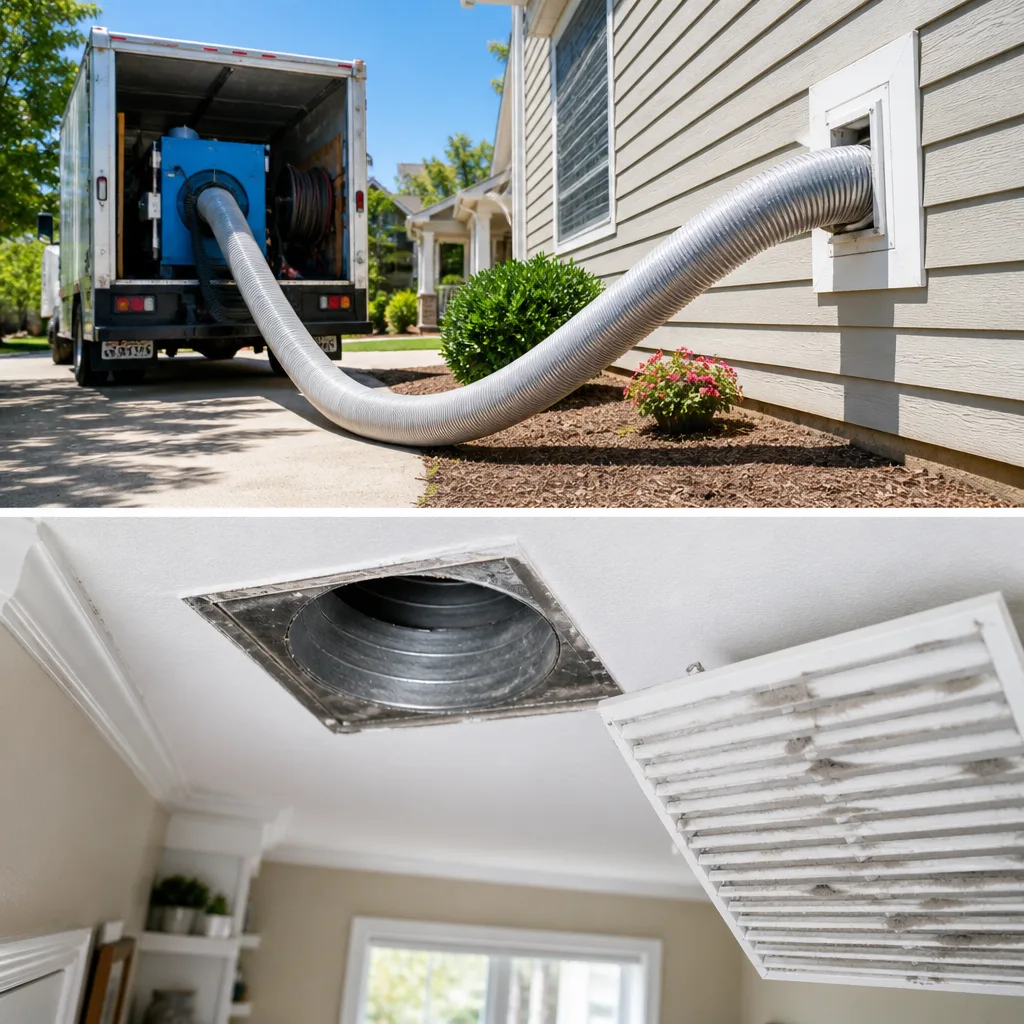 Whole-home duct cleaning
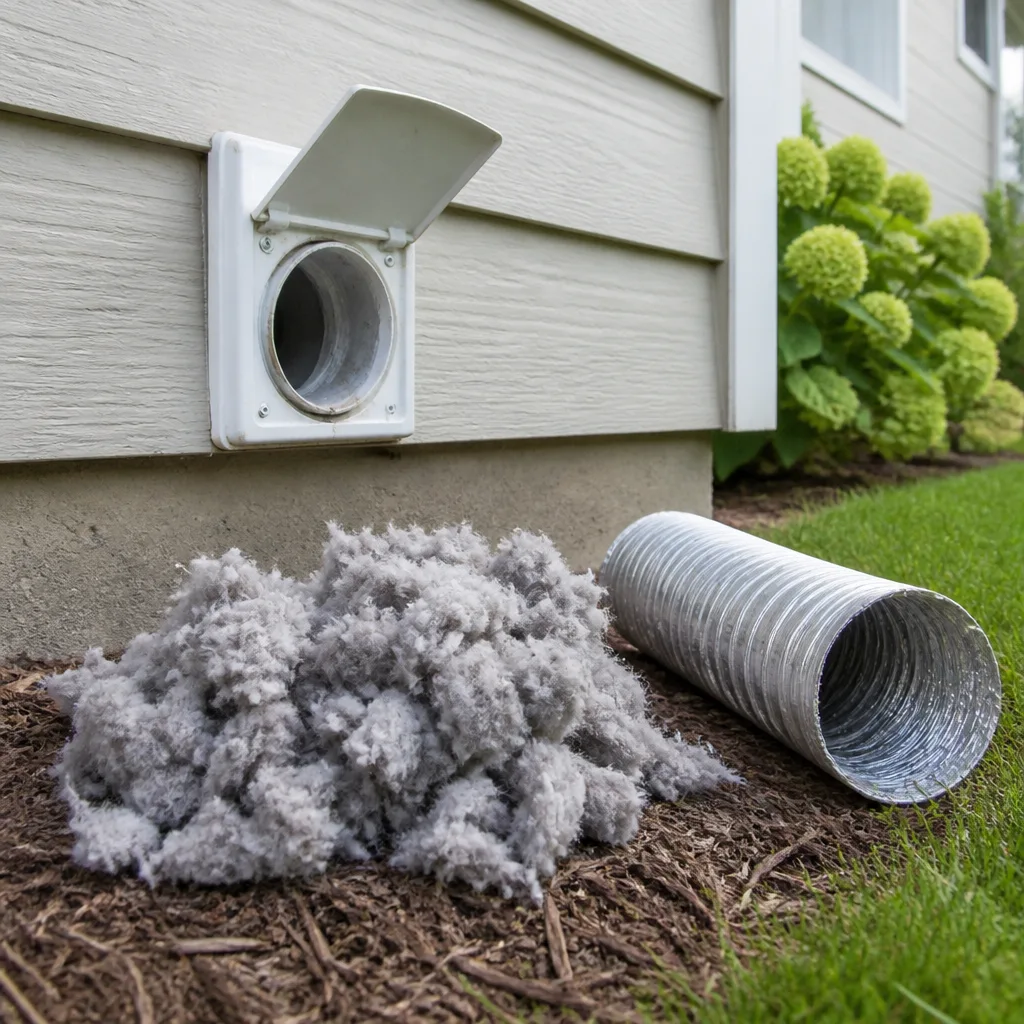 Dryer vent cleaning
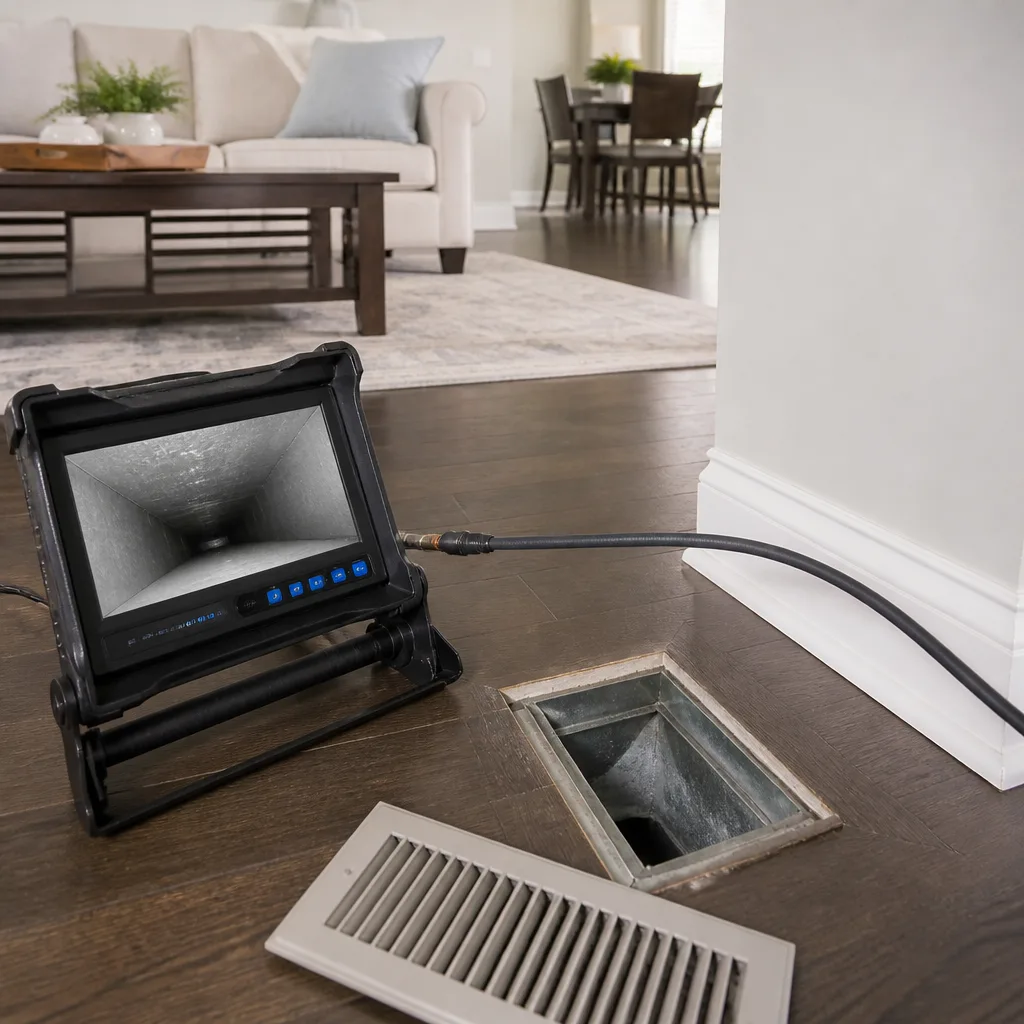 Camera inspection
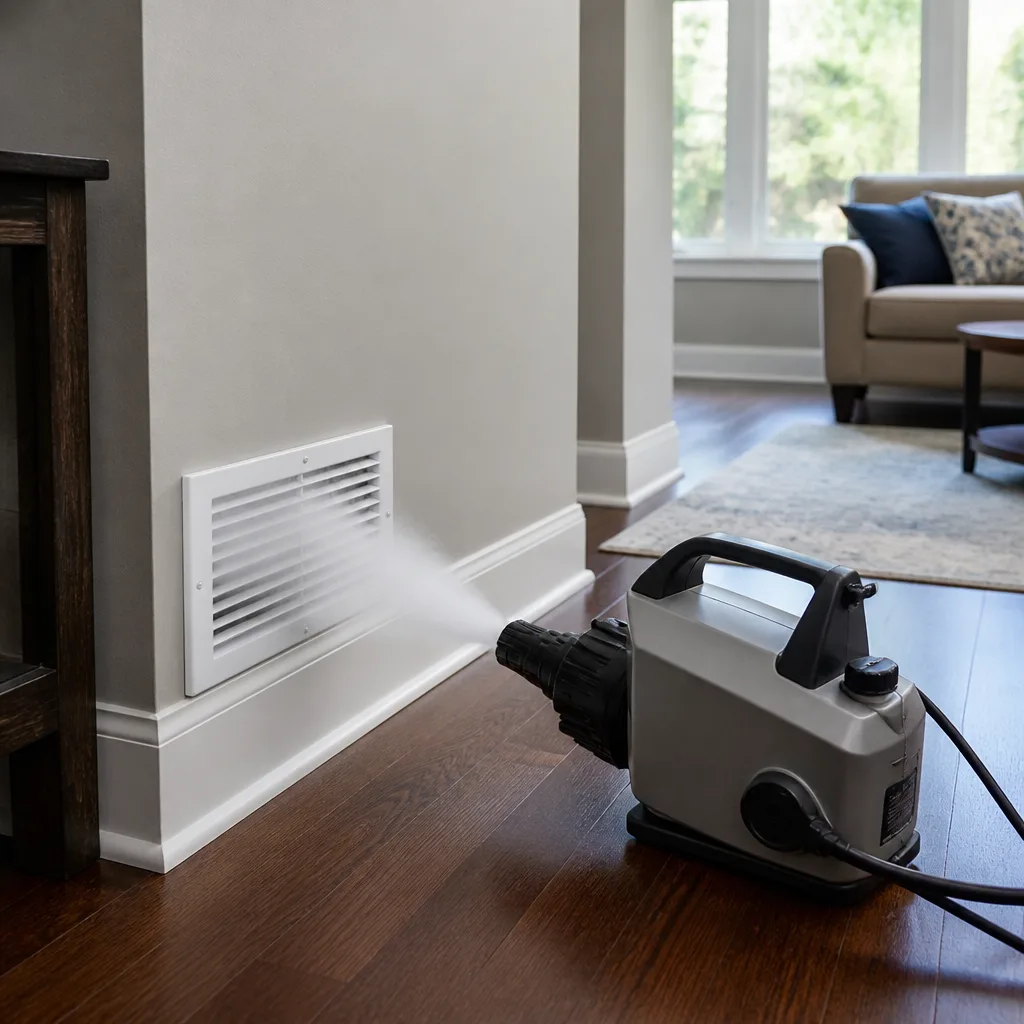 Sanitizing & deodorizing
Whole-system duct and dryer vent check with before-and-after photos - you see exactly what came out of your vents
That "$99 whole-house special" is a bait ad - the real number appears once they are in your hallway, or the "clean" is a shop-vac at the register. We photograph the inside of your ducts before and after instead.
Air Duct Cleaning Maintenance Checklist for St. George Homeowners
Most duct maintenance checklists are written for a house that runs its furnace and air conditioner a few months a year. That’s not your house. A St. George home running its AC from April through October logs roughly 2,100+ hours of HVAC runtime annually, close to double the national average, and ductwork that sees that much air moving through it ages on a different schedule than a checklist written for a Denver or Portland homeowner assumes. Calendar-based maintenance advice quietly fails here. This guide gives you a maintenance checklist calibrated to Southern Utah conditions: runtime-based triggers instead of arbitrary dates, the specific failure points we look for in St. George duct systems, a pass/fail visual inspection you can do yourself, and a clear line between “watch this” and “call now.”
Quick Answer
In St. George, ductwork should be accessed and inspected at runtime milestones, not just calendar milestones: filter changes every 1-3 months depending on dust events and nearby construction, a mechanical inspection of accessible duct runs and the air handler roughly every 12 months or at 2,000 hours of runtime, and a full contact cleaning when inspection turns up visible buildup or debris. Homes running AC seven-plus months a year hit those runtime thresholds faster than owners expect. When in doubt, inspect on early-summer and late-fall timing to match the cooling and heating seasons.
Styles & brands we work with
- Whole-home duct cleaning
- Dryer vent cleaning
- Camera inspection
- Sanitizing & deodorizing
Table of Contents
- Why Runtime, Not the Calendar, Should Set Your Duct Schedule
- Five St. George Conditions That Drive Duct Wear
- Filter Replacement: A St. George Interval Guide
- What You Can Check Yourself: A Pass/Fail Visual Inspection
- The Annual Maintenance Checklist, Step by Step
- “Monitor This” vs. “Call a Professional Now”
- What a Professional Contact Cleaning Actually Involves
- The Dryer Vent Item Most Checklists Leave Out
Why Runtime, Not the Calendar, Should Set Your Duct Schedule
Duct contamination is driven by the volume of air passing through the system, and that volume is a function of fan hours. A home in a mild climate that runs its HVAC 1,000 hours a year and a St. George home that runs it 2,100+ hours a year are not on the same maintenance clock even if they were built the same year. Measuring runtime instead of counting months on a wall calendar is the single most useful adjustment a Southern Utah homeowner can make.
Here’s what that means in practice. If your system runs seasonally for about seven months of cooling plus several months of heating, you cross the 2,000-hour mark in roughly one year of normal use. That’s the point at which we recommend accessing the air handler and inspecting the accessible duct runs, filter condition, and coil face, because dust loading, moisture from the cooling coil, and airflow restrictions all accumulate on that schedule rather than per calendar year.
- Under 1,000 runtime hours: basic filter changes and visual checks at the registers are usually enough.
- 1,000-2,000 runtime hours: add a return-grille check and inspect flex duct for sagging or separation.
- 2,000+ runtime hours: schedule the full inspection of the air handler, plenum, and accessible duct runs; clean if inspection warrants it.
This is why blanket advice like “clean your ducts every three to five years” is too loose for St. George. Some homes here are on a much shorter cycle because of how hard the system works and what’s in the local air. Runtime tells the truth the calendar can’t.
Five St. George Conditions That Drive Duct Wear
St. George’s climate and housing stock create failure points you won’t find on a checklist written for a wetter or milder region. These are the five we keep on our radar when we’re evaluating a Southern Utah system.
1. Seasonal temperature swings and thermal expansion at registers
St. George runs hot summers and cold winters, and the temperature difference between the two is large enough that the metal boot and register components expand and contract significantly over a year. That movement loosens seals at the register edges. Once a register seal fails, unfiltered attic or wall-cavity air bleeds into the supply stream. Check the seal at each register by touch; a rubbery, crumbling, or detached seal is a fail.
2. UV degradation of duct board and flex duct jacket
Duct board and the outer jacket of flex duct are plastic and foil products, and both break down under sustained UV exposure. Any duct run that sees sunlight through an attic vent, a garage, or an unshaded exterior wall run is at risk of the jacket becoming brittle and cracking, which opens the door to dust infiltration and pressure loss. When you inspect, look for chalky surfaces, cracking, and peeling on flex duct near sun-facing attic sections.
3. Flex duct sag and separation
Long, hot attic runs in St. George attics soften flex duct and let it sag between supports. A sag creates a trap where dust settles and airflow drops. More importantly, connections between flex sections and rigid boot or plenum can pull apart as the duct sags, dumping conditioned air into the attic instead of your rooms. Look for visibly low, drooping runs and disconnected joints at boots and plenum.
4. Dust-storm events and construction activity in fast-growing Washington County
Washington County is one of the fastest-growing areas in Utah, and construction dust plus periodic regional dust events load the return side of the system quickly. Filters that would last three months in a stable neighborhood can load in six weeks next to an active build site. That’s the reason our filter intervals below are conditional, not fixed.
5. Cooling coil moisture and the long AC season
A seven-month cooling season keeps the evaporator coil wet for much of the year. A damp coil catches dust and can develop biological growth on its face and in the drain pan area. This is a main reason we advocate a full system approach to cleaning rather than just running a blower through the registers: the coil has to be part of the inspection.
Filter Replacement: A St. George Interval Guide
No single interval works for every St. George home, but these ranges reflect how local conditions load a filter. Use them as starting points, then shorten the interval if your filter is visibly loaded before the calendar rolls over.
- Standard 1-inch pleated filter, no construction nearby: change every 60-90 days during cooling season.
- 1-inch pleated filter, active construction or dirt road within a few blocks: change every 30-45 days during cooling season, and after any major regional dust event.
- High-MERV pleated filter (4-inch thick media): every 4-6 months is typical, but check the face at the two-month mark; a loaded thick filter restricts airflow even when the calendar says it’s fine.
- Return grille filter in a rental or multi-unit property: inspect monthly; these are frequently neglected and load fast.
One rule of thumb worth stating plainly: a filter’s job is to protect the equipment and the coil, not just to catch dust for the room. An over-restrictive filter that loads quickly can push down static pressure and strain the blower motor, which is a bigger problem than a slightly dusty supply register. Match the filter’s MERV rating to what your system was designed for; if you’re not sure, ask a professional rather than guessing.
We’ve also seen homeowners in St. George stick with a filter “because it looks clean” when what’s actually happening is that dust is bypassing the filter frame entirely due to a bad gasket or a misaligned filter. If the filter looks clean but the coil is dirty, the filter isn’t doing its job. A quick check of the filter seating at each replacement catches this.
What You Can Check Yourself: A Pass/Fail Visual Inspection
You don’t need tools to catch the most common problems. A flashlight and 15 minutes at your registers, returns, and air handler will surface the issues that matter most. Use the pass/fail criteria below, and treat any fail as a prompt to inspect further or call a professional.
At the supply registers
- Register seal: Run your finger around the gap between the register and the wall or ceiling. Pass if the seal is intact and flexible. Fail if it’s crumbling, detached, or you can feel air leaking around the frame.
- Visible dust at the grille face: Pass if you see light, uniform dust that wipes off easily. Fail if there’s a heavy, dark buildup inside the register boot, visible streaks on the ceiling around the register, or a musty smell when the AC runs.
- Airflow: Hold your hand a few inches from the register with the fan on. Pass if the stream feels strong and consistent across all registers. Fail if one register is noticeably weaker than the others, which points to a duct problem downstream.
At the return grilles
- Filter condition: Pass if the filter face is less than half-loaded. Fail if it’s clogged or you can see through a thin filter at a bright light.
- Return duct surface: Pass if the visible interior of the return boot is free of debris and buildup. Fail if there’s debris accumulation on the sides of the return drop or the plenum.
At the air handler and plenum
- Filter seating: Pass if the filter is fully seated in the frame with no gaps. Fail if you can see daylight around the edges.
- Accessible duct connections: Pass if flex duct connections to the plenum and boots are tight and taped or sealed. Fail if you see separation, torn jacket, or a disconnected run.
- Coil face (if visible): Pass if the coil face looks metallic and shows only light dust. Fail if it’s matted, dark, or has visible biological growth. Do not attempt to clean a coil yourself; that’s a professional job.
On the air handler itself, never open an electrical panel or attempt to work on wiring. If you see a panel cover that’s loose, wires that look damaged, or any signs of scorching, stop and call a licensed professional. Electrical work in the air handler is not a homeowner task, and the risk of serious injury is real.
The Annual Maintenance Checklist, Step by Step
Run this checklist once a year at minimum, timed to the start of cooling season in spring and repeated in a lightweight version at the start of heating season. Each step has a clear outcome: pass, monitor, or fail-to-professional.
- Check and replace filters. Note the date and filter type on the frame with a marker. If the filter is past 30 days old during cooling season and shows dust loading, replace it now.
- Walk every supply register. Check seal condition, grille face, and airflow strength. Record any weak register in a note on your phone so you can see if it gets worse next season.
- Inspect return grilles and the return duct surface. Note filter condition and any debris buildup in the return boot.
- Look at accessible flex duct in the attic or garage. Check for sagging runs, torn jacket, UV chalkiness, and disconnected connections at boots and plenum. Take photos before moving anything so you have a baseline.
- Check the air handler filter seating and the coil face if visible. Leave the electrical panel closed.
- Inspect the outdoor condenser. Clear leaves and debris from the side and top, and check that the line-set insulation is intact. If the insulation is cracked, that’s a professional fix.
- Run the heat and the AC briefly. Note any musty smell, unusual noise, or weak airflow when the system changes mode. A musty smell in cooling mode often points to the coil or the return side.
- Check the dryer vent line. Look behind the dryer for lint accumulation, and check the exterior wall vent for a clear flap and no lint buildup. A clogged dryer vent is a documented fire hazard, and it’s a separate checklist item from the HVAC ductwork.
Running the checklist twice a year is a small investment that catches most problems while they’re still cheap to fix. The one item to run monthly, not annually, is the filter check during construction activity nearby.
“Monitor This” vs. “Call a Professional Now”
The value of a checklist depends on knowing what to do with what it finds. Here’s the dividing line we’ve settled on after years of evaluating Southern Utah systems. Use the monitor column as a note-to-self for next season. Treat the call-now column as a reason to book an appointment rather than wait.
Monitor this next season
- One register with lighter airflow than the rest, but no visible dust buildup or smell.
- Flex duct in the attic with a mild sag that hasn’t separated at the connections.
- Light, uniform dust on grille faces that wipes away easily.
- Filters loading faster than the calendar suggests, but not bowing or collapsing.
- Dust tracked in from a nearby construction site, without visible debris in the return.
Call a professional now
- A disconnected or badly separated flex duct run at the plenum or boot. This is a root-cause problem that cleaning alone won’t fix, and it means conditioned air is going somewhere it shouldn’t.
- Any musty or moldy smell when the AC runs. This is a moisture problem that may involve the coil, the drain pan, or the return side.
- Visible biological growth anywhere in the duct system or on the coil face.
- Crumbling or detached register seals across multiple rooms, indicating system-wide thermal expansion issues.
- UV-degraded or torn flex duct jacket that’s exposing insulation, especially in attic runs near sunlight.
- A dryer vent line that feels warm against the wall behind the dryer after a cycle, or lint buildup visible at the exterior termination.
- Any signs of scorching, burn marks, or damaged wiring near the air handler. Stop and call; do not investigate further yourself.
What a Professional Contact Cleaning Actually Involves
A professional duct cleaning done the way we do it at Ironwood Air Duct Cleaning is not a blower pointed at a register. It’s contact cleaning with a rotary brush system and a HEPA vacuum capturing what gets dislodged. That distinction matters in a market where low-bid operators sometimes do little more than agitate dust. When you’re evaluating a company in St. George, ask what equipment they use and how they approach the source.
Here’s what a full-system contact cleaning involves in practice, so you know what to expect and what questions to ask.
- Setup and containment. The crew seals registers and installs vacuum connections so that dislodged debris goes into a HEPA-filtered collection system instead of recirculating into your rooms. This is why HEPA equipment matters: a system that captures 99.97% of fine particles leaves the air cleaner than when you started.
- Source cleaning, not just surface agitation. Rotary brush contact systems like Rotobrush clean the interior walls of the duct run in contact with the surface, then vacuum the loosened material. A blower that agitates without vacuum capture just moves debris from one part of the house to another.
- Air handler and plenum. The coil face, the drain pan area, the blower compartment (from the accessible side), and the plenum get inspected and cleaned as part of a full-system service, because the contamination source is often there rather than in the long duct runs.
- Structural repair. If the inspection turns up disconnected or damaged ductwork, that should be repaired so cleaning does the job it’s supposed to. Cleaning a system with a disconnected run is wasted effort; the debris returns as soon as the system runs again.
- Protection. Guarding the cleaned surfaces with a protective product reduces re-contamination and extends the interval to the next cleaning. We use Guardsman-line protective products in that step, and it’s part of why the next inspection is usually less involved.
- Verification. Before-and-after photos of the ducts themselves, so you can see what was there and what was removed.
If you have filtration or IAQ upgrades in mind, ask about them at the same visit. We work with Honeywell and Aprilaire equipment and can speak to which upgrades make sense for a given system, rather than recommending the same setup for every home.
The Dryer Vent Item Most Checklists Leave Out
The dryer vent line is ductwork too, and it’s the one run that’s documented as a fire hazard. Lint buildup inside the flexible line that connects the dryer to the wall, or inside the rigid run to the exterior, is a fire risk that’s entirely separate from your HVAC duct system, and most general duct maintenance checklists skip it. In St. George, where homes run the AC hard and the dryer just as often, this item deserves its own line.
What to check yourself: look behind the dryer at the flexible connector for visible lint, check the exterior vent flap for a clear open, and watch for the line feeling warm against the wall after a cycle. A dryer that takes noticeably longer to dry a load is another signal. Lint traps that look thin are fine; a lint trap you can visually see loading fast is a sign the whole vent line needs attention.
What shouldn’t be a DIY job: removing and cleaning the rigid vent line that runs inside a wall or through a crawl space. That work involves disconnecting the appliance, accessing the run, and cleaning from the exterior, and it’s where a professional dryer vent cleaning pays for itself in fire safety. This is a separate service from duct cleaning, and it should be on your annual checklist every year regardless of whether the HVAC ducts need attention.
Common Mistakes to Avoid
- Using a national calendar interval instead of local runtime. “Clean every three to five years” is a moderate-climate rule of thumb that doesn’t account for a seven-month cooling season in St. George. Measure runtime or inspect on early-summer and late-fall timing instead.
- Sticking with the same filter through a dust event. Washington County dust events and nearby construction can load a filter in weeks. Check the filter face after a visible dust event, not just on the calendar date.
- Believing a blower-only “cleaning” is a cleaning. A service that agitates ducts without HEPA collection recirculates debris into the home. Ask what equipment a company uses before you book.
- Ignoring a musty smell because “the ducts were cleaned.” A smell in cooling mode usually points to the coil or the return, not the long runs. Cleaning the ducts without addressing the source leaves the problem in place.
- Skipping the dryer vent because it’s not the HVAC. It’s the highest-stakes duct run in the house. Add it to the checklist every year.
- Assuming a weak register is just “how the house is.” A single weak register usually means a duct problem downstream. Catch it at inspection rather than writing it off.
- Trying to clean the coil or open the air handler panel yourself. Coil cleaning and electrical work are professional tasks. The risk of damaging the coil or injuring yourself is not worth it.
See the difference
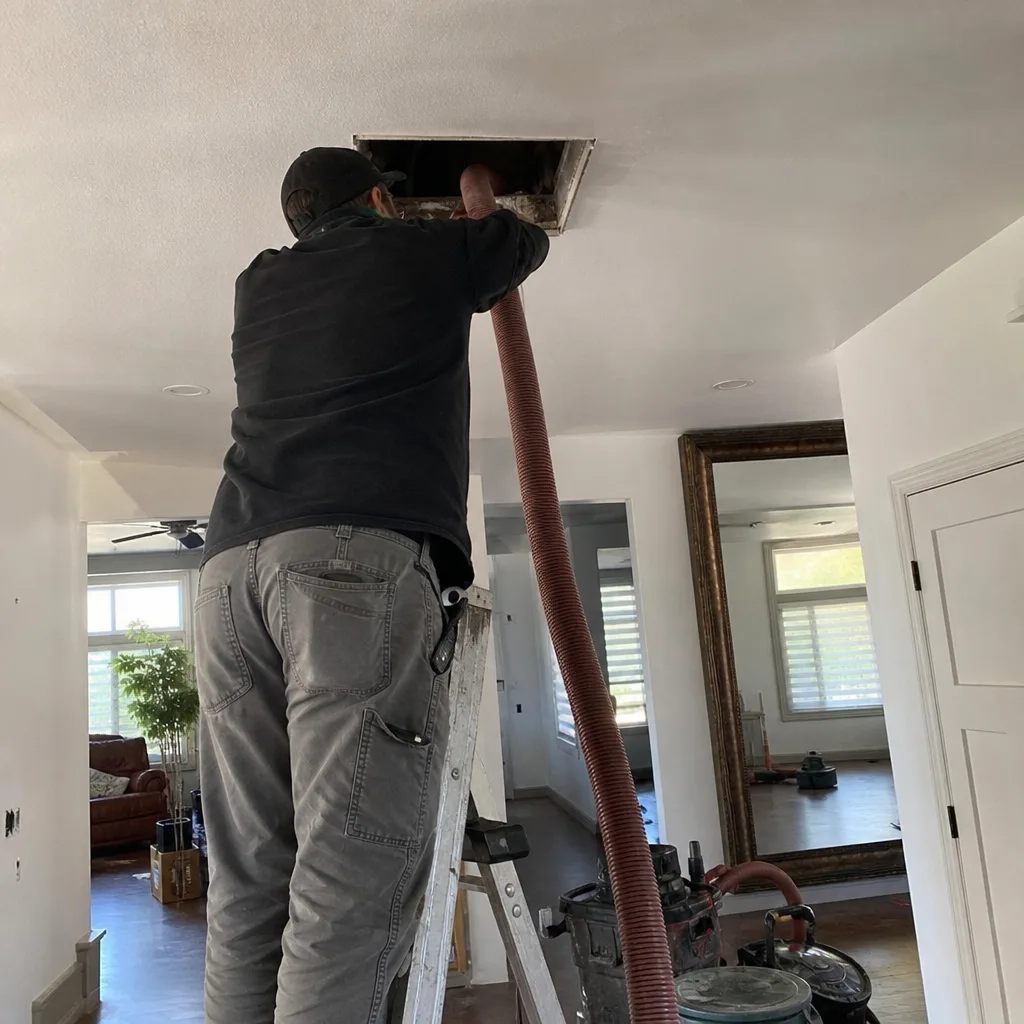 Before
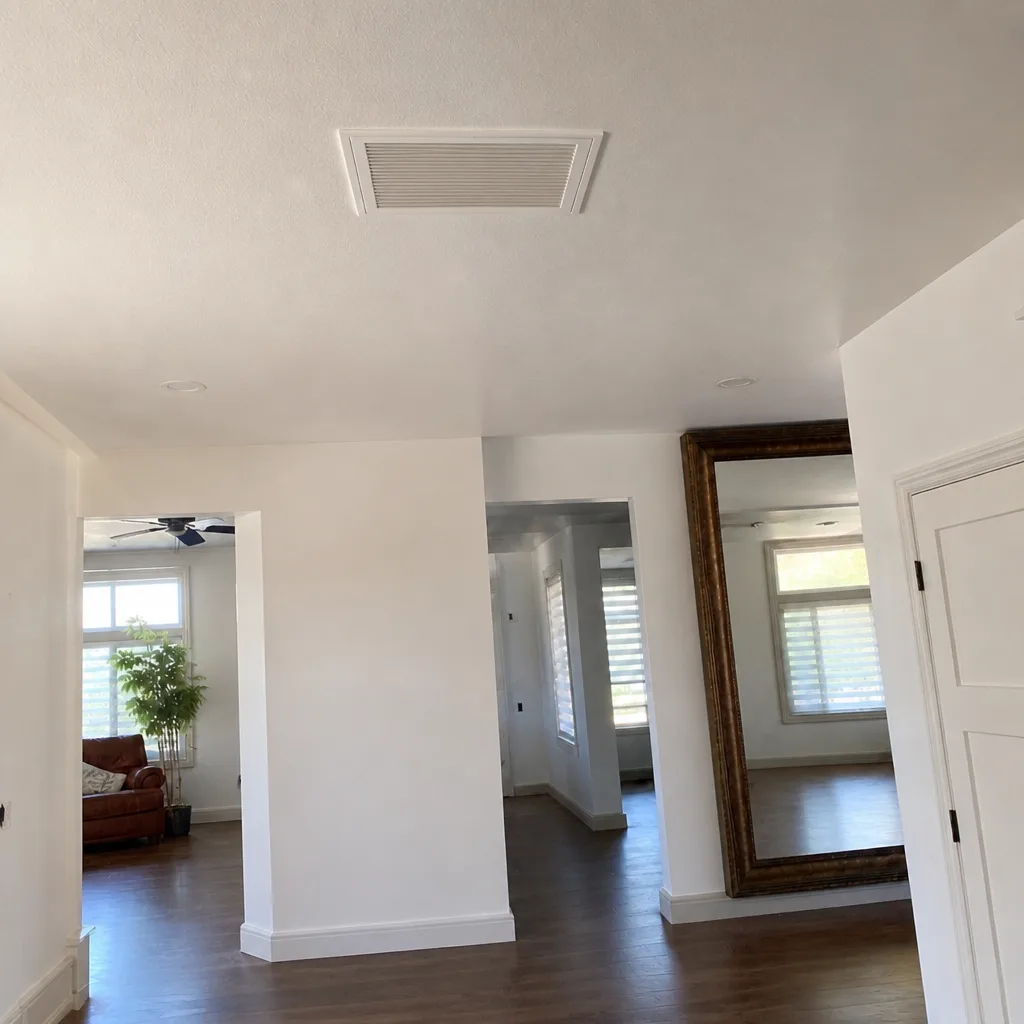 After
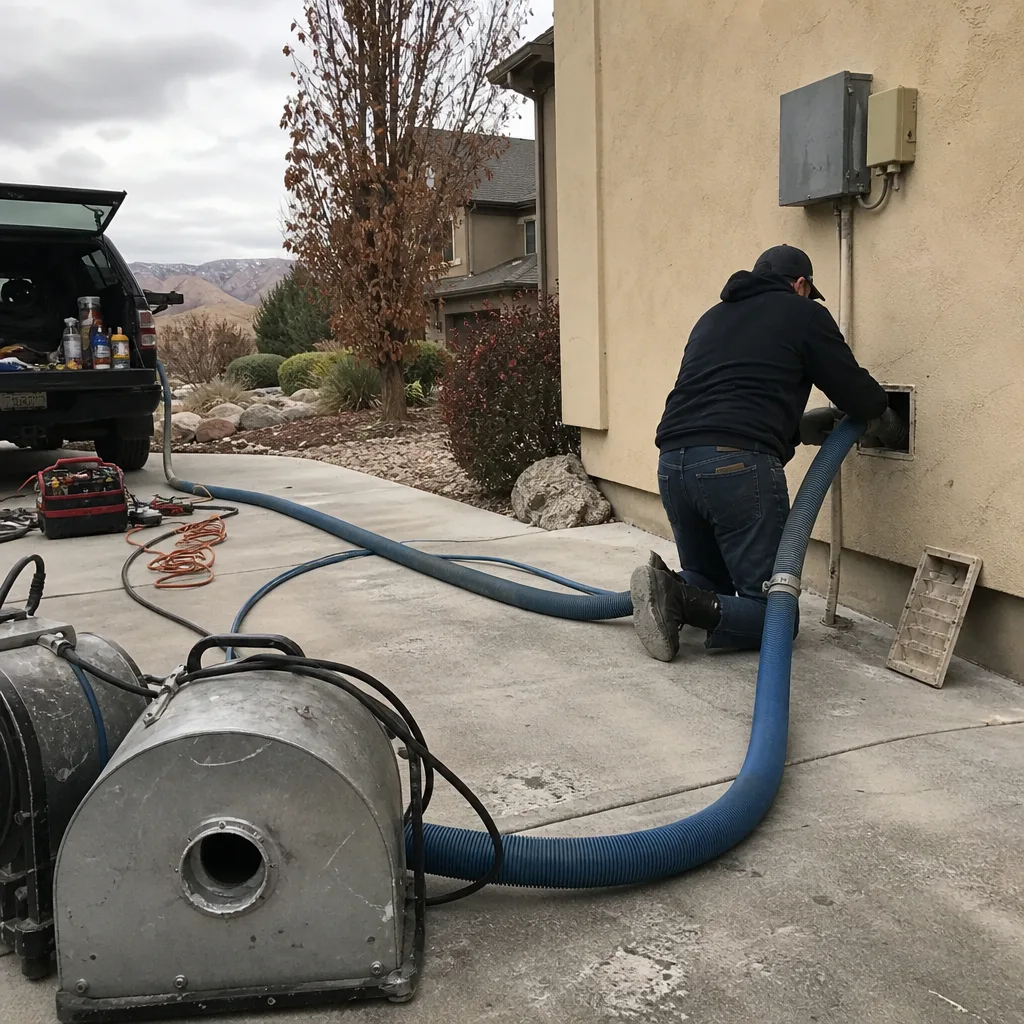 Before
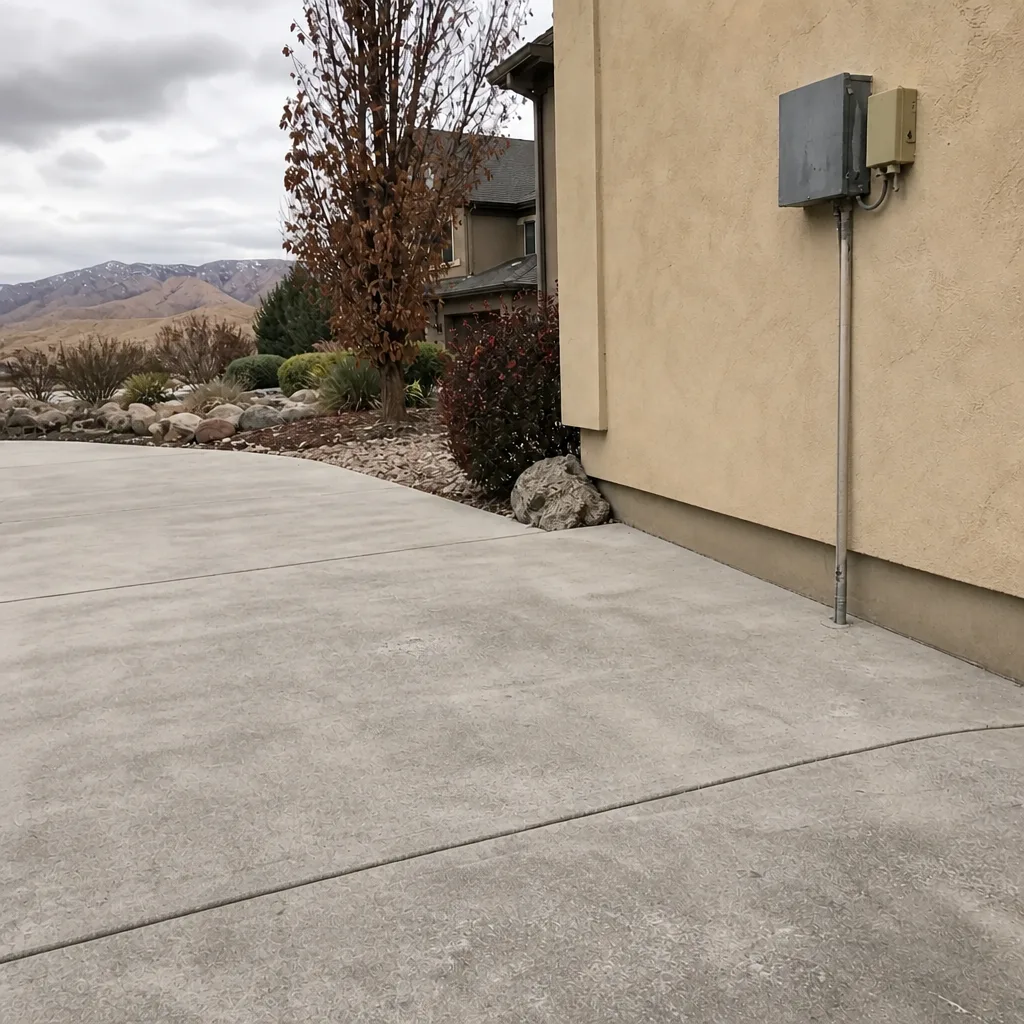 After
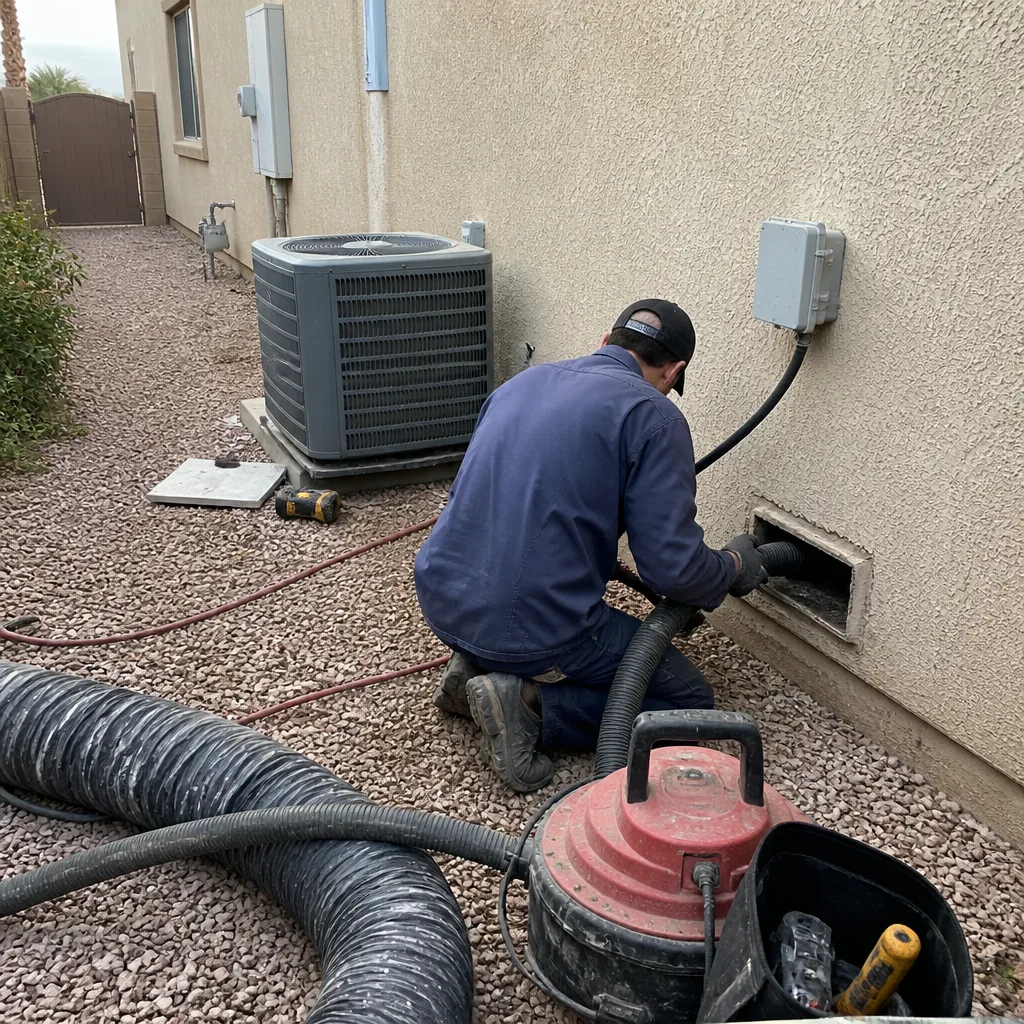 Before
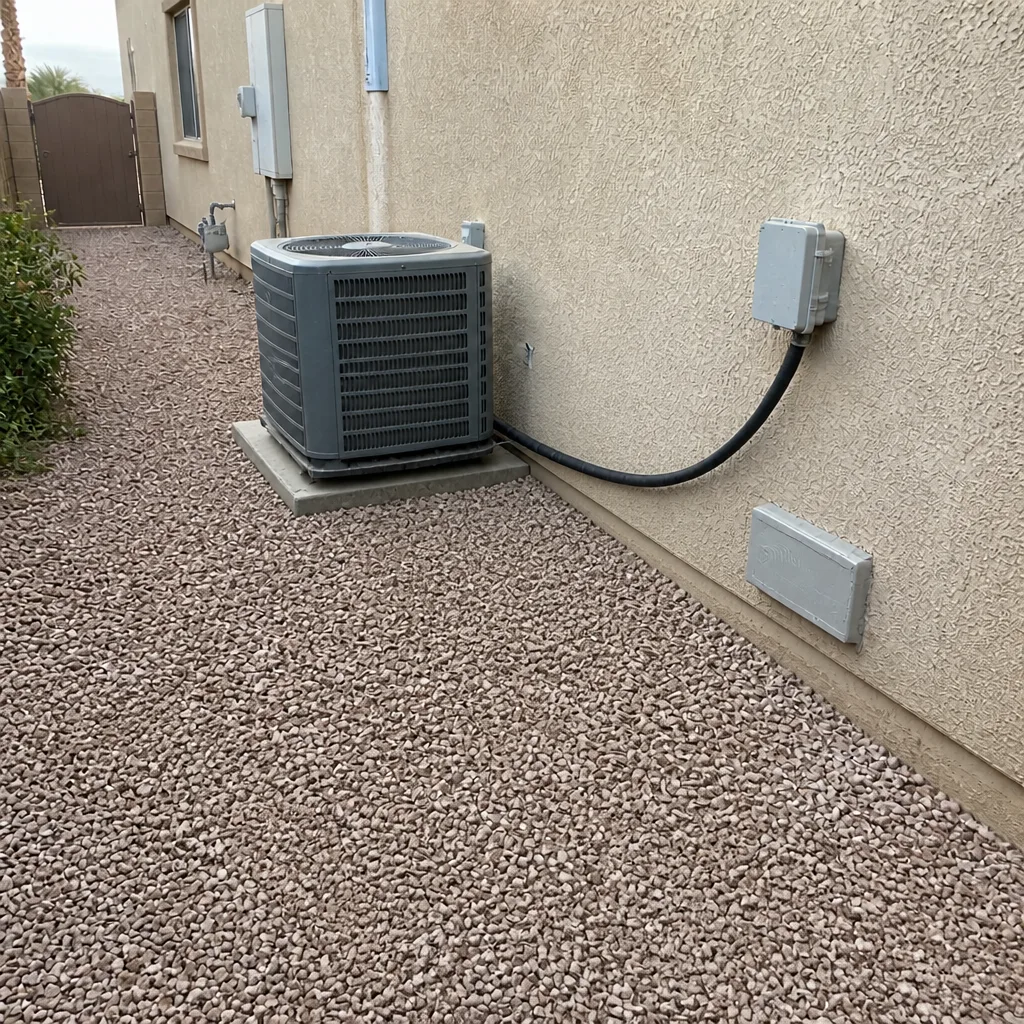 After
When to Call a Professional
Call a professional if the inspection turns up a disconnected flex duct, visible biological growth, a musty smell in cooling mode, multiple failed register seals, or UV-degraded jacket on attic runs. These are all beyond the reach of a homeowner inspection because they involve opening the system, containing the debris, and in some cases repairing ductwork before cleaning. If the checklist turns up any of these in your St. George home, book an inspection rather than trying to work around the problem; cleaning a broken system just returns the same problem. Ironwood Air Duct Cleaning offers free estimates in St. George and can tell you whether a cleaning, a repair, or both is the right answer. Call (855) 419-9402. We answer 24/7. Fast dispatch from 7am to 7pm, Sunday through Friday.
Frequently Asked Questions
St. George homes typically run their HVAC 2,100+ hours a year, so plan on inspecting ducts at least annually and cleaning when inspection shows visible buildup, a disconnected run, or contamination at the coil. Some homes here need cleaning on a two-to-three year cycle because of dust events and construction activity. Call (855) 419-9402 for an exact assessment; estimates are free.
Prices are set per job by a written estimate, because a single small system and a large multi-zone home aren’t comparable. Be cautious of any quote that’s given as a per-vent price or a teaser coupon before anyone has seen your system; that structure tends to grow once the technician is on-site. Ironwood quotes a flat price for the full system before work begins, so you know the number up front. Call (855) 419-9402 for a free estimate.
No, a shop vac isn’t sufficient for duct cleaning and can make things worse by agitating dust without containing it. Professional contact cleaning relies on rotary brush equipment and HEPA vacuum capture so dislodged material is collected rather than recirculated. The homeowner-appropriate tasks are the visual pass/fail inspection and the filter changes, not the duct interior. Call (855) 419-9402 if you’re not sure whether your system needs professional service.
The most common issue is a disconnected or sagging flex duct run in a hot attic, followed by coil moisture in homes with a long AC season. Both are root-cause problems that a cleaning alone won’t fix, which is why air duct repair is a core part of what we do rather than an add-on. A full-system inspection catches both. Call (855) 419-9402 to schedule one.
Ask for before-and-after photos of your own ducts, not stock images, and ask what equipment was used. A HEPA vacuum system with rotary brush contact cleaning leaves a different result than a blower-only visit, and the photos should show that difference. If the report doesn’t come with your own photos, that’s a problem. Call (855) 419-9402 to learn what our inspection and cleaning reports include.
Yes, they’re separate services and they should both be on your annual checklist. Dryer vent cleaning addresses a documented fire hazard that’s completely separate from the HVAC ductwork, and it’s worth doing every year regardless of whether the ducts need attention. We handle both as part of a full-system approach to a home’s ductwork. Call (855) 419-9402 to book either service and get a written estimate.
The Bottom Line
St. George homes run their HVAC hard, and the checklist directions that apply elsewhere don’t quite fit here. Measure runtime, treat dust events and nearby construction as reasons to shorten your filter interval, inspect the items you can see with pass/fail criteria, and give the dryer vent its own annual line. When inspection turns up disconnected flex duct, UV-degraded jacket, musty smell, or contamination at the coil, that’s the point to call a professional rather than keep watching. Ironwood Air Duct Cleaning provides air duct cleaning, dryer vent cleaning, and air duct repair as a full-system service, using professional-grade Rotobrush, Nikro, and Abatement Technologies equipment, with a flat price per system agreed before work starts. Our technicians have up to 10 years of experience. Call (855) 419-9402 for a free estimate. We answer 24/7. Fast dispatch from 7am to 7pm, Sunday through Friday.
Written by the team at Ironwood Air Duct Cleaning.