
Last updated November 15, 2026
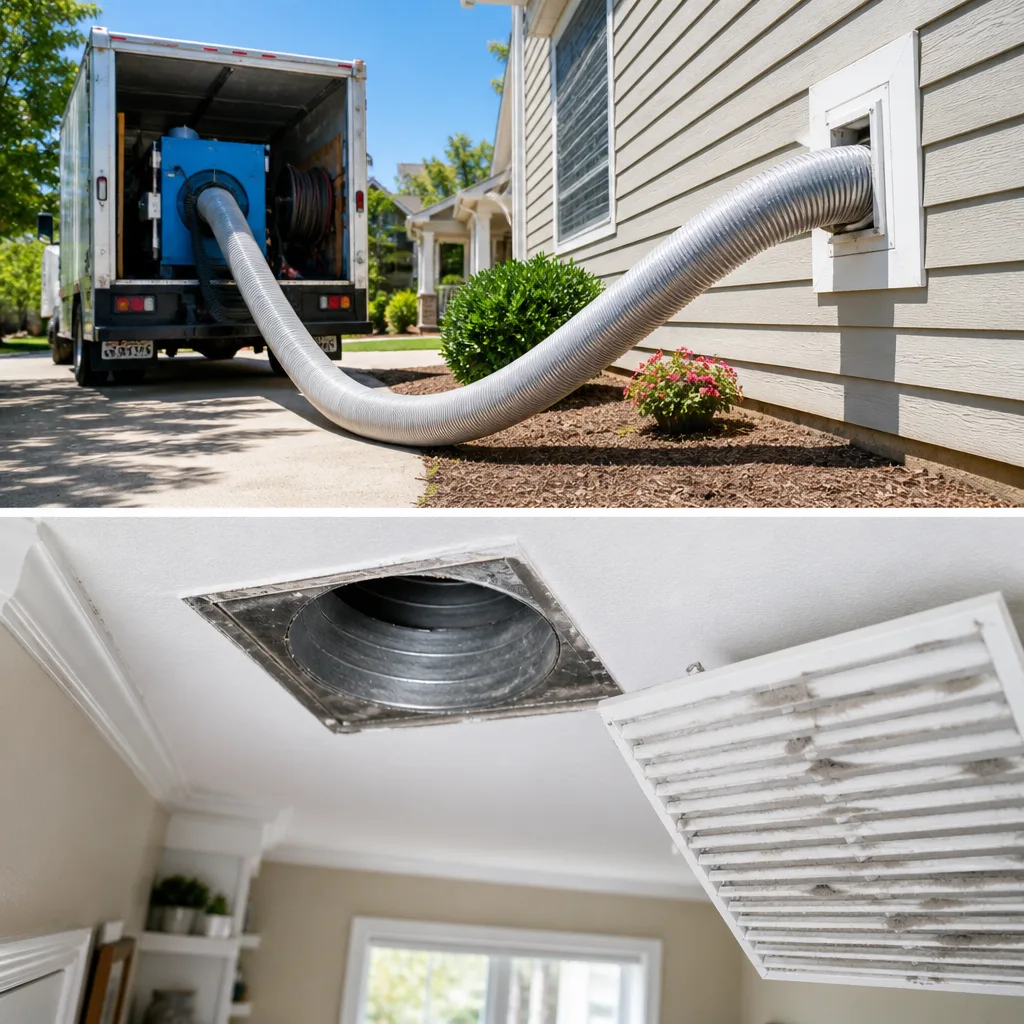 Whole-home duct cleaning
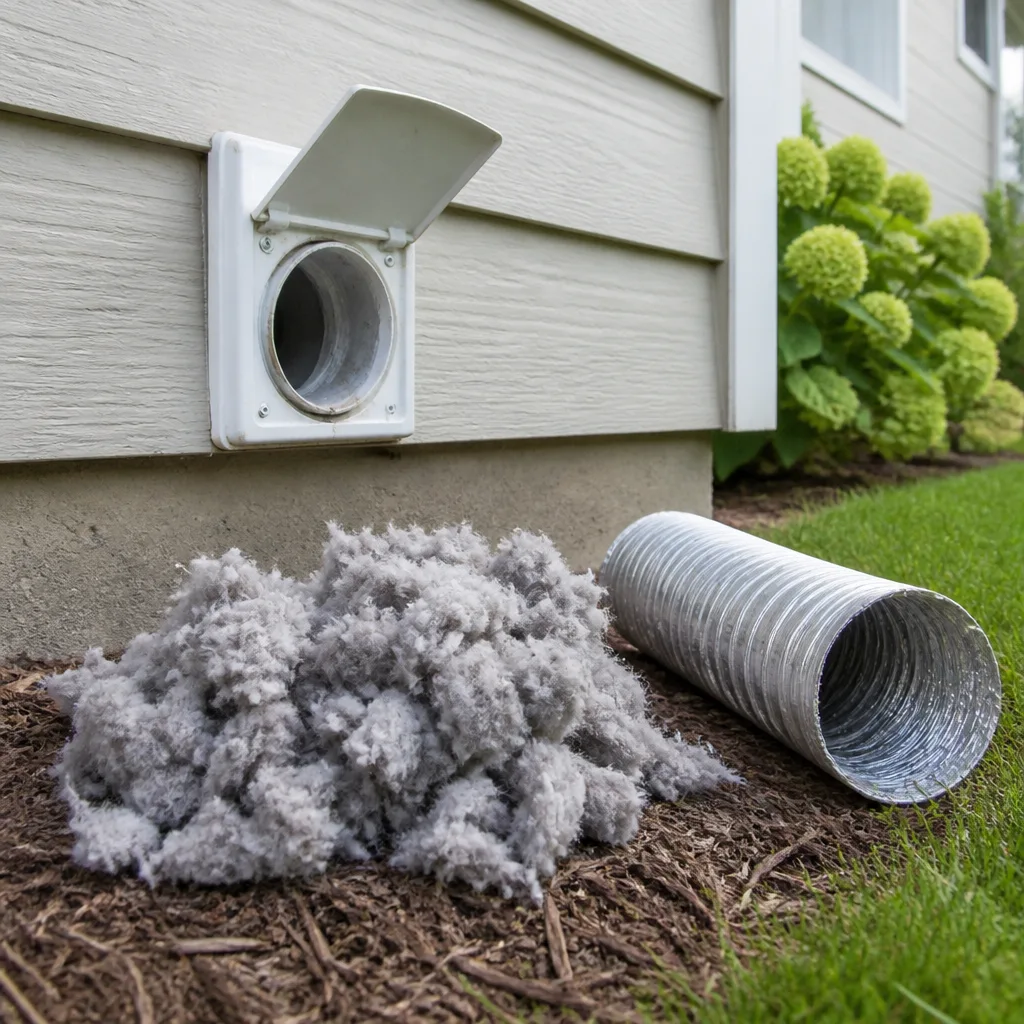 Dryer vent cleaning
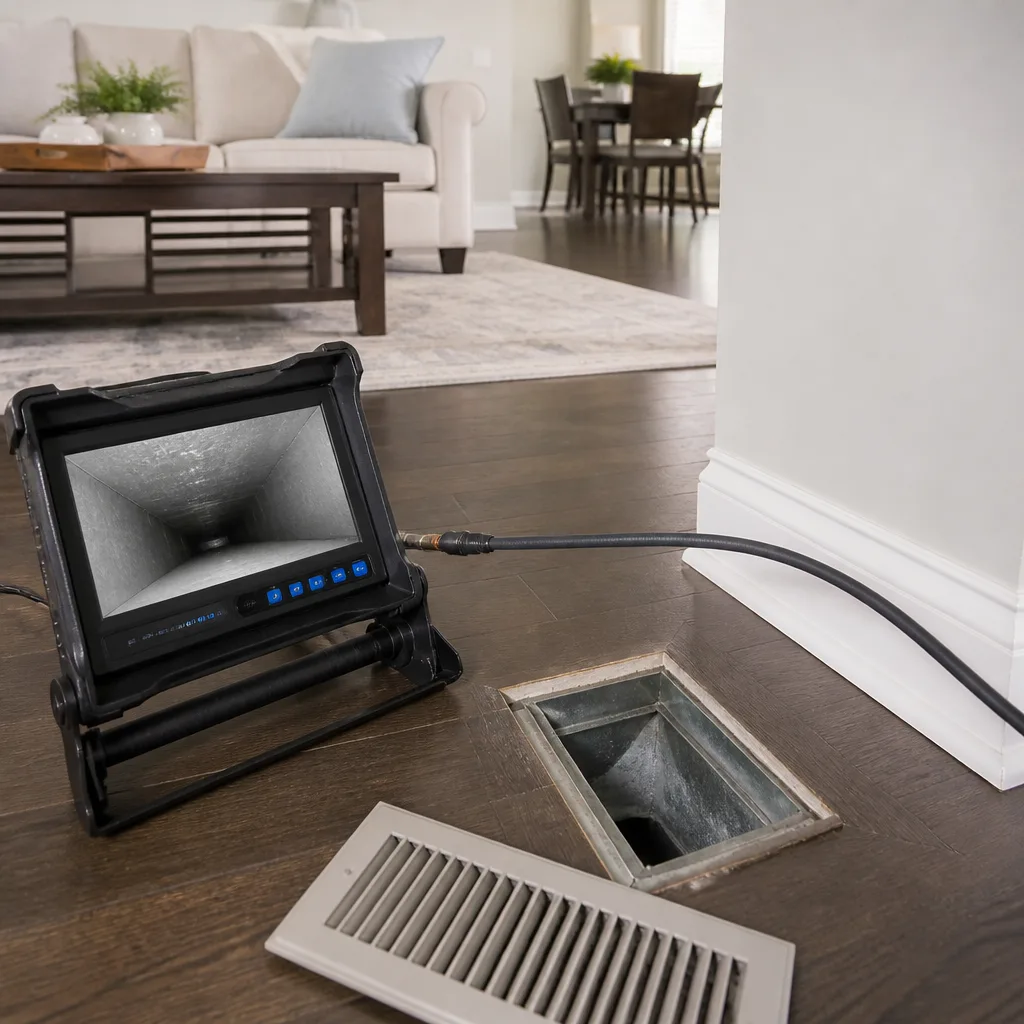 Camera inspection
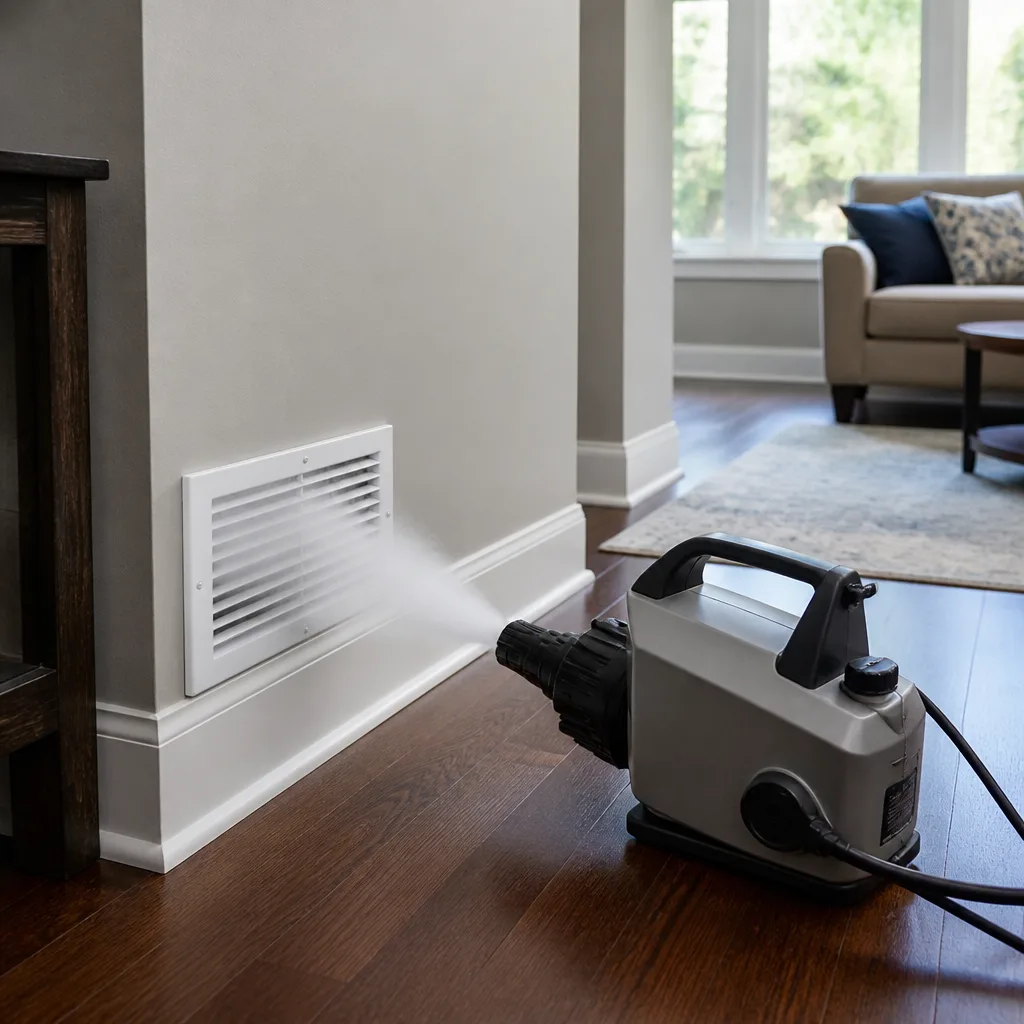 Sanitizing & deodorizing
Whole-system duct and dryer vent check with before-and-after photos - you see exactly what came out of your vents
That "$99 whole-house special" is a bait ad - the real number appears once they are in your hallway, or the "clean" is a shop-vac at the register. We photograph the inside of your ducts before and after instead.
Air Duct Cleaning Permits, Codes & Inspections in St. George, UT: What You Need to Know
Here’s the part of the duct cleaning conversation almost nobody raises: cleaning your ducts is one kind of work, and repairing them is another. One is routine maintenance. The other can be regulated construction. In St. George, the two get treated as the same thing all the time, and that’s where homeowners run into trouble. A technician pulls a length of crushed flex duct out from under a floor or finds a joint that’s come apart behind a wall, and it gets reconnected on the spot because it’s “part of the cleaning.” Whether that repair needed a permit, and whether anyone should have inspected it, never comes up. This guide walks through where the legal line actually sits in Utah, how Washington County and city building departments handle HVAC-adjacent work, what mold remediation and duct sealing add to the picture, and the questions to ask before you let anyone touch damaged ductwork.
Quick Answer
Air duct cleaning by itself does not require a permit in Utah. Repairing, modifying, sealing, or replacing ductwork is mechanical work, and under the Utah Mechanical Code that work may require a mechanical permit depending on scope and jurisdiction. In St. George and the rest of Washington County, permits for duct repair or replacement are issued by the city or county building department that has jurisdiction over the property, and the work is expected to be inspected. Cleaning and repair are legally different activities, and treating them the same is the mistake this guide is built to prevent.
Styles & brands we work with
- Whole-home duct cleaning
- Dryer vent cleaning
- Camera inspection
- Sanitizing & deodorizing
Table of Contents
- The Line Between Cleaning and Repair Under the Utah Mechanical Code
- Who Issues Permits in St. George and Washington County
- When Duct Sealing and Mold Remediation Add Rules
- What to Ask When Damage Turns Up Mid-Cleaning
- How Unpermitted Duct Repairs Affect Insurance and Home Sales
- What an Inspection Actually Looks Like
- How to Tell a Real Repair From a Bait-and-Switch
- Why St. George Ductwork Takes the Abuse It Does
The Line Between Cleaning and Repair Under the Utah Mechanical Code
Cleaning is not construction. A technician loosening dust from duct interiors with a rotary brush system and pulling it out with a HEPA vacuum is doing maintenance, roughly the same category as changing a filter or vacuuming a register. No permit is issued for any of it.
Repair sits on the other side of the line. A mechanical permit is the mechanism a building department uses to review and inspect work that changes or restores a building system. When ductwork is physically altered, replaced, or significantly reconstructed, that activity falls within mechanical work, and the Utah Mechanical Code framework that governs it in St. George flows down from the state adoption through the local building department. The code itself doesn’t police cleaning visits. It polices the moment someone starts fixing ductwork.
The categories that most often need a closer look:
- Replacing a duct run. Cutting out damaged flex or hard duct and installing new material is replacement, not cleaning.
- Reconnecting separated joints. Sometimes simple, but when a joint has come apart inside a wall, ceiling assembly, or crawlspace, it can involve opening the structure.
- Sealing ductwork. Mastic or aerosolized sealing applied to address leakage can count as an alteration to the system.
- Adding, moving, or resizing registers and branches. This changes system design and almost always draws permit review.
- Working inside a duct system contaminated by mold or pests. Containment and remediation scope can pull in other rules, which we’ll cover below.
The honest take on this: some small repairs are minor enough that a building department wouldn’t expect a permit. The problem is that “minor” is a judgment call, and the person making that judgment is usually the contractor who benefits from skipping the paperwork. If you’re ever unsure whether a repair crosses the threshold in St. George, the right move is a phone call to the building department before the work starts, not after.
Who Issues Permits in St. George and Washington County
Permit authority for HVAC-adjacent work in Washington County follows property location. If the home is inside St. George city limits, the City of St. George building department handles it. If the property sits in unincorporated Washington County, the county building department does. Homes inside other Washington County municipalities go through their own city or town building department.
- Confirm the jurisdiction. Look up whether the address is inside St. George city limits or in unincorporated county. A surprising number of homeowners assume they’re in the city when they’re actually on county land, or the reverse.
- Ask about permit category. When you call, describe the work plainly: “The flexible duct run to a bedroom is crushed and needs replacement.” The department will tell you whether that requires a mechanical permit and how much of the scope has to be included.
- Get the contractor’s permit plan in writing. Whoever does the repair should be able to tell you before work starts whether they’re pulling a permit and through which department.
- Keep the paperwork. Permit number, inspection record, and final sign-off belong with your home’s records. Future buyers and insurers will thank you.
One thing we’ve seen from the St. George side of this conversation: the building departments here are straightforward to deal with when the work is described honestly. The permit questions get complicated only when a contractor is trying to avoid the process entirely. If you’re not sure who has jurisdiction, start by calling the city or county building department for the address and asking the question directly.
When Duct Sealing and Mold Remediation Add Rules
Two categories of work inside a duct system go beyond standard cleaning and repair: sealing and mold remediation. Both can pull additional regulatory considerations into the job, and both are worth understanding before you authorize anything.
Duct sealing
Sealing ductwork to reduce leakage is common in St. George homes, particularly on older systems with slip-fit joints that have loosened over years of thermal cycling. Whether a given sealing job requires a permit depends on scope. A simple mastic seal on accessible joints may not draw review. A larger reconstruction of a duct system, or the application of aerosolized sealant that changes the system’s measured performance, may. The practical move is to ask the contractor to confirm the scope in writing and to state whether they consider the work permit-required, then verify that answer with the building department if the scope is more than routine.
Mold remediation
When duct interiors show visible microbial growth, or when moisture from an AC coil, condensate pan, or crawlspace has fed fungal growth into duct surfaces, the job becomes remediation and crosses into different territory. Key considerations:
- Source control first. No amount of cleaning matters if the moisture source keeps feeding the growth. Coil and condensate issues need to be fixed before ductwork is sterilized and cleaned.
- Containment-grade equipment matters. Remediation-level vacuum equipment and containment protocols exist for a reason. Blow-and-go air washing with consumer equipment can spread spores through a home rather than remove them.
- Contractor qualifications apply. Utah has its own rules and expectations around mold work, and some contractors carry specialized training while others don’t. Ask what method they use, what containment they set, and what verification they’ll do afterward.
- Anything above modest surface growth is worth professional remediation. Small cleaning steps are within the reach of a diligent homeowner. A duct system with a spreading mold problem is not a DIY job, and the airborne distribution of spores is exactly why containment equipment exists.
We use Abatement Technologies equipment capability on jobs that reach this tier, because the tool demands on a remediation job aren’t the same as on a routine cleaning. The same is true of Nikro HEPA vacuum systems that capture dislodged material instead of circulating it back into the living space.
What to Ask When Damage Turns Up Mid-Cleaning
This is the moment that separates a professional company from a low-bid operator. A technician finds damaged ductwork during the cleaning visit. What happens next is where the legal and practical risks pile up.
- “Is this repair permit-required, and are you pulling the permit?” The contractor should give you a direct answer, not a shrug. If they say no, ask why not and get the reasoning.
- “Can you show me the damage?” Before anything is repaired, you should see it. Photos, a camera inspection, or a direct view of the failed joint. Good technicians document the condition before they touch it.
- “What’s the scope of the repair in writing?” You should have the proposed work in writing before anyone blocks out a weekend to cut into walls. Anything not on the written scope shouldn’t be billed.
- “Will the repair be inspected?” If the contractor says a permit isn’t needed, ask them to confirm that in writing. If they say it is, the inspection should appear in your records.
- “Who’s doing the repair work?” A duct cleaning company that also does repair work should be clear about their scope. If the repair is outside their capability, they should say so instead of taking it on.
- “What’s the written estimate for the repair?” The estimate sets the price. Nothing should appear on the invoice that wasn’t in the estimate or authorized in writing afterward.
If a contractor responds to any of those questions with “we’ll just take care of it” and no paperwork, that’s the answer in itself. In our experience cleaning ducts across St. George, the repairs worth doing are the ones that come with documentation. A duct run that comes apart twice because it was patched without permit or inspection isn’t saving anyone money.
How Unpermitted Duct Repairs Affect Insurance and Home Sales
Two scenarios turn unpermitted duct repairs from a paperwork nuisance into a real financial problem: an insurance claim and a home sale. Both are worth understanding early.
Insurance claims
Homeowner policies generally require that work on the home be done to code and with permits where required. When a claim comes up after a fire, water loss, or other event, the insurer’s adjuster will look at the property’s repair history. Work that changed a mechanical system without permit or inspection can raise questions about coverage for that system or for damage the work might have contributed to. That doesn’t mean every claim gets denied. It means a policyholder can find themselves arguing about coverage at the worst possible time, over a repair that would have been a modest cost to permit correctly in the first place.
Real estate disclosure and sales
Utah sellers have disclosure obligations, and major repair work on a home’s systems typically has to be accounted for during a sale. In practice, this means a buyer’s inspector can flag ductwork that was replaced or significantly repaired, and the seller’s ability to prove the work was permitted and inspected becomes a negotiation point, sometimes a price reduction. The bad version of this conversation: buyer requests proof of permit, seller can’t produce it, buyer asks for concession. The good version: buyer requests proof of permit, seller has it, conversation ends there.
What we’ve learned from St. George property managers over the years is that a clean permit record for any duct repair becomes an asset, not just compliance. It’s a quicker, cleaner transaction later. If you’re dealing with rental property, a landlord who can produce inspection records for ductwork also has an easier time responding to tenant concerns about air quality.
What an Inspection Actually Looks Like
A mechanical inspection for ductwork isn’t a long visit. It’s a targeted review of the work done and whether it meets code. Here’s what generally happens on a duct repair that’s been permitted and scheduled for inspection in the St. George or Washington County area:
- Pre-work review. Depending on the department, the permit is issued with a scope of work. Some departments perform a limited pre-inspection, others move straight to final inspection depending on the job.
- Rough-in inspection. If structural work had to be opened to access ductwork, the inspector reviews the duct installation before the structure is closed back up. This is why sequencing with the contractor matters.
- Final inspection. After the repair is complete, the inspector confirms that the work matches the permit scope. Connections sealed, materials correct, system return path restored.
- Sign-off and record. The inspection record gets filed with the jurisdiction. You should have a copy for your own records whether or not you’re selling the home.
The inspection itself is a healthy thing. It’s the moment when an independent reviewer confirms someone else’s work on your ducts was done to standard. If the contractor pushes back on getting the inspection, or treats the final sign-off as an inconvenience, that’s a signal about how seriously they take the code.
How to Tell a Real Repair From a Bait-and-Switch
The duct cleaning industry has a reputation problem, not entirely unfairly. A low opening price, a visit where suddenly the job has “discovered” major problems, and a much larger invoice after the fact. Here’s how a homeowner in St. George can distinguish the good version from the bad.
- The price is set per system, in writing, before work starts. Not per vent, not per foot of material, not “we’ll see.” One flat price per system agreed before work starts is the model that survives scrutiny.
- You see before-and-after photos of your own ducts. Not stock photos. Not a slideshow about someone else’s home. Your ducts, photographed before and after the work.
- The repair is separately scoped and priced. If damage turned up mid-cleaning, the repair gets its own written estimate and its own permit question. Not a verbal add-on at the end of the visit.
- They tell you the permit answer directly. A cleaned-and-done job is one thing. A repair is another. A contractor who knows the difference can say so plainly.
- Equipment doesn’t look like a consumer product. Contact cleaning with a rotary brush system and containment-grade HEPA vacuuming is a different discipline than what a shop-vac and a leaf blower can accomplish.
- They recommend, they don’t pressure. If they say “your ducts are fine, that’s not the problem,” take them seriously. Someone pushing a huge scope on a first visit is pushing for a reason other than your air quality.
On the equipment side, the difference between a professional-grade Rotobrush system and a consumer blower is roughly the difference between a dental cleaning with actual instruments and someone waving a shop dust brush at your teeth. On the capture side, Nikro HEPA vacuuming is what keeps what gets dislodged from recirculating into the room. When we describe our method as contact cleaning, that’s the distinction we mean: rotary brush contact against the duct interior, HEPA capture on the other end. Not air washing.
Why St. George Ductwork Takes the Abuse It Does
Ductwork in St. George lives in a different set of conditions than ductwork in coastal or humid climates. Those conditions accelerate the wear that leads to repairs, which makes the code and permit conversation relevant more often here than homeowners in milder climates might expect.
- Extreme summer heat. Duct systems in unconditioned attics and crawlspaces see interior surface temperatures that stress flexible duct materials. Crushed or kinked runs fail faster in this heat than in cooler climates.
- Dust and fine particulates. This part of Washington County sits in high-desert country with abundant fine dust, and wind-driven particles work their way into return paths and around filter housings. Registers and return grilles in St. George homes often show material that homeowners in wetter climates never see.
- Heating and cooling cycling. The swing from winter heating to summer cooling is real here, and every joint and connection on the system sees the expansion and contraction that comes with it. Over years, flex duct slip joints and tape seals loosen.
- Wide temperature swing between day and night. Even within a single day, attic and crawlspace temperatures can move enough to keep materials working. Tape adhesives and mastic seams take the wear.
- Newer construction with tight envelopes. St. George has grown quickly, and tighter home envelopes put more stress on every duct connection. Poorly sealed repair work in these homes shows up as pressure imbalance, not just dust.
What this means practically: a St. George home is more likely to develop crush damage, joint separation, and seal failure than a home in a more moderate climate. If you have an older home near the older parts of town, near the river corridor, or sitting on a crawlspace, the odds of a repair coming up during cleaning are higher. That’s not a knock on the home. It’s climate and construction meeting over decades.
If your ducts need cleaning before any repair question even comes up, the place to start is our air duct cleaning service page. That page describes the process, the equipment, and what we typically find. The permit question only becomes relevant when the inspection turns up damage that goes beyond dust. Dryer vents sit in a separate safety category, and you can read more on our dryer vent cleaning page. If you’re outside the city and want to see how the service line covers the surrounding area, St. George is the place to start.
See the difference
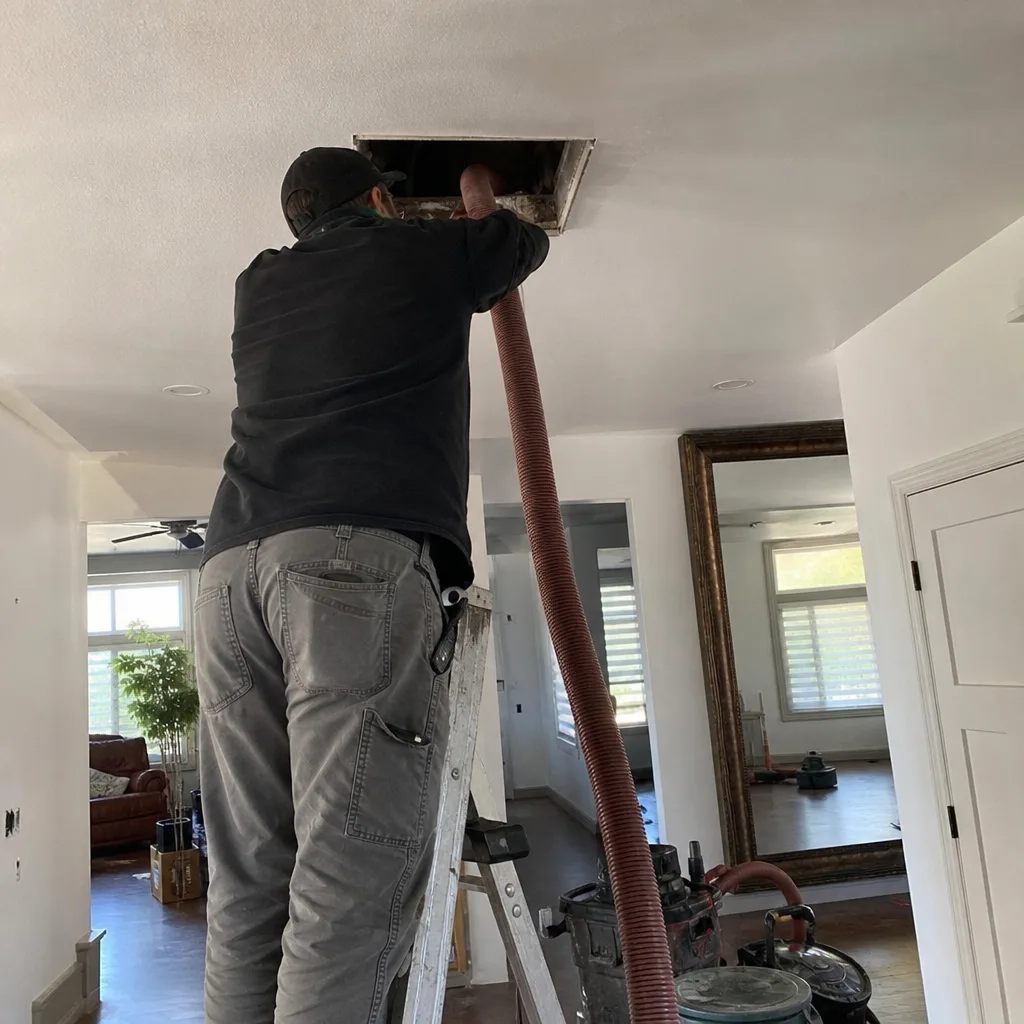 Before
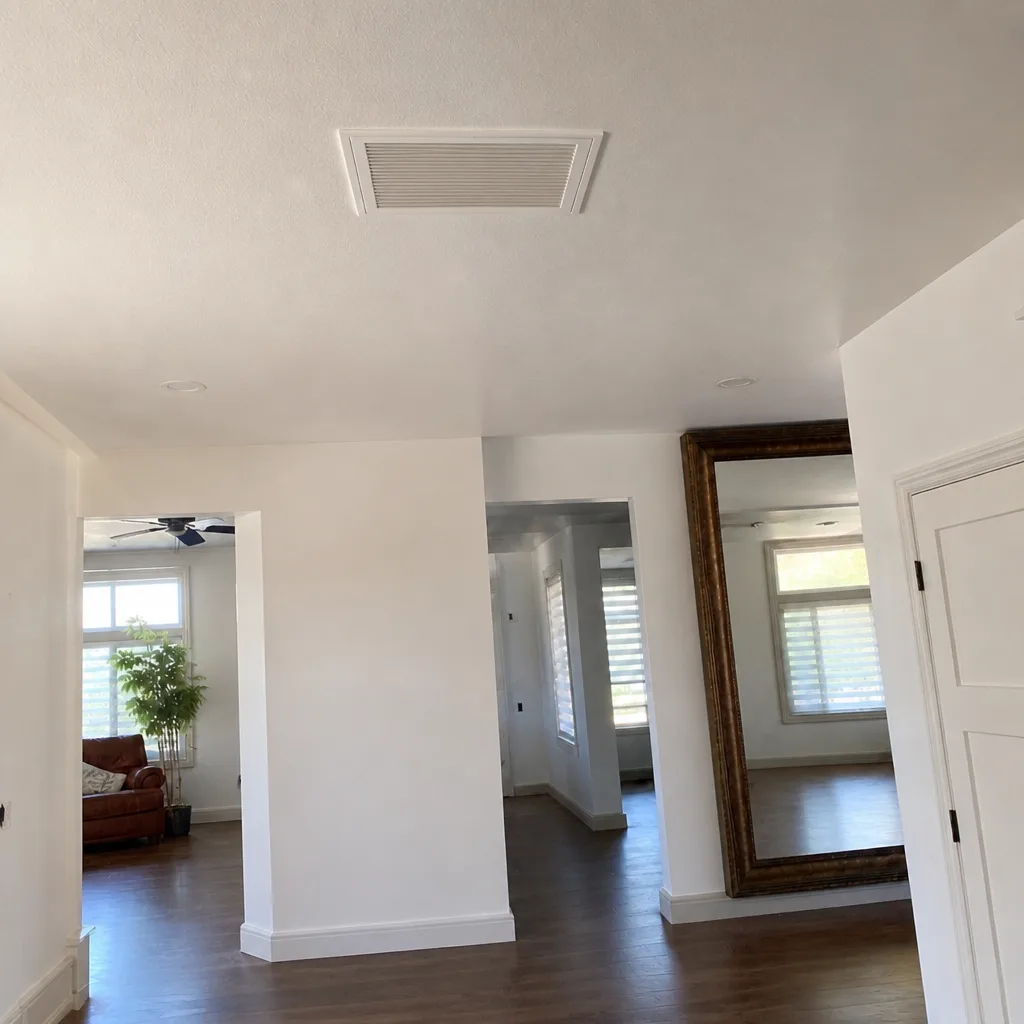 After
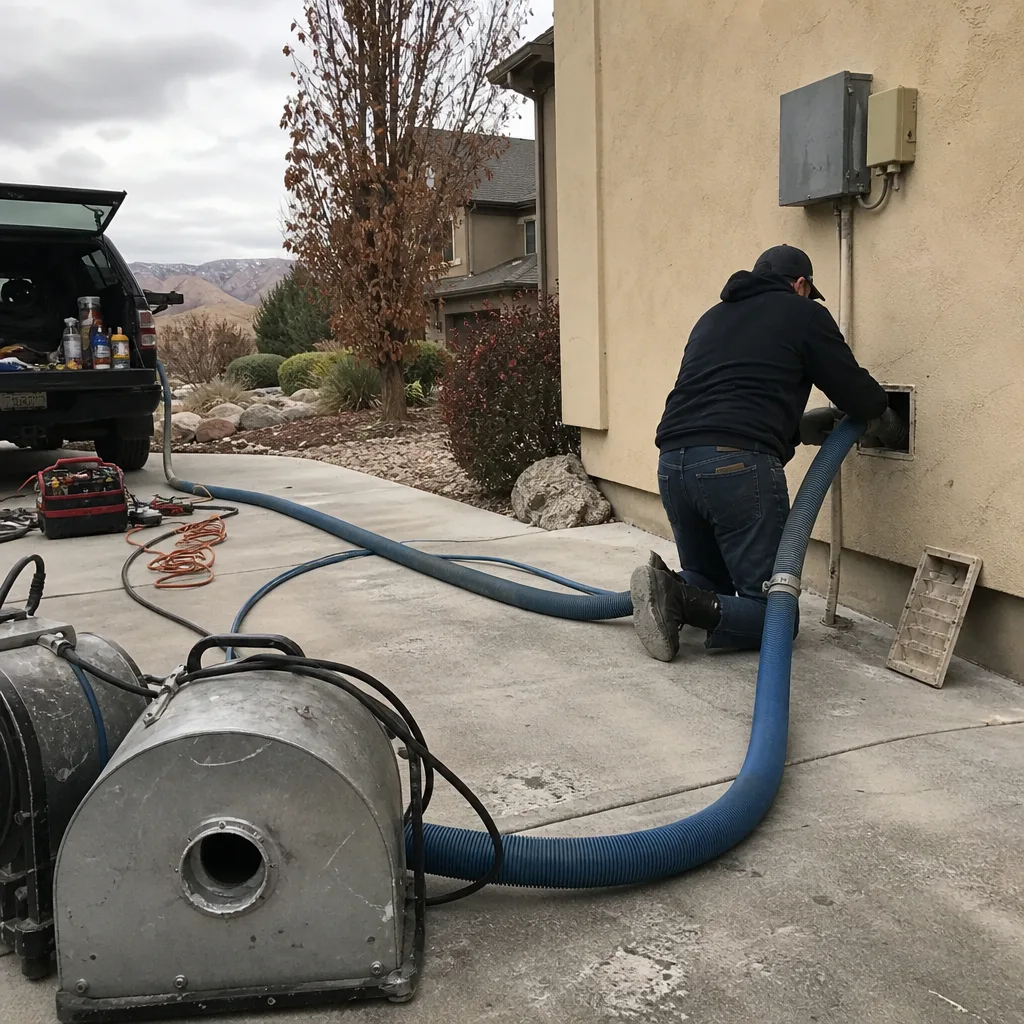 Before
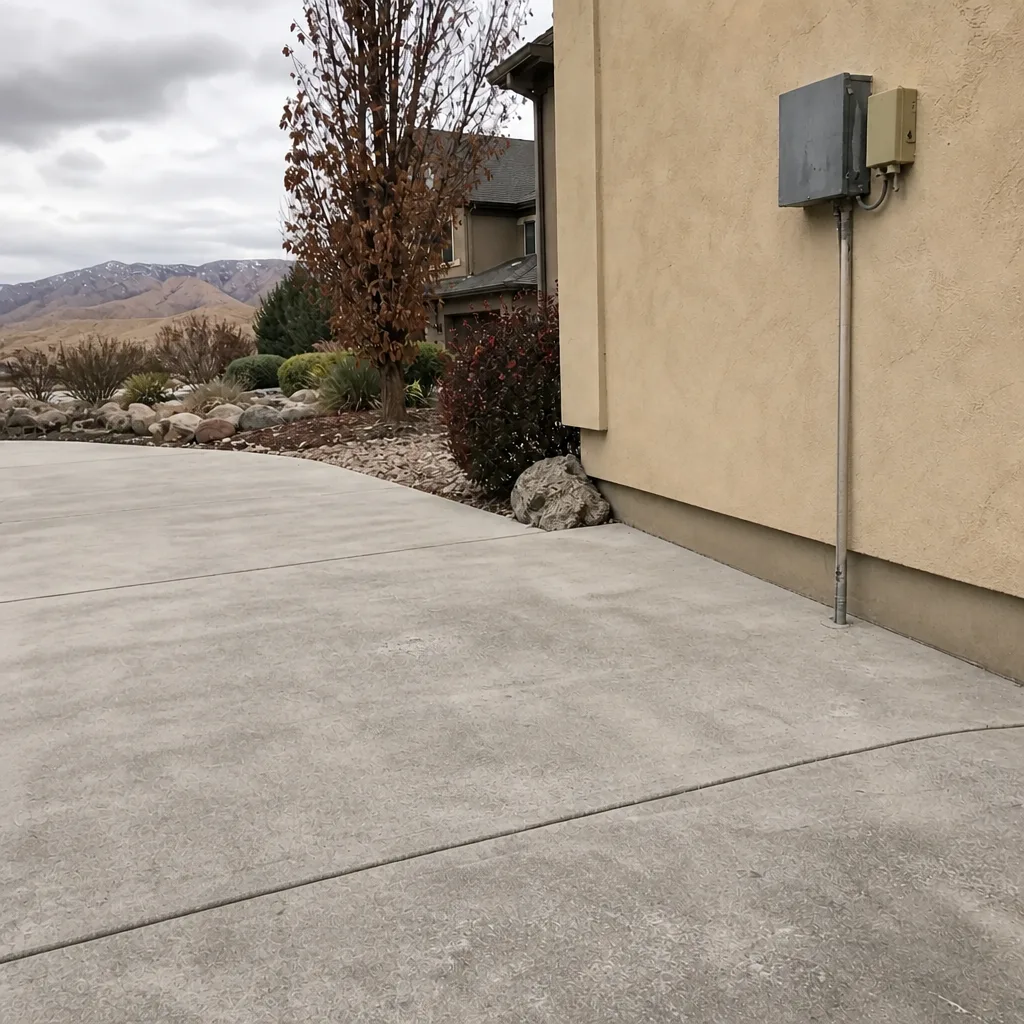 After
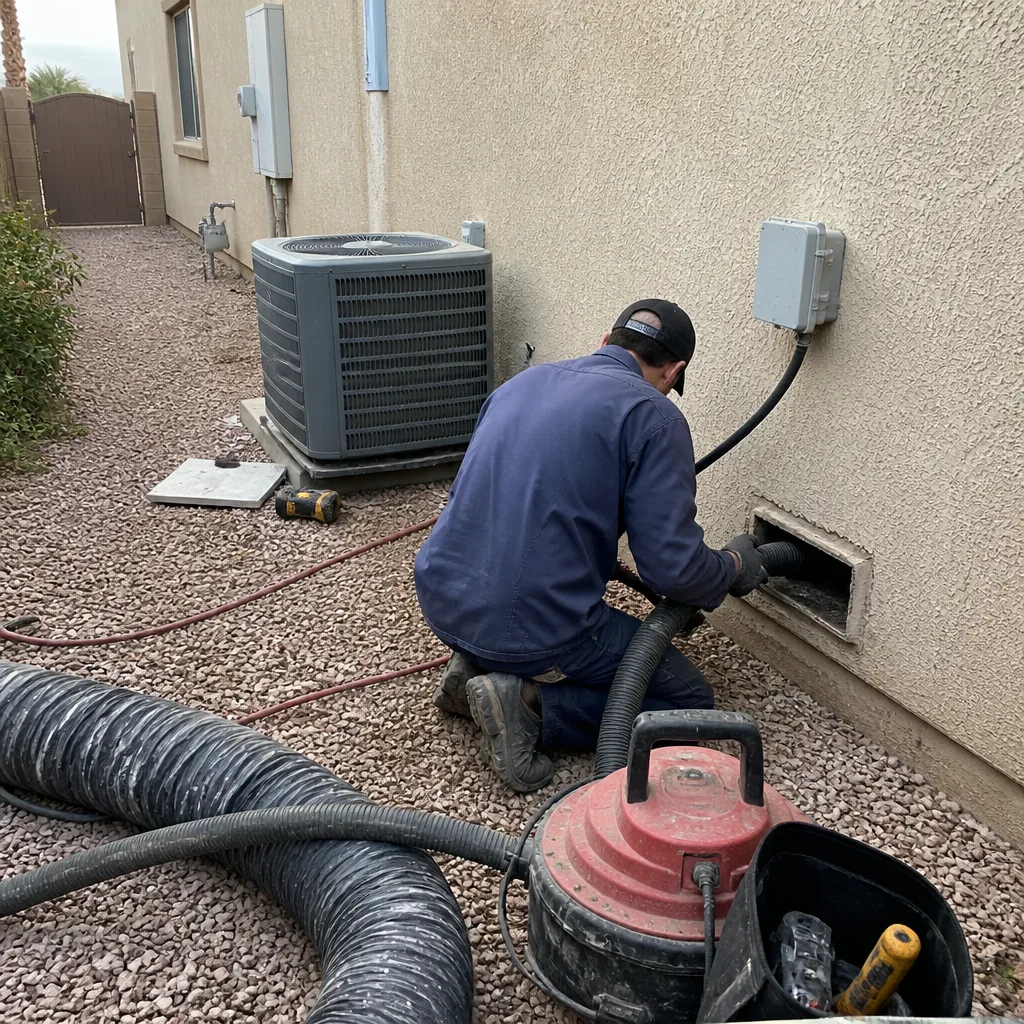 Before
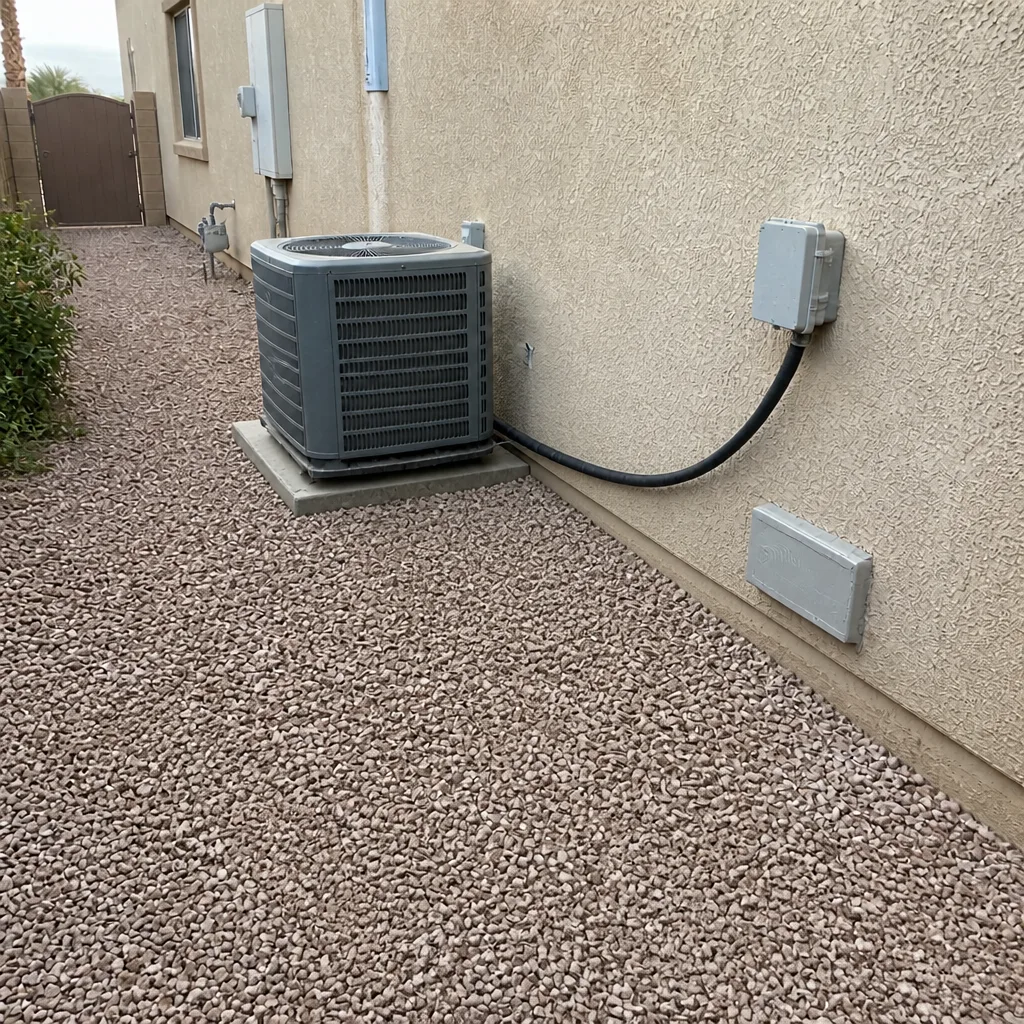 After
Common Mistakes to Avoid
- Assuming “duct cleaning” covers repair. It doesn’t. Cleaning is unregulated maintenance. Repair is potentially regulated mechanical work. If a contractor treats the two as identical, they either don’t understand the code or are choosing to ignore it. Either way, ask the question.
- Letting a repair happen without a written scope. A verbal “we fixed it while we were in there” from a technician is not documentation. Anything beyond the written scope shouldn’t appear on your invoice.
- Not calling the building department to confirm. The St. George or Washington County building department can answer the permit question for your specific property in a single phone call. Contractors who talk you out of making that call are the ones with something to hide.
- Waiting until sale or claim to figure out permits. By then, you’ve lost the option of going back to the contractor. Unpermitted repairs found during a home sale inspection or insurance claim become your problem, not theirs.
- Using a discount operator for anything involving duct damage. Blow-and-go outfits are willing to clean cheaply because their equipment is minimal. That same willingness to cut corners often extends to repair work, which is exactly where the risk sits.
- Overlooking dryer vents entirely. Moisture-fed lint buildup in dryer ducts is a documented fire hazard, not a maintenance nicety. St. George homeowners with dryer vents routed through hot attic space are especially worth checking.
- Skipping the crawlspace and attic look. Duct damage in St. George homes often hides in crawlspaces and attic runs rather than showing up in the living space. A cleaning visit that never goes those places is missing the most likely repair sites.
When to Call a Professional
Calling in a professional makes sense when you’re seeing the symptoms the code exists to prevent. Ducts that whistle or hiss during operation, rooms that never get comfortable no matter how the system runs, visible dust streaks at registers, musty odor when the system cycles on, or a recent remodel that disturbed duct runs. If you just bought a home and don’t have the mechanical history, a documented cleaning with an inspection of the system condition is a good place to start. If a home sale inspection or an insurance claim is coming up, having documented duct condition matters more than a fresh cleaning.
Air duct repair work that goes beyond simple reconnection is not a job for consumer tools. Rotobrush contact cleaning and Nikro HEPA capture are professional equipment for a reason, and the moment a repair enters the permit question, the work has left the DIY category. Ironwood Air Duct Cleaning offers free estimates in St. George – call (855) 419-9402. We answer 24/7. Fast dispatch from 7am to 7pm, Sunday through Friday. Our technicians have up to 10 years of experience, and the written estimate sets the final price.
Frequently Asked Questions
No. Air duct cleaning on its own does not require a permit in Utah. Cleaning is maintenance, not construction. The permit question applies to duct repair, modification, or replacement, which is mechanical work and may require a mechanical permit through the city or county building department. If you’re not sure which applies to your job, call the jurisdiction that covers the property before work starts.
The building department for the jurisdiction where the property sits. Homes inside St. George city limits go through the City of St. George building department. Unincorporated Washington County properties go through the county department. Some Washington County municipalities have their own department as well. If you don’t know the jurisdiction, the city or county can tell you by address. Call (855) 419-9402 for help understanding what generally needs to be permitted.
It can. Small reconnections and minor sealing may not trigger permit review, but replacing a duct run, adding or moving registers, or reconstructing ductwork does. Ask the contractor directly whether the repair will be permitted and inspected. If the answer is vague, get it in writing or call the building department. Anything that changes the mechanical system should come with a permit answer, not a shrug.
Before-and-after photos of your own ducts are the baseline. For repairs, ask for documentation on scope and permit status. If a permit was required, the inspection record is proof the work was reviewed by an independent party. If any of that is missing, ask for it before the invoice gets paid. Call (855) 419-9402 if you’re unsure what documentation is reasonable to expect.
No. Cleaning and mold remediation are different scopes with different equipment demands and often different contractor qualifications. If visible microbial growth has spread inside the duct system, the job is remediation, and it may trigger separate considerations from the Utah DEQ and require containment-grade equipment. Moisture source control comes first. Call (855) 419-9402 to talk through what your situation needs.
It becomes a negotiation point. Utah sellers have disclosure obligations, and a buyer’s inspector who flags ductwork whose permit history isn’t documented will ask for records, inspections, or a concession. Having the permit and inspection record from the repair closes the topic quickly. Not having it can cost you in the transaction. If a repair is coming up, get the permit straight before it becomes a surprise later. Call (855) 419-9402 for an estimate on the repair scope.
The Bottom Line
Cleaning your ducts is a maintenance decision. Repairing, modifying, or replacing them is a construction decision, and the Utah Mechanical Code and the local building department treat those two situations differently. In St. George and Washington County, the permit process is straightforward when the work is described accurately. It becomes expensive when the work isn’t. Ask the permit question before repair begins, get the answer in writing, keep the inspection record, and treat the written scope as the thing that sets the price. The ductwork in this climate takes real wear. Getting it cleaned and repaired correctly, with documentation, is what makes the difference between a good outcome and a problem you didn’t know you had.
Call (855) 419-9402 for a free estimate on Ironwood Air Duct Cleaning services. We answer 24/7. Fast dispatch from 7am to 7pm, Sunday through Friday. The written estimate sets the price, and you’ll see before-and-after photos of your own ducts.
Written by the team at Ironwood Air Duct Cleaning.