
Last updated November 15, 2026
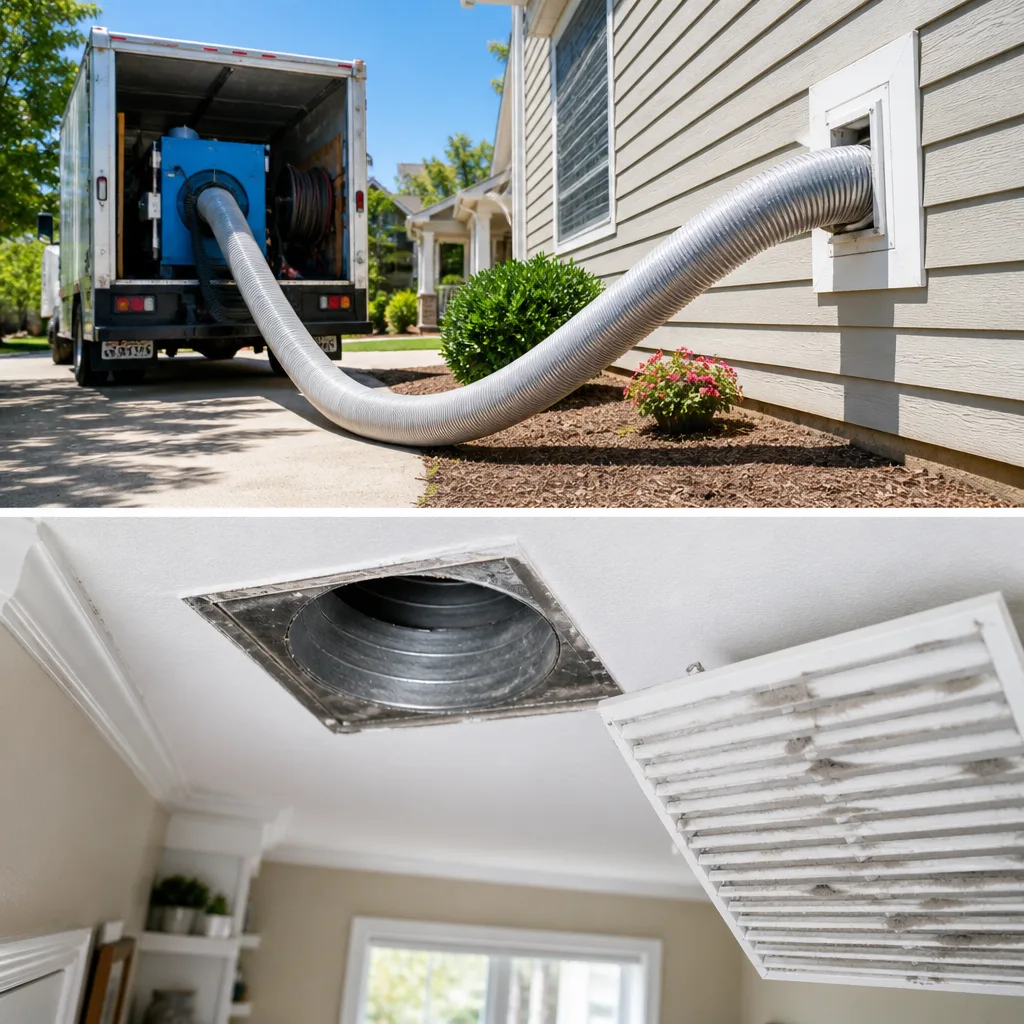 Whole-home duct cleaning
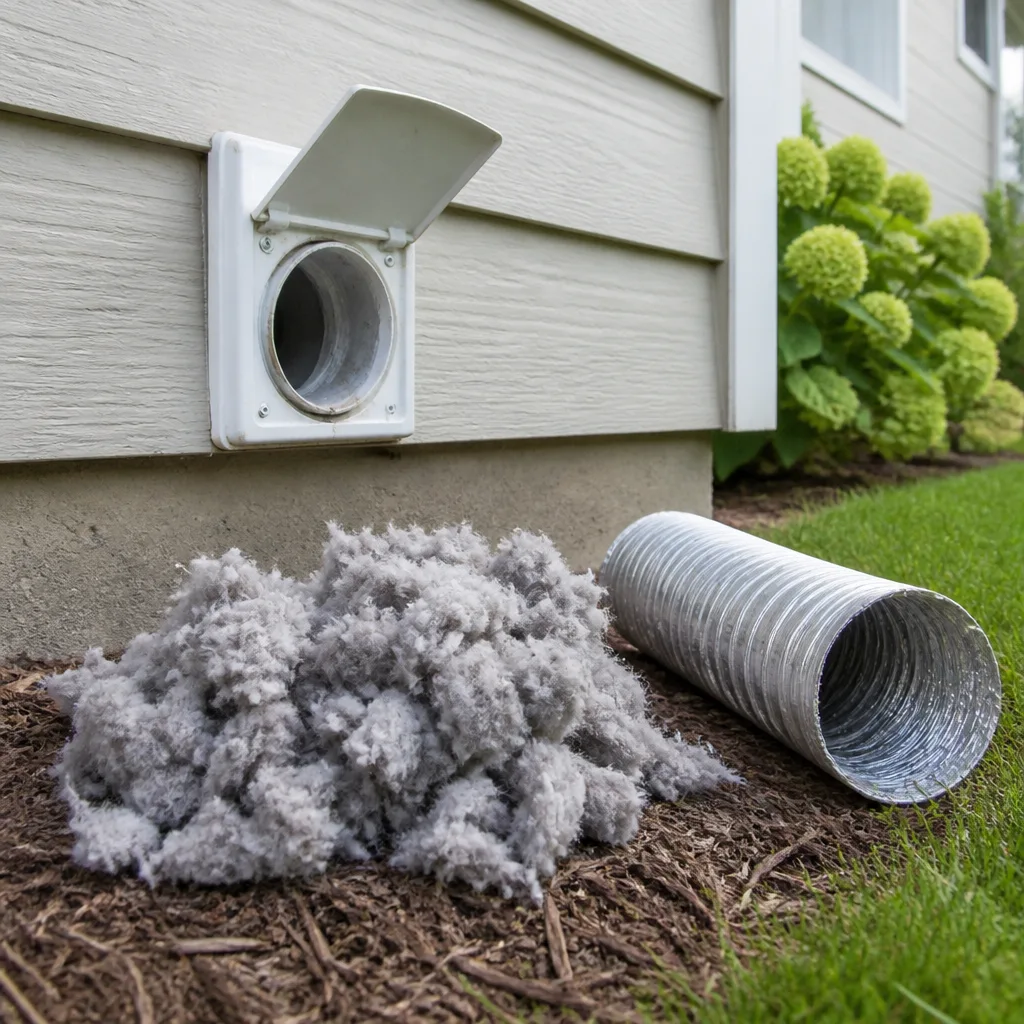 Dryer vent cleaning
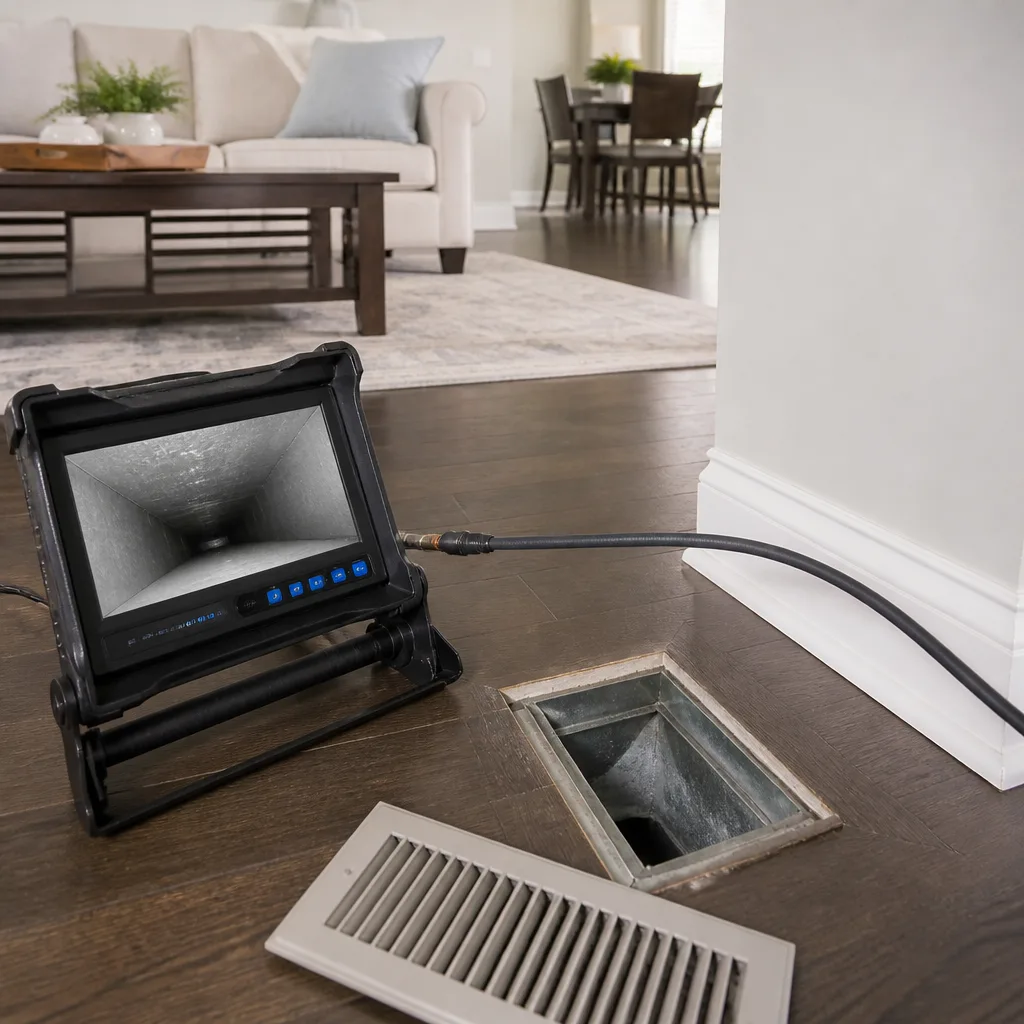 Camera inspection
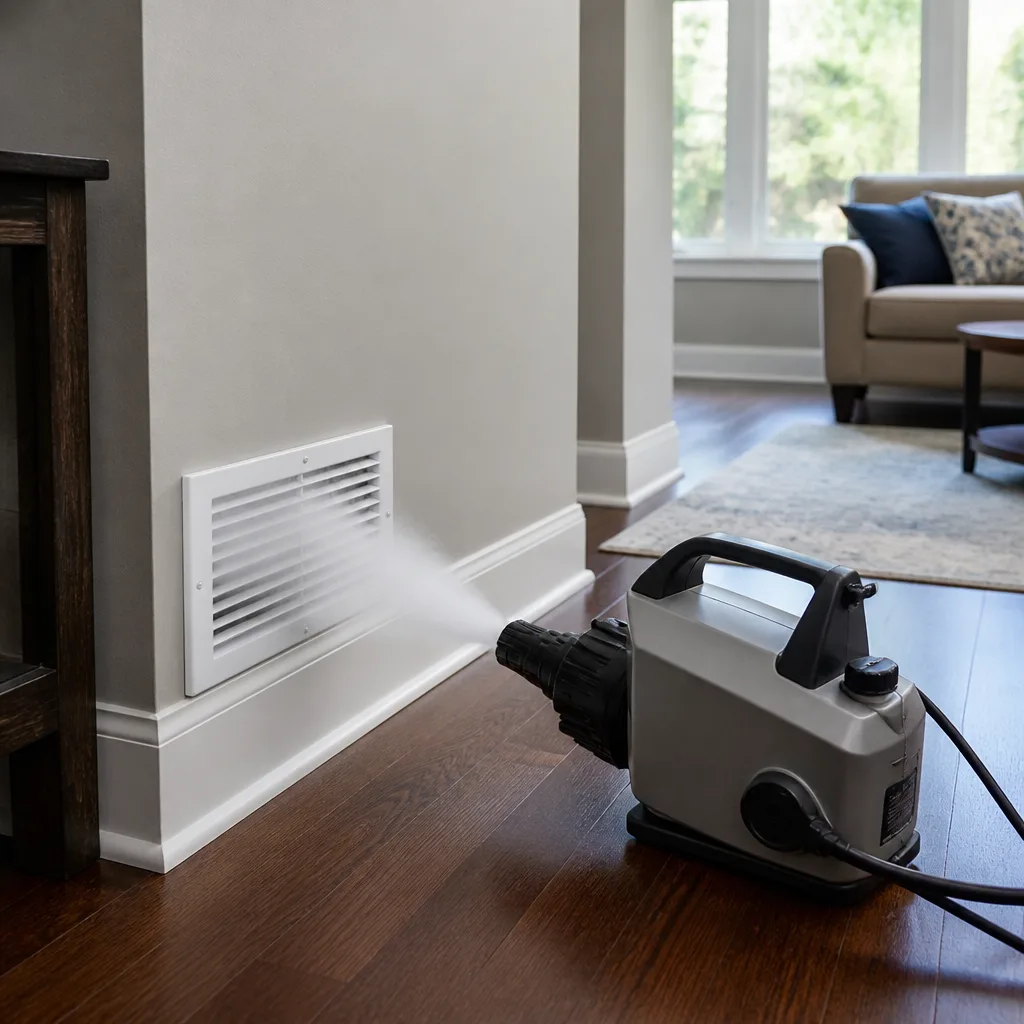 Sanitizing & deodorizing
Whole-system duct and dryer vent check with before-and-after photos - you see exactly what came out of your vents
That "$99 whole-house special" is a bait ad - the real number appears once they are in your hallway, or the "clean" is a shop-vac at the register. We photograph the inside of your ducts before and after instead.
How to Hire an Air Duct Cleaning Contractor in St. George: A Step-by-Step Guide
Utah does not license air duct cleaners. Anyone with a shop vac and a website can operate legally in St. George tomorrow. That single fact reshapes the entire hiring decision. In a licensed trade, a state board checks a contractor’s competence before you ever get a bid. Here, the checking falls to you. The credential and equipment questions in this guide exist precisely because the state won’t ask them for you. We’ll show you what to ask, how to compare quotes fairly, which red flags matter, and how to confirm after the visit that the work matched the scope. Read it before you book anyone in St. George.
Quick Answer
To hire an air duct cleaning contractor in St. George, verify three things: the equipment (a collection vacuum rated for the job, HEPA filtration, and true contact cleaning rather than air washing), a written itemized scope that lists every vent and every process, and post-job documentation including before-and-after photos. Membership in a trade association is one useful signal, not a guarantee. Compare identical scopes, not headline prices.
Styles & brands we work with
- Whole-home duct cleaning
- Dryer vent cleaning
- Camera inspection
- Sanitizing & deodorizing
Table of Contents
- Why Utah’s lack of duct cleaning licensing changes how you hire
- The equipment questions to ask before you book
- What trade association membership actually tells you
- How to structure a quote request so you’re comparing apples to apples
- Red flags specific to St. George’s low-bid market
- What a legitimate job looks like on the day
- Post-job accountability and how to verify the work
- Common mistakes to avoid
Why Utah’s lack of duct cleaning licensing changes how you hire
There’s no state license exam, no continuing education requirement, and no board complaint process for duct cleaning in Utah. A company operating in St. George is not breaking a rule by starting up with consumer equipment and a phone number. It’s simply filling a gap the state leaves open. That means the usual shortcuts you might rely on elsewhere, like checking a license lookup or a regulatory database, don’t apply here.
What replaces the license? A paper trail you build yourself. Ask for proof of general liability insurance and workers’ compensation, because a company with neither shifts injury risk onto you if someone is hurt on your property. Ask what equipment they bring and how it’s powered. Ask for references from St. George-area homes similar to yours. None of this guarantees quality, but a professional operator expects every one of these questions and answers them without hesitation. An operator who dodges them is telling you something.
Southern Utah’s growth has pulled a lot of new operators into the market, some skilled and some not. Because barriers to entry are essentially zero, the discipline of vetting is on you. This guide gives you the questions that separate the genuinely equipped from the technically legal but unprepared. We work in this environment, and we’ve seen how much variation exists under the same “duct cleaning” label.
The equipment questions to ask before you book
Equipment is the single biggest quality gap between operators, and it’s the easiest thing to ask about over the phone. A duct cleaning system is only as good as its ability to dislodge debris and capture it before it recirculates into your living space. Ask these specific questions and listen for specific answers.
1. What is the CFM rating of your vacuum collection unit?
CFM means cubic feet per minute, a measure of airflow the vacuum can pull. A collection unit needs enough negative pressure to keep the entire duct system under suction while cleaning tooling runs through it. If the operator can’t name a CFM number or kind of machine, they likely don’t have professional-grade equipment. This is the first question worth asking.
2. Is the machine truck-mounted or portable?
Truck-mounted units generally deliver more consistent suction across a long run of duct. Portable professional units can do excellent work too, especially with good HEPA filtration. What matters is whether the machine is sized for residential duct systems, not repurposed shop equipment. Ask which it is and how it’s powered.
3. Do you use HEPA filtration?
HEPA filtration captures fine particulate that standard filtration lets escape back into the room. The systems we operate, including Nikro HEPA vacuums, are built to capture what gets dislodged rather than blowing it around. On a dry, dusty day in St. George, capturing fine particulate matters more than most homeowners realize.
4. What is your cleaning method?
Contact cleaning means rotary brush tooling physically agitates the duct wall while vacuum pulls debris out. Air washing, by contrast, just pushes compressed air through and hopes the vacuum catches it. The Rotobrush contact-cleaning system is an example of the first approach. Ask directly: “Do you use contact cleaning, or air washing?” A confident operator will explain the difference without prompting.
What trade association membership actually tells you
NADCA, the National Air Duct Cleaners Association, publishes standards for how duct cleaning should be done and offers assessment and certification programs. Membership signals that an operator cares about industry standards, and it’s a legitimate thing to check. But it’s a signal, not a guarantee. Understand what it does and doesn’t confirm.
- What it indicates: A company willing to invest in best-practice resources and stay informed about method standards.
- What it doesn’t confirm: That any specific job will be done well, that the crew you meet is trained, or that the equipment on your driveway is right-sized.
- How to use it: Treat membership as one point in your favor, alongside insurance proof, equipment answers, and references. It doesn’t replace those checks.
Utah doesn’t require membership, so ask directly if a company claims it. Ask what the association’s standards say about scope and documentation, and whether the operator follows them. A real member can talk about the standard; a name-dropper can’t. Combine this with your equipment questions and you start to build a real picture of a St. George operator, rather than relying on a logo on a truck.
How to structure a quote request so you’re comparing apples to apples
Comparing duct cleaning quotes by dollar amount alone is the fastest way to get burned. Two quotes for “duct cleaning” can describe wildly different scopes: one cleans every supply and return plus the main trunk, the other cleans a subset of vents and skips the air handler area. The fix is to send every company the same request. Use this structure.
- Describe your home. Square footage, number of supply vents, number of returns, and age of the HVAC system.
- Ask for the scope in writing. Which components get cleaned: every supply run, every return, the main trunk, registers, and the air handler or coil area if included.
- Ask which equipment will be used. Collection vacuum type, HEPA or standard filtration, and the cleaning method (contact vs. air washing).
- Ask about access ports. Does the operator cut and seal proper access points, or work only through existing openings? Ports matter for getting tooling through the full run.
- Ask what happens with unexpected findings. Disconnected or damaged ductwork gets discovered mid-job. Will they document it, quote the repair separately, and get your approval before doing more work?
- Ask for the final price in writing. A single flat price per system, agreed before work starts, is what you want. Per-vent pricing and open-ended hourly rates both invite surprises.
Send that same request to everyone. Now when you compare St. George quotes, you’re comparing scope to scope and equipment to equipment. A higher number may reflect equipment and access work a lower bid skipped entirely.
Red flags specific to St. George’s low-bid market
Low-bid operators succeed by making a job look cheap on the front end and profitable elsewhere. In a growing market like St. George, where homeowners are often comparing several companies for the first time, a few patterns recur. Watch for these.
- Vague scope on the quote. “Whole house duct cleaning” with no component list. If the quote won’t name what gets cleaned, assume it means the minimum.
- No access port process. A genuine full-system cleaning often needs access points cut and properly sealed. An operator who says “we just work through the registers” is cleaning less than you think.
- Upsell-only model. A cheap price that becomes a long list of add-ons once the technician is inside. Legitimate operators quote the work they intend to do up front.
- No equipment details. A refusal to name the vacuum, the filtration, or the cleaning method signals consumer-grade gear.
- No documentation offer. If the operator doesn’t mention photos, a written summary, or any way to verify the work, expect no proof afterward.
- Per-vent pricing that creeps. A low per-vent figure multiplied across a large home, plus fees added on site, ends up far above a flat per-system price.
What a legitimate job looks like on the day
On the day of a proper cleaning, the process follows a sequence. Knowing the sequence lets you tell a real full-system job from a quick pass. Here’s how a professional visit typically unfolds.
- Pre-inspection. The technician walks the system, notes vent counts, checks for accessible damage, and confirms the scope against the written quote.
- Setup and protection. Floor protection and containment go in before any equipment runs, keeping debris inside the work area.
- Source evacuation. The collection vacuum connects to the system and maintains negative pressure throughout.
- Contact cleaning. Rotary brush tooling runs each supply and return while the vacuum captures loosened debris. This is the step where equipment quality shows.
- Component checks. Registers, grilles, the air handler area, and dryer vent if included in the scope. Dryer vent cleaning is part of the full-service picture and addresses a real household fire hazard.
- Before-and-after documentation. Photos of the system before and after, showing the condition of the ducts.
If a company skips the inspection and the documentation, the “cleaning” is likely a quick blow-through. Watch whether the technician runs the vacuum the entire time. A pause in suction lets debris resettle. A St. George home on a dusty lot especially benefits from full negative pressure held throughout the job.
Post-job accountability and how to verify the work
A legitimate contractor hands you evidence, not just a receipt. Before you pay, ask for the following and review it while the technician is still on site.
- Before-and-after photos of your own system. Not stock images. Photos of your ducts, your registers, and your returns.
- A written summary of what was cleaned. Vent counts, components, and any areas the operator couldn’t reach or chose to leave.
- Notes on findings. Disconnected runs, damaged sections, or evidence of moisture. These are the things you want documented so you can plan repairs.
- A repair recommendation in writing. If the technician flags duct damage, ask for a separate quote. Cleaning alone won’t fix structural problems in the system.
Then do a simple visual check. Pull a register cover and look inside the first few inches of duct. Clean duct walls and no visible debris pile are the basic signs. Ask what to expect in the first days after cleaning, and whether any dust settling is normal. A company that documents the job expects you to inspect it. A company that doesn’t will treat your inspection as an inconvenience. The difference is a direct signal of accountability.
Common Mistakes to Avoid
- Comparing prices without comparing scope. The lowest bid usually reflects the least work. Match every quote to a written component list before you decide.
- Ignoring equipment questions. A company that can’t name its vacuum or its method is probably using consumer gear. Ask the four equipment questions and treat the answers as your filter.
- Booking before the quote is in writing. Verbal scope and verbal price aren’t enforceable. Get both in writing and confirm the flat per-system price before anyone arrives.
- Assuming a fixed price equals the final price. Read the language on whether that price holds if the technician finds damage. A professional will quote repairs separately with your approval.
- Overlooking the dryer vent. Duct cleaning that ignores the dryer vent leaves a genuine fire hazard unaddressed. Ask whether the scope includes it.
- Skipping the after-inspection. If you don’t look at the photos or the inside of a register, you have no way to verify the work. Inspect while the technician is still there.
- Choosing on reviews alone. Reviews tell you about service experience, not equipment, method, or scope. Use reviews as one signal and the vetting steps as the rest.
See the difference
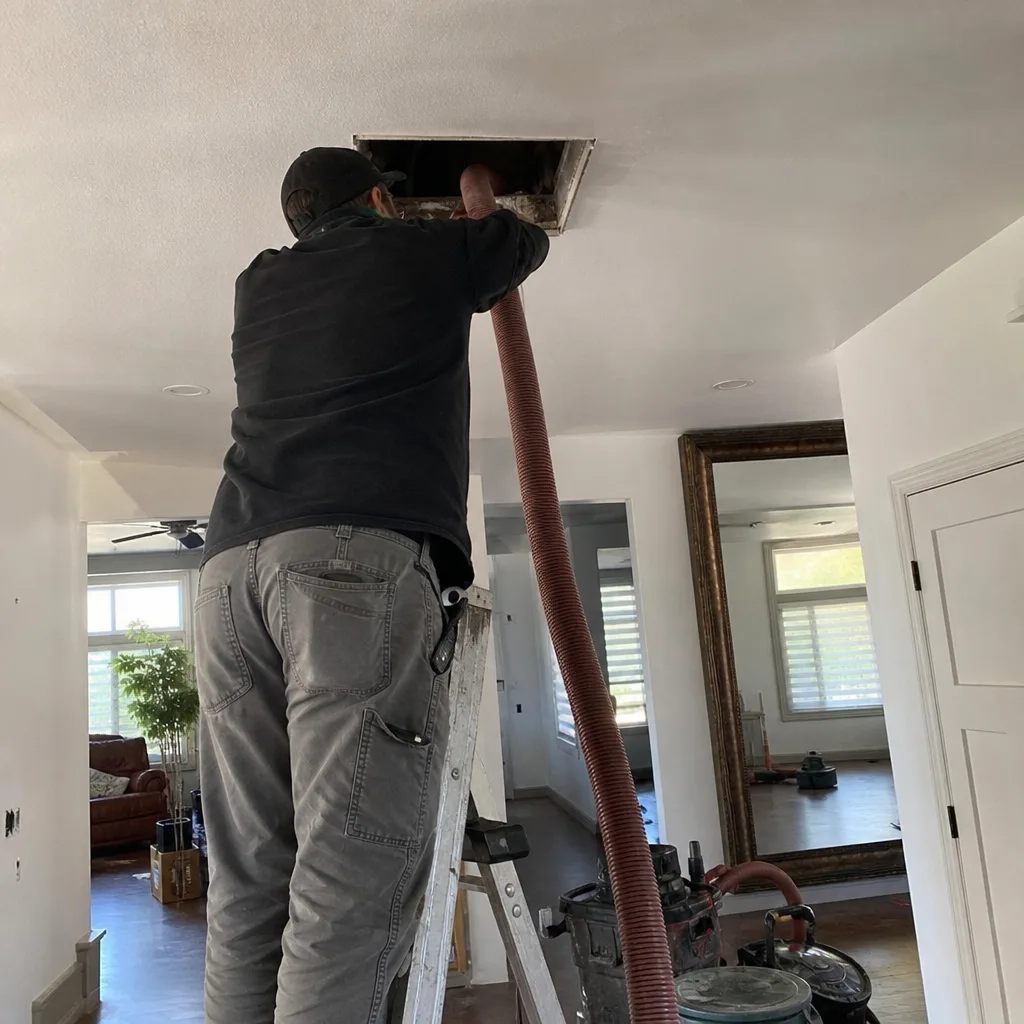 Before
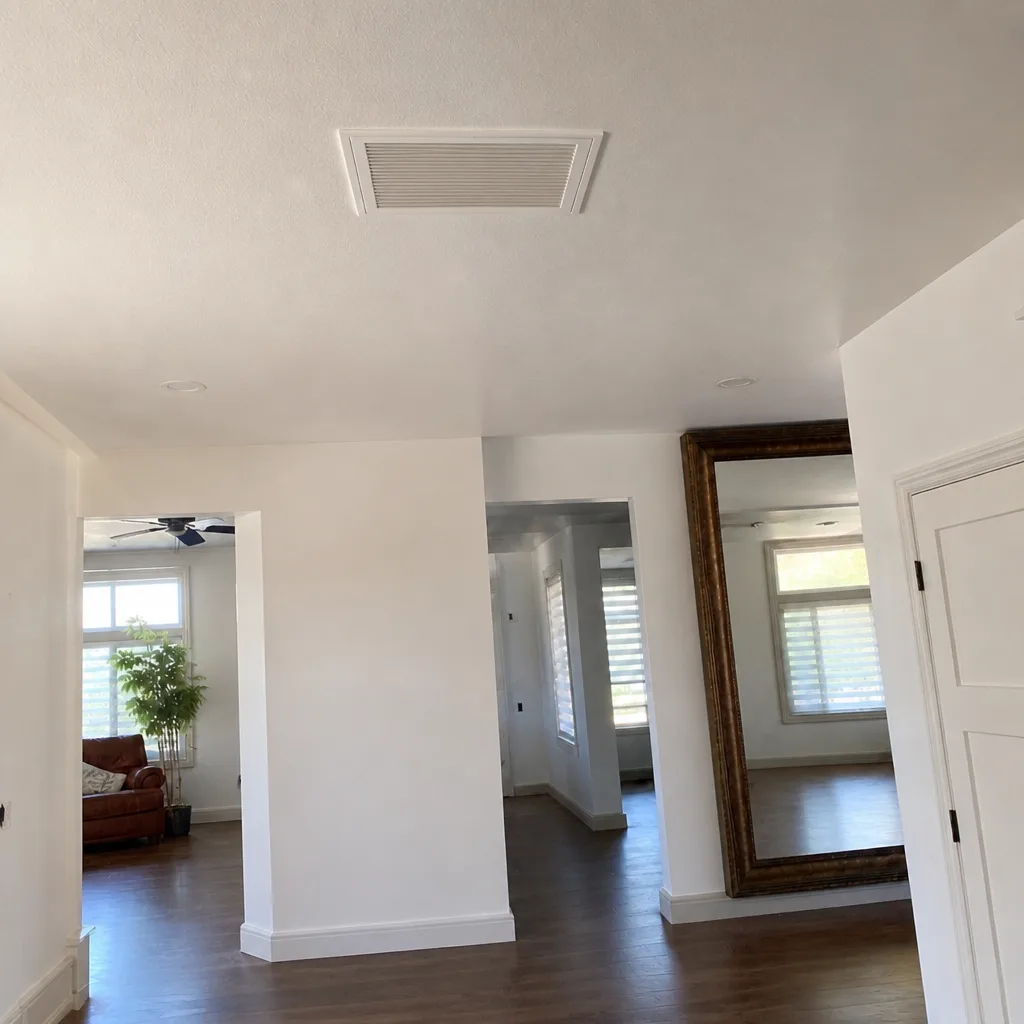 After
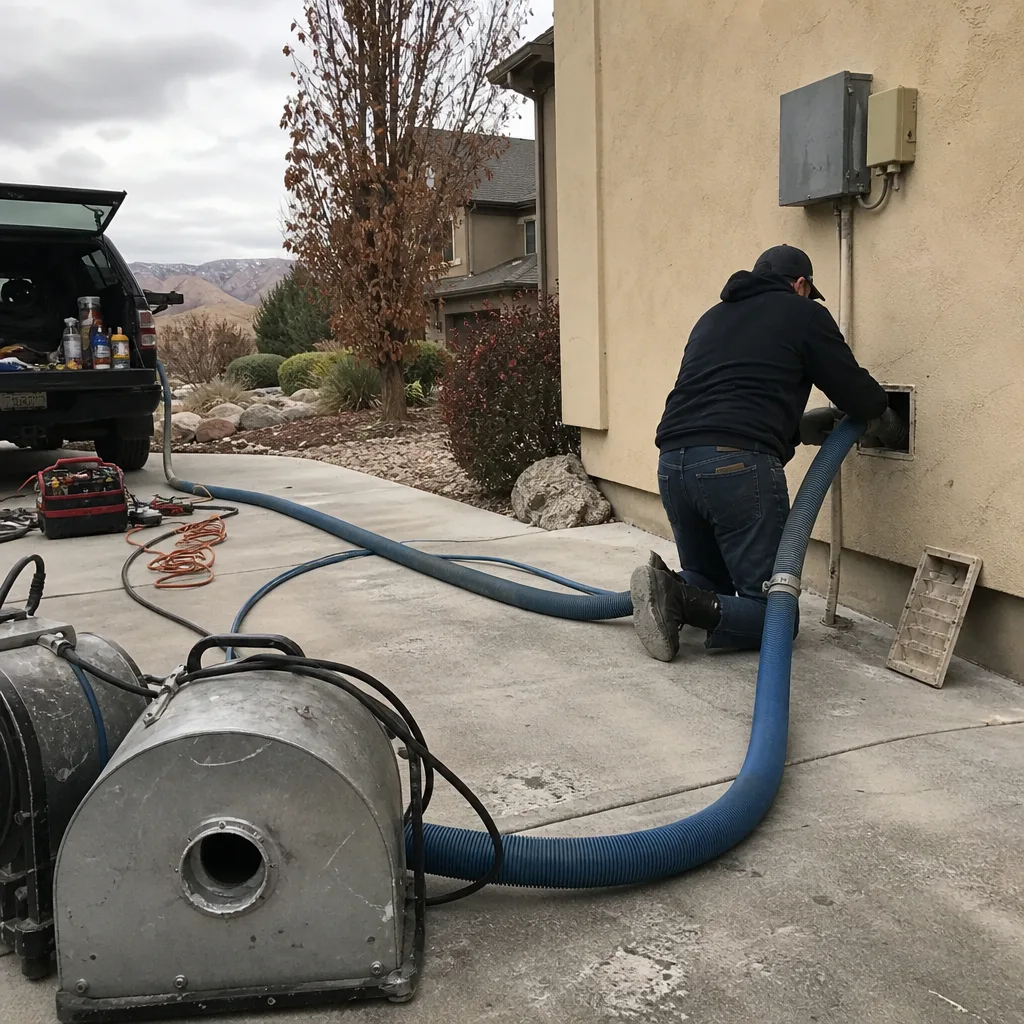 Before
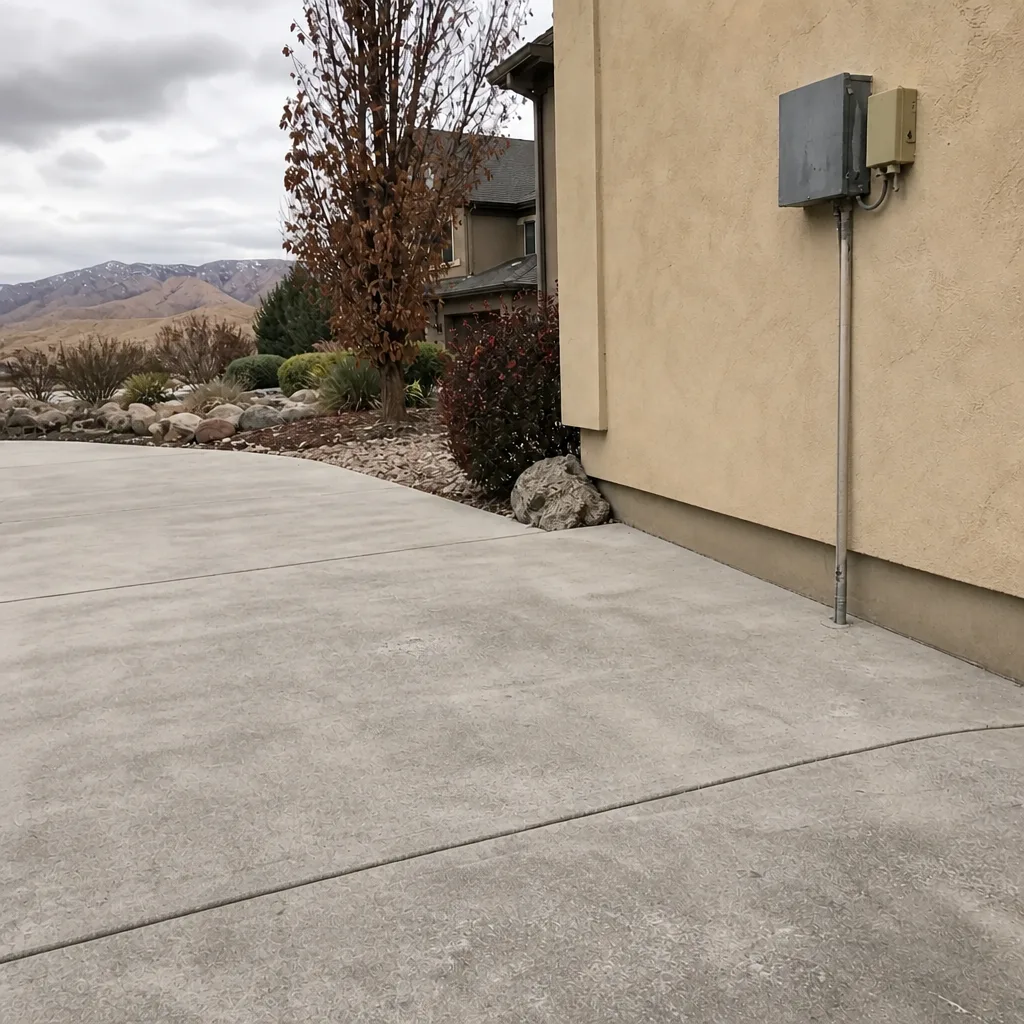 After
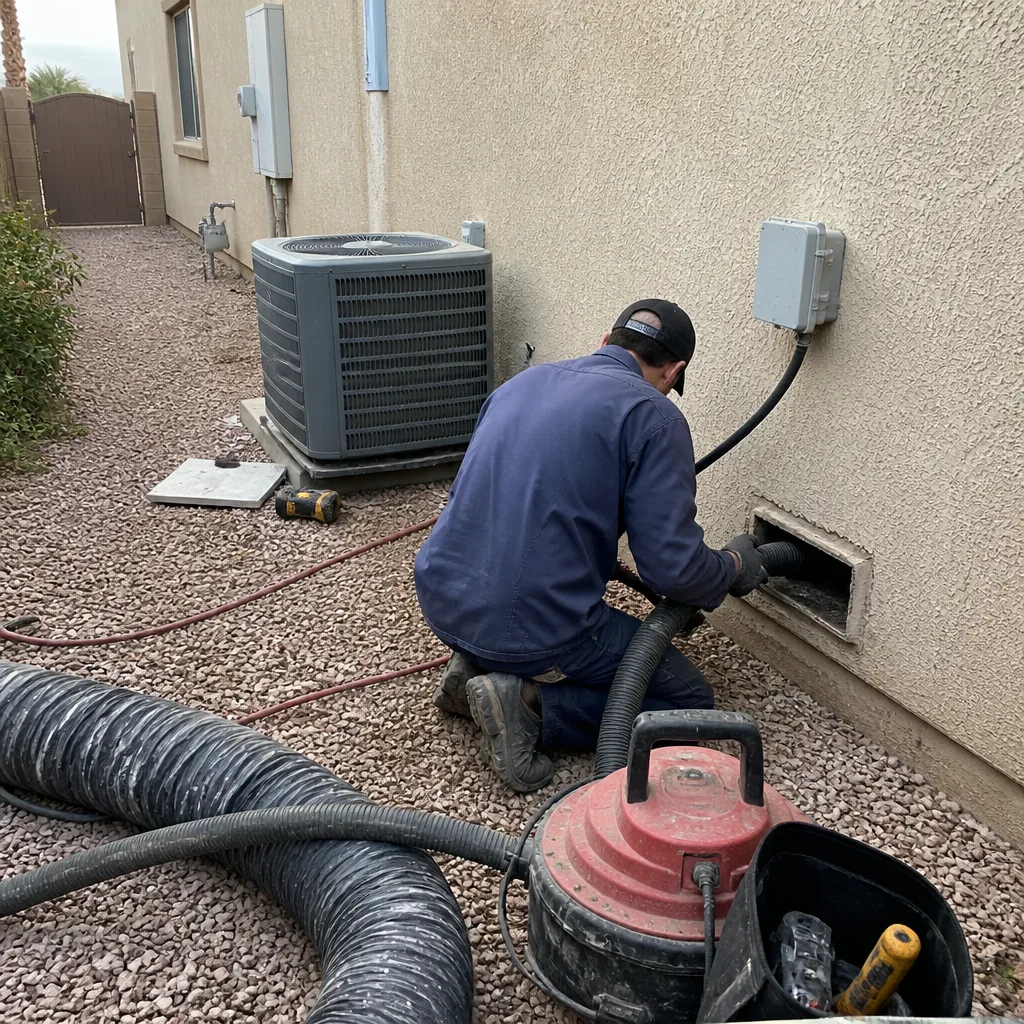 Before
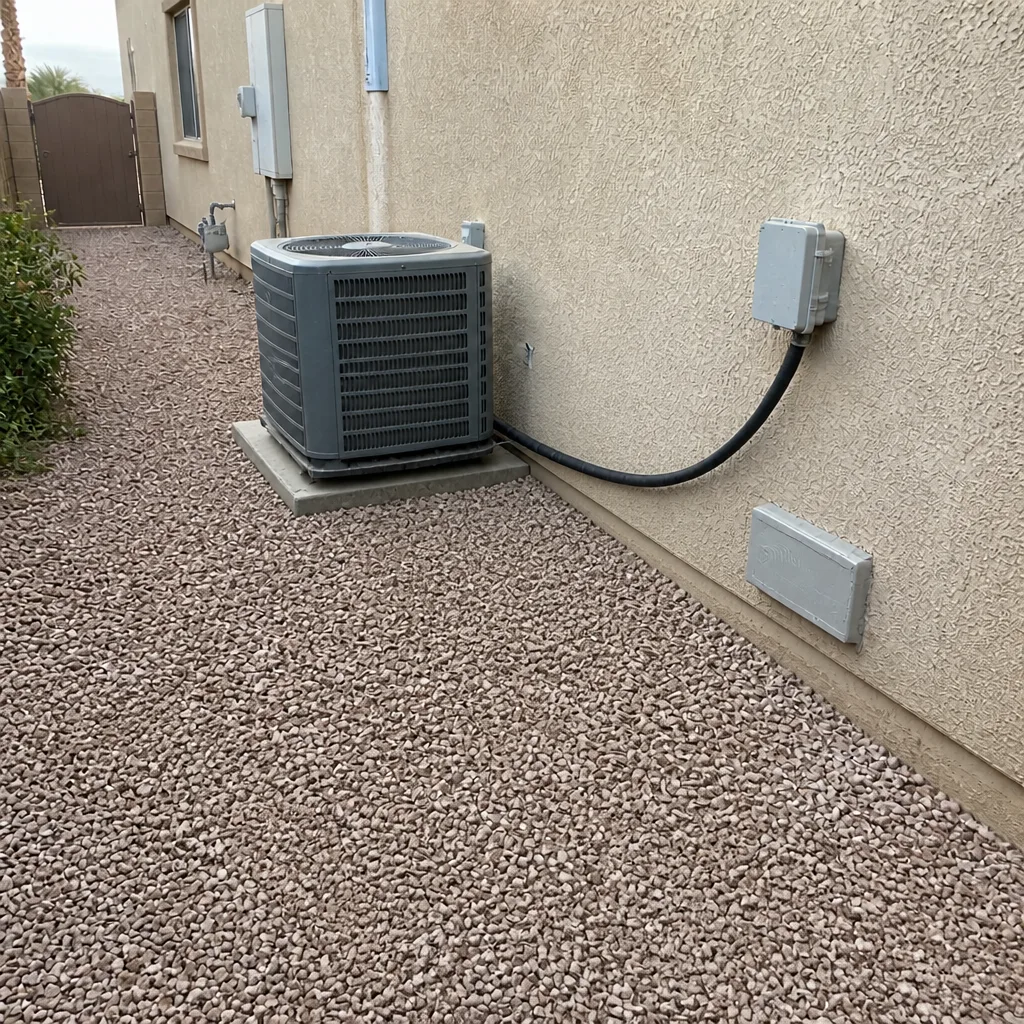 After
When to Call a Professional
Some signs mean it’s time to stop researching and call. Visible dust blowing from registers when the system runs. Unexplained allergy symptoms that spike indoors. A recent remodel that left drywall dust in the system. A dryer that takes longer to dry loads, which points to a clogged vent. Disconnected ductwork or a system with poor airflow that cleaning alone won’t fix. Any of these warrant a professional assessment before cleaning is attempted. Ironwood Air Duct Cleaning offers free estimates in St. George. Call (855) 419-9402. We answer 24/7, with fast dispatch from 7am to 7pm, Sunday through Friday.
Frequently Asked Questions
No. Utah has no state licensing requirement for air duct cleaning. That means the burden of verifying a contractor’s competence falls on you. Ask about equipment, method, insurance, and whether the quote is in writing before you book anyone in St. George.
Most residential jobs price as a flat per-system figure rather than per vent. We don’t quote a per-vent price or a teaser coupon number; the written estimate you get after a quick assessment sets the final price, and that’s the number you should compare across companies. Call (855) 419-9402 for an exact quote. Estimates are free.
Cheap quotes usually describe a smaller scope: fewer vents, no access ports, or consumer-grade equipment that can’t maintain suction across a full system. A low headline price with vague scope or per-vent add-ons often ends up costing more than a fair flat system price. Ask for a written component list on every quote.
NADCA is a national trade association that publishes duct cleaning standards and offers certification programs. Membership signals a company follows industry best practices, but it isn’t required in Utah and doesn’t guarantee any single job. Treat it as one useful signal alongside equipment answers and references.
Ask four things: the CFM rating of the collection vacuum, whether the unit is truck-mounted or portable, whether filtration is HEPA or standard, and whether the method is contact cleaning or air washing. Then ask for a written itemized scope and post-job before-and-after photos. Any hesitation on these is your answer. Call (855) 419-9402 and we’ll walk you through it. Estimates are free.
Require before-and-after photos of your own ducts and registers, a written summary of what was cleaned, and notes on any damage found. Then inspect a register yourself while the technician is on site. A company that documents the job invites the check; one that doesn’t has nothing to show. If you’re comparing St. George companies, ask what documentation they provide before you book.
The Bottom Line
Hiring in an unlicensed trade means the vetting is yours. Ask the four equipment questions, understand what NADCA membership does and doesn’t promise, and structure your quote request so every company answers the same scope. Watch for vague quotes, no access ports, and per-vent pricing that creeps. Confirm the flat per-system price in writing before work starts, and ask for documentation after. That framework is what separates a real cleaning from a quick blow-through in St. George. If you want a straight answer on equipment, method, and scope, Ironwood Air Duct Cleaning offers free estimates. Call (855) 419-9402. We answer 24/7. Fast dispatch from 7am to 7pm, Sunday through Friday.
Written by the team at Ironwood Air Duct Cleaning.