
Last updated November 15, 2026
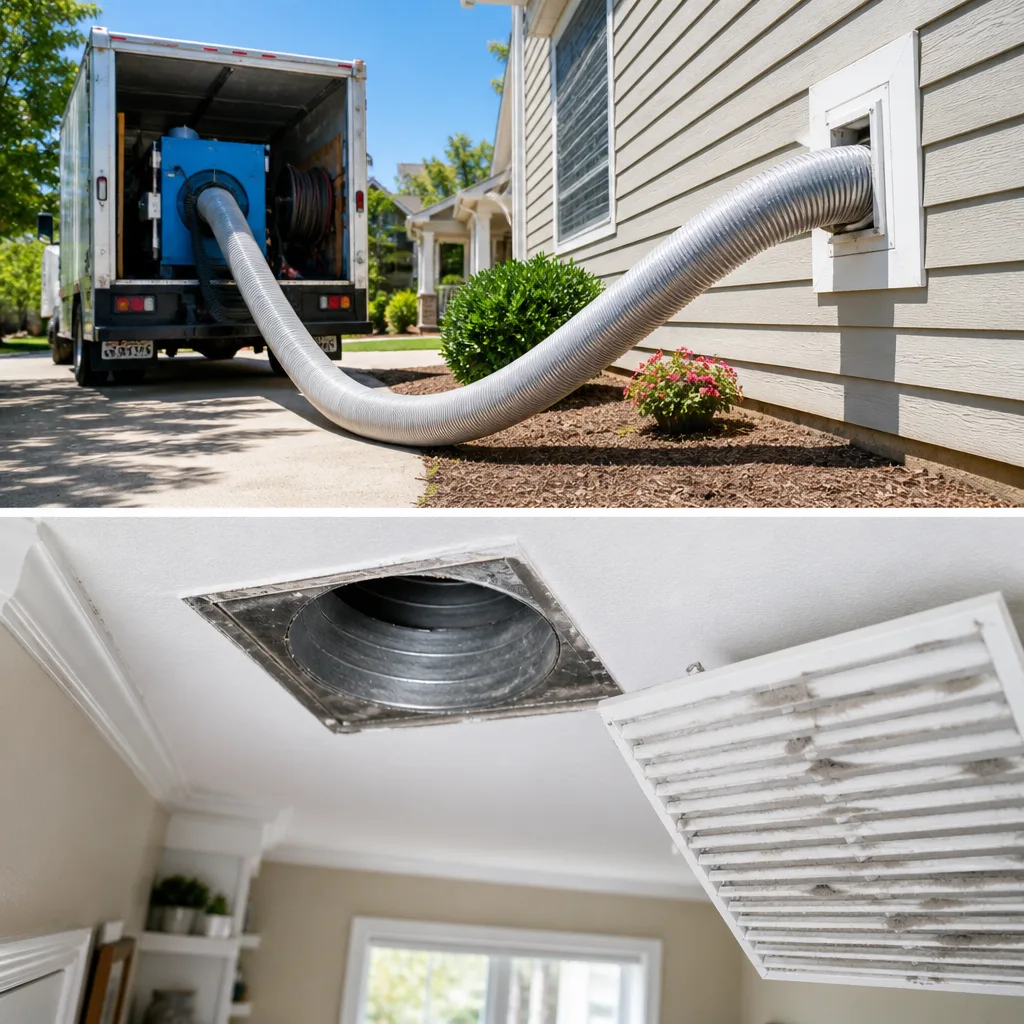 Whole-home duct cleaning
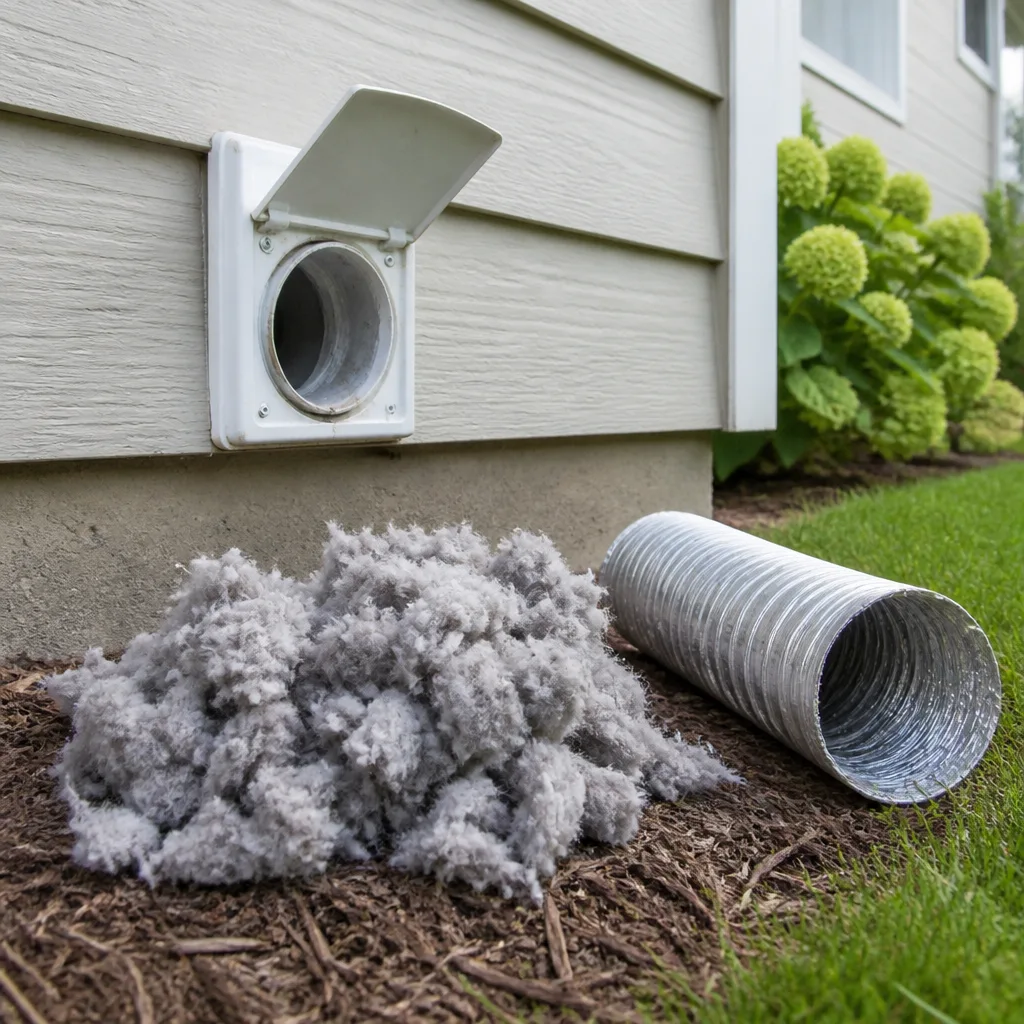 Dryer vent cleaning
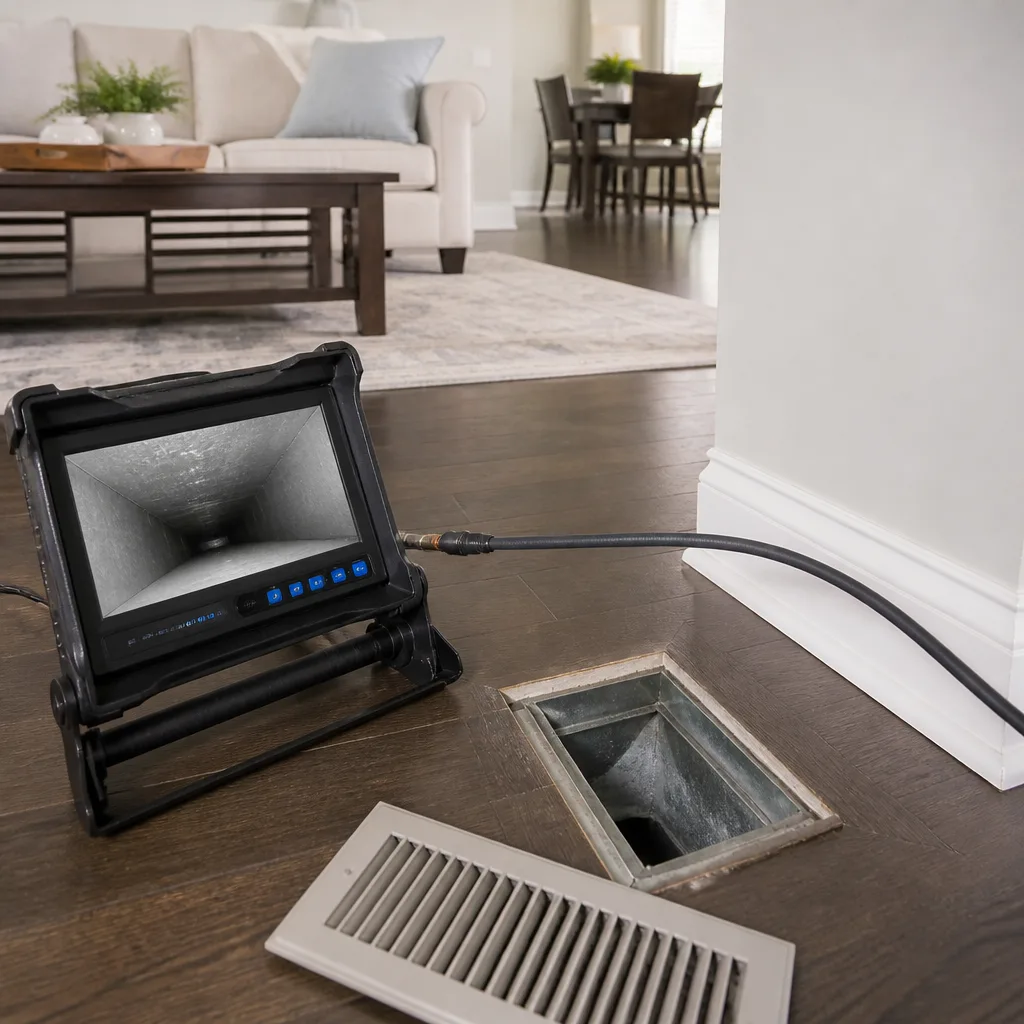 Camera inspection
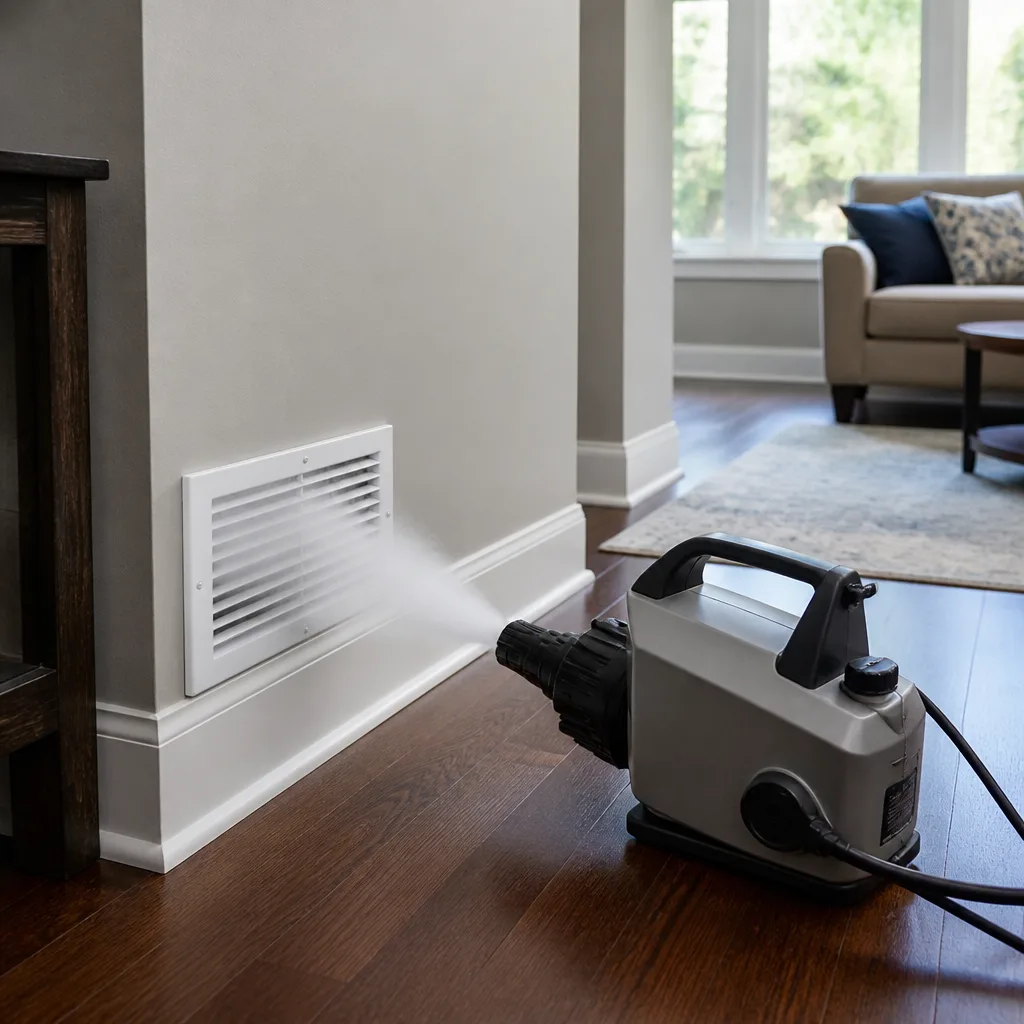 Sanitizing & deodorizing
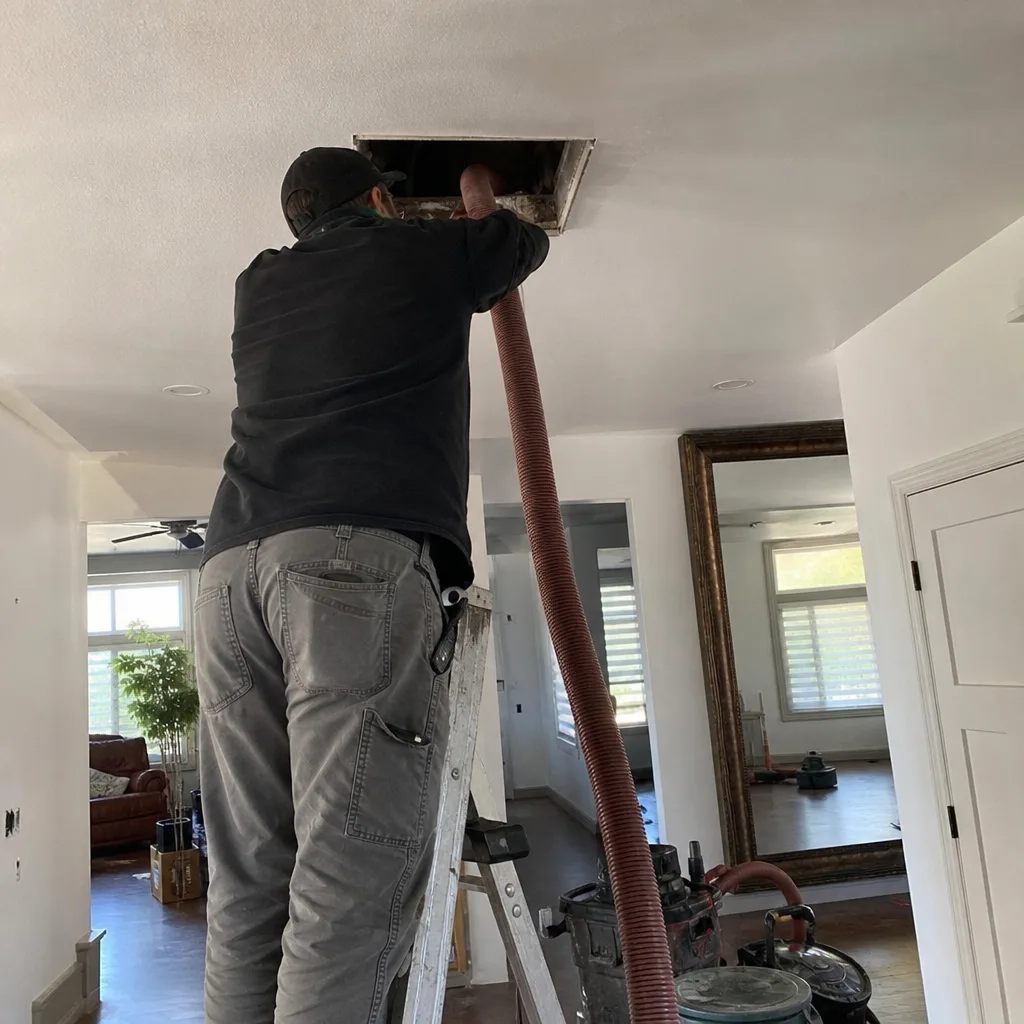
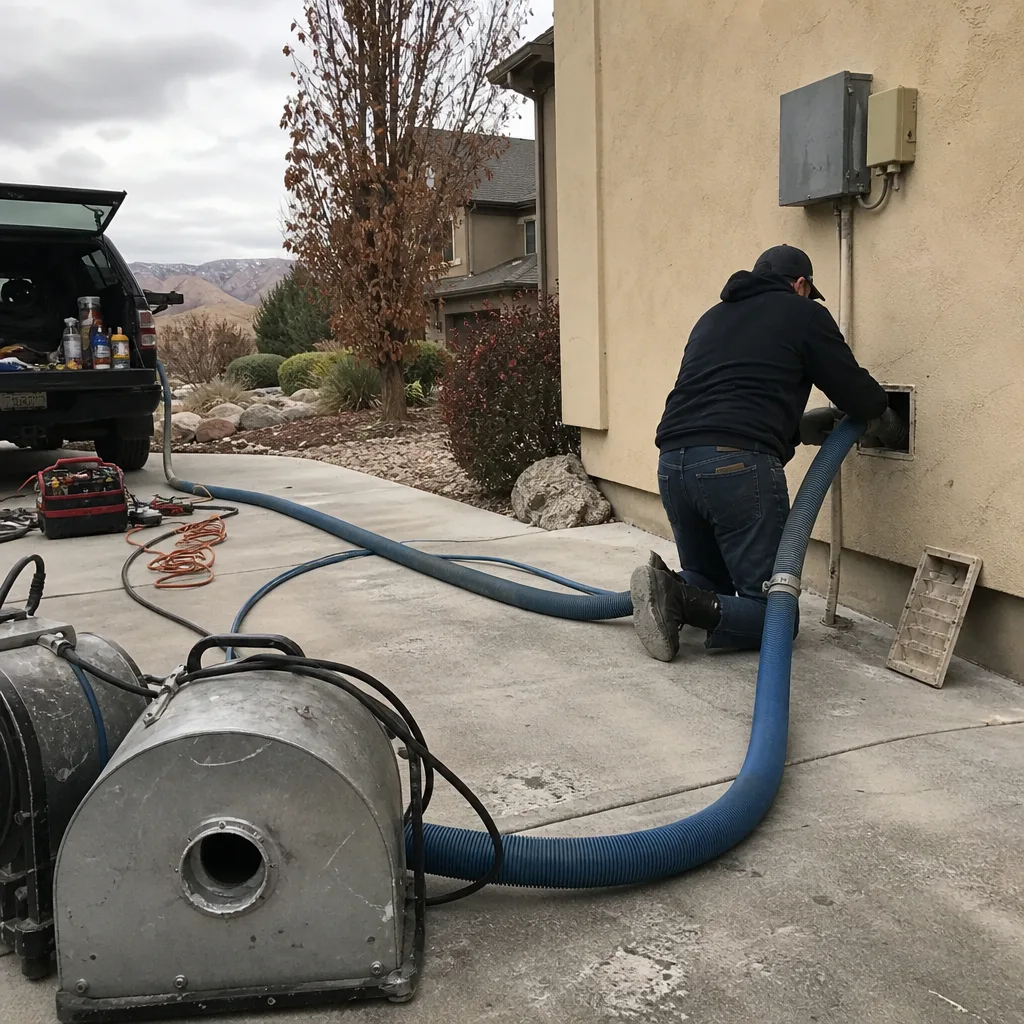
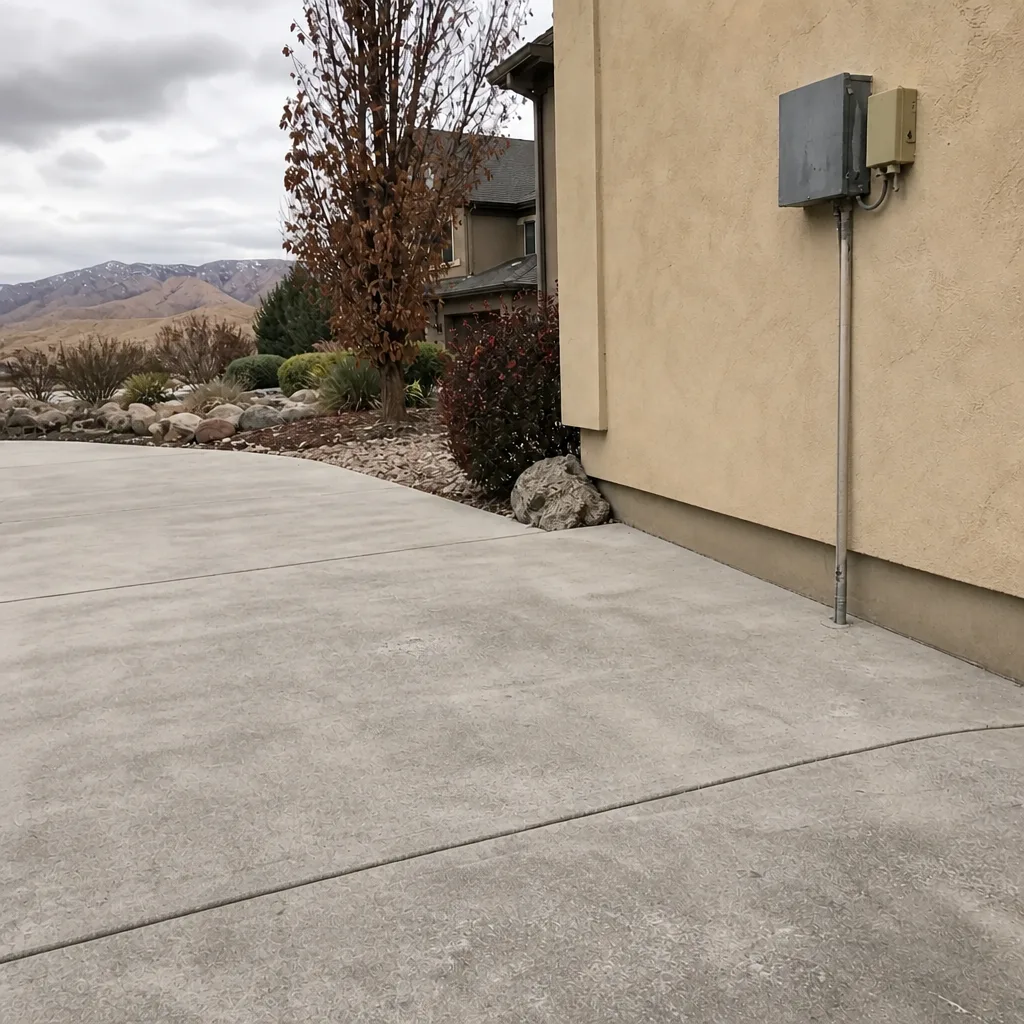
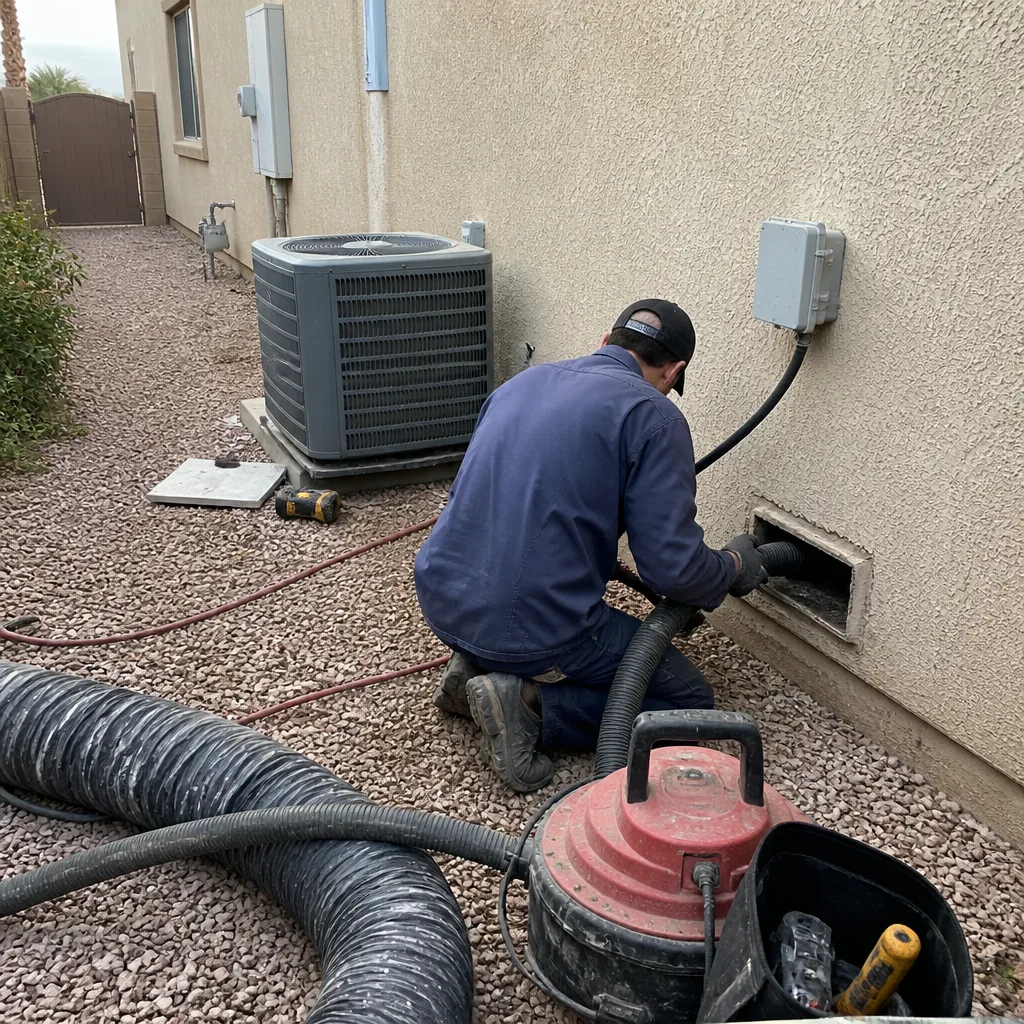
Whole-system duct and dryer vent check with before-and-after photos - you see exactly what came out of your vents
That "$99 whole-house special" is a bait ad - the real number appears once they are in your hallway, or the "clean" is a shop-vac at the register. We photograph the inside of your ducts before and after instead.
Seasonal Air Duct Cleaning Care for St. George: Year-Round Homeowner’s Guide
Most seasonal duct cleaning guides tell you to schedule a visit in the fall. In St. George, that advice arrives about six months too late. Our cooling season here runs long and hard, and the ductwork that carries that air spends the better part of the year working under real load. The highest-value window to inspect and clean isn’t autumn. It’s late March, right before the system shifts out of heating mode and into what becomes months of near-continuous cooling. Miss that window and you’re moving conditioned air through whatever accumulated over the winter for the rest of the hot season. This guide walks through each season in St. George, what actually stresses your ducts during it, and what to check before the next one starts.
Quick Answer
The best time to clean and inspect air ducts in St. George is late March, before the cooling season begins, with a secondary check in November after the cooling load drops. Summer is when contamination matters most because the system runs almost constantly, so pre-season cleaning delivers more value than a fall-only schedule. Winter is lower priority for cleaning but a good window for duct seal checks and, in gas-heated homes, combustion-side verification.
Styles & brands we work with
- Whole-home duct cleaning
- Dryer vent cleaning
- Camera inspection
- Sanitizing & deodorizing
Table of Contents
- Why St. George Doesn’t Have Four Equal Seasons
- Spring (March – April): The Highest-Value Window of the Year
- Summer (May – October): What to Monitor Under Peak Load
- Fall (November): Post-Season Assessment
- Winter (December – February): Lower Priority, Specific Checks
- Local Events That Reset the Seasonal Calendar
- The Whole-Home View: Filtration, Seals, and Dryer Vents
- How a Professional Seasonal Service Actually Works
Why St. George Doesn’t Have Four Equal Seasons
The standard seasonal cleaning calendar was written for climates with four roughly equal seasons. St. George has something different. It has a long, intense cooling season, two short shoulder periods in spring and fall, and a mild winter that rarely keeps a heating system running for weeks at a time. That imbalance changes what your ductwork experiences and when it needs attention.
Think about how the system actually runs. In most of the country, heating and cooling split the year roughly evenly, so dust and debris accumulation happens gradually and gets disturbed gradually. In St. George, cooling dominates. The air handler, the return ducts, and the supply runs all see sustained, near-continuous airflow from roughly May through October. That’s a lot of hours of air moving across the same duct surfaces. When you run a system that hard, whatever is inside those ducts gets carried into the living space far more consistently than it would in a milder climate.
There’s a second factor: dust. The desert environment around St. George produces fine particulate that finds its way into return air. Your filter catches a lot of it, but filters load at different rates depending on how hard the system is working and what’s in the air. A filter that lasts a reasonable stretch in a mild climate can load much faster here during peak cooling season.
What that means practically: the highest-value cleaning and inspection window isn’t driven by the calendar year evenly. It’s driven by the cooling season. Clean before the load starts, not after. That single shift in timing is the core of this whole guide.
If you’re new to the area or managing a rental property here, understanding St. George and its climate patterns is the foundation for everything else. The duct system is your home’s lungs, and the local environment shapes what it breathes.
Spring (March – April): The Highest-Value Window of the Year
Late March through April is when a St. George home gets the most value from duct service. Here’s why: the heating season is winding down, the cooling season hasn’t fully started, and the system is briefly in transition. That transition is the only time of year you can fully inspect and clean the system without fighting the load.
What should happen in this window:
- Inspect the evaporator coil. The coil is where cooling happens, and a dirty coil reduces efficiency and can harbor moisture. Spring is the time to check it while the system is between seasons.
- Check the condensate drain pan and line. A drain pan that’s been sitting through winter can develop growth or debris. Before the cooling season starts pushing moisture through it again, verify it drains cleanly.
- Verify duct seal integrity. Leaks at joints and connections waste conditioned air and pull unconditioned attic or crawlspace air into the system. Checking seals before the cooling load is the right time to catch problems.
- Clean the full duct system. Contact cleaning with a rotary brush and HEPA vacuum removes what has accumulated over winter and resets the system before summer. Our air duct cleaning service is designed around exactly this pre-season timing.
- Replace or assess filters. Starting the cooling season with clean filters is the cheapest efficiency gain available.
The reason spring matters so much here is that a St. George cooling system runs long enough that a small pre-season problem compounds quickly. A moderately dirty coil in a mild climate might limp through the summer. Here, running under sustained load, it becomes a real efficiency drag and a potential moisture issue. Our technicians have up to 10 years of experience and can identify these pre-season issues before they become summer problems.
If you schedule any duct work this year, this is the window that delivers the most return.
Summer (May – October): What to Monitor Under Peak Load
Summer is when you don’t clean, you watch. Once the cooling season is fully underway, the job shifts from maintenance to monitoring. The system is running almost constantly, and the signs of duct problems show up in how the home feels and smells rather than on a calendar.
What to keep an eye on during peak operation:
- Register airflow changes. If a register that used to blow strong starts feeling weak, that’s a signal. It could mean a filter is loaded, a damper shifted, or a duct connection has separated. Airflow that changes for no obvious reason deserves a look.
- Unusual odors. A musty smell suggests moisture somewhere in the system. A hot or burning smell can indicate an overheated component or a duct near a heat source. Any new, persistent odor is worth investigating rather than waiting out the season.
- Filter loading rates. In dusty St. George conditions, filters can load faster than the manufacturer’s schedule suggests. Check monthly during peak summer and replace when they’re visibly dirty.
- Condensate issues. If you see water near the air handler or standing in the drain pan, stop and address it. Moisture in a duct system is a contamination problem, not just a nuisance.
August is often the worst month for this. The system has been running since May, filters have loaded multiple times, and any leaks in the duct system have been pulling dusty attic air into the conditioned space all summer. That’s why a pre-season cleaning in spring pays off so much here: it means the system is starting the long summer already clean.
We’ve seen plenty of homes where a filter change and a quick airflow check make the difference between a comfortable summer and a frustrating one. Monitoring doesn’t cost anything. Ignoring the signals does.
Fall (November): Post-Season Assessment
Fall in St. George is short and serves one real purpose for duct care: assessment. The cooling season has ended, the air has stopped moving constantly, and you can finally take stock of what a full summer of operation left behind.
November is the right time to look at the return system specifically. Return ducts carry unfiltered air from the living space back to the air handler, so they collect dust faster than supply ducts. After a full cooling season, returning air has deposited a layer that accumulates most heavily in the return side. A post-season assessment tells you whether that accumulation has reached the point where cleaning before next spring makes sense, or whether the system can wait.
Practically, here’s what a November check covers:
- Visual inspection of the return system for dust accumulation
- Filter housing and filter condition after the cooling load
- Duct joint and connection review (fall is a good time to catch sealing issues before they sit all winter)
- Air handler condition and the coil, which has just finished its heaviest working months
- Any duct damage that showed up during the summer, such as separated connections or crushed flex runs
If a cleaning in late March already happened this year, the November check is often just an inspection rather than a full clean. But if the return system built up significantly, or if you’ve noticed decreased performance, scheduling around this window sets up the next spring well. The key insight is that the fall visit is a checkpoint, not the main event. For most St. George homes, the main event is in spring.
Winter (December – February): Lower Priority, Specific Checks
Winter is the lowest-priority season for duct cleaning in St. George, and that’s a genuine advantage of living here. With a mild winter, most homes run the heating system intermittently, and demand on the duct system drops significantly. Cleaning just isn’t as urgent as it is in climates where the heating system runs heavily.
But winter does have its own checklist, and two items matter:
- Combustion-side components in gas-heated homes. If your home has a gas furnace, winter is the time to verify combustion-side components are in good condition. This is a genuine safety matter, and it belongs in the hands of a trained professional, not a weekend project. Have the furnace inspected by a qualified HVAC technician before relying on it through a cold snap.
- Duct seal integrity before spring. Winter is a low-load season, which makes it a good time to check and repair duct seals without worrying about disrupting the cooling system. Sealing leaks now means the system starts spring already tight, not leaking conditioned air into the attic.
On the safety point: gas lines and combustion components are not something to troubleshoot yourself. If you smell gas, leave the home and call your gas utility or a qualified professional immediately. If anything about your furnace’s operation seems off, get it checked by a trained technician. The same principle applies to any electrical work around the air handler. We’ll say it plainly: high-voltage components and gas-fired equipment require trained hands. We handle the duct side and can tell you when a combustion-side concern needs a licensed HVAC or gas professional.
Winter is also a sensible time for the unrelated fire-safety chore that most homeowners defer: the clothes dryer vent. A clogged dryer vent is a documented fire hazard, and the milder season is a good window to get it handled without competing with cooling-season demand. Our dryer vent cleaning covers that hazard directly.
Local Events That Reset the Seasonal Calendar
Even with a well-planned seasonal schedule, St. George throws curveballs that can upend it. Some years, the calendar alone doesn’t tell the whole story. Three local factors can accelerate contamination and push a cleaning or inspection higher up the priority list.
Dust events. Haboobs, the large dust storms that sweep through the region, push fine particulate into every gap, including ductwork and return systems. After a significant dust event, filter checks and a visual inspection become worth doing regardless of where you are in the seasonal schedule.
Nearby construction. Construction phases around a neighborhood generate airborne dust that settles into homes. If there’s active building near you, your duct system is pulling that material through the returns. A cleaning that seemed a year away can become appropriate sooner.
Wildfire smoke events. Smoke events can affect indoor air quality even with the system running. Areas near wildfire smoke exposure benefit from filtration assessment and duct cleanliness checks, since smoke particles can settle into the system and get redistributed when airflow resumes.
These events reset the schedule because they add contaminants the seasonal calendar didn’t anticipate. A good rule: after any significant dust or smoke event, at least check your filters and do a quick visual on the returns. If the system seems to be blowing dustier air than before, a professional inspection is the right next step. Our Ironwood Air Duct Cleaning team can assess whether an event has pushed your system past its usual cleaning interval.
The Whole-Home View: Filtration, Seals, and Dryer Vents
Seasonal duct care doesn’t live on its own island. It connects to three other home systems, and thinking about them together produces better results than treating each in isolation.
Filtration. The filter is your duct system’s first line of defense, and in a dusty climate it does more work. Many St. George homes can benefit from filtration assessment, including whether a higher-efficiency filter or a whole-home approach makes sense. We’re familiar with Honeywell and Aprilaire IAQ product lines, so when filtration upgrades come up alongside cleaning, we can speak to them knowledgeably rather than just deferring the conversation. A filter that’s too restrictive can hurt airflow; one that’s too permeable lets particulate through. Matching filtration to the system and the local environment is part of the picture.
Duct repair. Cleaning alone can’t fix a duct system that’s disconnected, crushed, or leaking. Repair is a core service, not an afterthought, and it addresses the root-cause problems cleaning can’t reach. A seasonal inspection that finds a separated connection is doing real work: catching that problem early saves energy and keeps contaminants out of the living space.
Dryer vent cleaning. This one sits outside the air conditioning system but deserves the same seasonal thinking. Dryer vent lint accumulation is a leading household fire hazard. It’s frequently overlooked by cleaners who only handle HVAC ducts. The winter window is a good time to address it.
The reason all of this matters together is that each piece affects the others. A clean duct system with a loaded filter underperforms. A sealed duct system with a dirty coil still wastes energy. A home with good ducts but a clogged dryer vent still carries a fire risk. The full-system approach handles cleaning, repair, and protection in one relationship rather than scattering them across separate service calls.
How a Professional Seasonal Service Actually Works
If you’ve looked into duct cleaning, you’ve probably noticed that quotes vary wildly and methods vary even more. The difference matters, and it’s worth understanding what a thorough seasonal service actually involves before you compare prices.
Here’s how a professional seasonal service typically runs, and what separates a real job from a cheap one:
- Inspection before cleaning. A thorough technician inspects the system, the coil, the drain pan, the filter housing, and the duct connections before any cleaning begins. This is how you find seal issues before they’re buried under fresh air.
- Contact cleaning, not air washing. Professional-grade contact cleaning uses a rotary brush system to go over the duct surfaces and a HEPA vacuum to capture what’s dislodged. We use Rotobrush contact-cleaning systems for exactly this: rotary brush plus vacuum contact cleaning rather than a blower. A blower that just pushes air through doesn’t remove the layer of buildup; it redistributes it.
- HEPA capture during the job. The vacuum matters as much as the brush. Nikro HEPA vacuum systems capture what the brushing dislodges so contaminants don’t recirculate into the home during work. This is part of why equipment quality separates good results from poor ones.
- Repair of what the inspection finds. Disconnected or damaged ductwork gets addressed as part of the service, not deferred. Cleaning a system with a leak just means cleaner air leaking out of a hole.
- Protection after cleaning. The work ends by protecting what was cleaned, so surfaces stay clean longer. Guardsman-line protective products are part of a finish-the-job approach.
Equipment matters because the method matters. When a low-bid operator shows up with a consumer-grade blower, you’re paying for air movement, not cleaning. When a crew arrives with professional-grade equipment and a method built around contact cleaning and HEPA capture, the results are different. Our equipment lineup includes Abatement Technologies systems, the standard used in containment-level air quality work, which means we can handle indoor air quality challenges that go beyond routine maintenance.
Our technicians have up to 10 years of experience, and that experience helps when a home has unusual characteristics: an older duct layout, a recent addition that changed the airflow, or a construction phase nearby that’s affecting indoor air. For an exact quote on your system, our estimates are free.
Common Mistakes to Avoid
- Scheduling cleaning in fall by default. Fall is when most generic guides recommend duct cleaning, but in St. George the pre-cooling window in late March delivers more value. Cleaning right before the long cooling season means the system runs clean through its heaviest months.
- Assuming a filter change is enough. Filters catch a portion of particulate, but they don’t clean duct surfaces or fix leaks. Assuming a new filter solves everything lets the return system keep accumulating dust.
- Hiring on price alone. The gap between a thorough job and a cheap one comes down to equipment and method. A quote that seems dramatically lower often reflects a blower-only approach that redistributes rather than removes.
- Ignoring the dryer vent. Many homeowners focus entirely on the HVAC system and never think about the dryer vent until something goes wrong. Dryer vent cleaning addresses a real fire hazard and deserves a place in seasonal planning.
- Skipping the visual inspection during summer. Summer is when signs of duct problems actually show up: weak registers, new odors, moisture. Waiting until fall to notice them means running compromised air all season.
- Self-troubleshooting gas or electrical components. Combustion-side checks and electrical work around the air handler are not DIY territory. A trained professional should handle anything involving gas lines or high voltage.
- Treating local dust events as no big deal. Haboobs, construction phases, and wildfire smoke all push particulate into a home faster than the usual calendar expects. Not checking filters after an event lets contamination build unnoticed.
See the difference
 Before
 After
 Before
 After
 Before
 After
When to Call a Professional
Some signs should prompt a call rather than a wait-and-see approach. If you notice persistent musty odors coming from registers, visible dust blowing from supply vents after a filter change, water near the air handler or in the condensate pan, a register that’s suddenly lost airflow, or a significant dust or smoke event nearby, it’s time for an inspection. Homes with gas heat deserve an annual furnace inspection by a qualified technician, and any combustion-side or electrical concern should be handled by a trained professional, not a project. If the duct system shows signs of damage like a disconnected run or crushed flex, cleaning alone won’t resolve it and repair should be part of the plan. Ironwood Air Duct Cleaning offers free estimates in St. George and can assess whether your system needs cleaning, repair, or both. Call (855) 419-9402.
Frequently Asked Questions
Most St. George homes benefit from an inspection and, when needed, cleaning once a year, timed to late March before the cooling season starts. Homes with ongoing dust exposure from nearby construction, recent dust or smoke events, or heavy filter loading may need it more frequently. A pre-season inspection tells you whether a full cleaning is warranted that year.
Late March through April is the highest-value window in St. George. Cleaning before the long cooling season means the system runs its heaviest months with clean ducts and a tightened seal. A secondary fall check in November catches return-system buildup after the cooling load drops.
Cost depends on your system’s size, condition, and whether repair is needed, which is why a written estimate matters more than a phone quote. Our estimate is free, and the price is set per job by that written estimate before any work starts. Call (855) 419-9402 for an exact quote.
Cheap quotes usually reflect a different method, not a better deal. A low-bid operator often uses a consumer-grade blower that pushes dust around instead of a contact-cleaning system with a rotary brush and HEPA vacuum capture. The equipment and method difference is what separates a real clean from air movement. Ask what equipment will be used before booking.
A thorough duct service includes inspection before work and verification after. We provide before-and-after photos of your own ducts so you can see what changed. For a quote and a walkthrough of what the job will involve, call (855) 419-9402.
Yes. Haboobs, nearby construction, and wildfire smoke events push fine particulate into returns faster than the usual calendar expects. After a significant event, check your filters and do a quick visual on the returns. If air from the vents seems dustier, a professional inspection can confirm whether an off-cycle cleaning makes sense.
The Bottom Line
St. George duct care isn’t a four-season routine; it’s a pre-season routine with checkpoints. The single most valuable window is late March, before the long cooling season begins, when inspection and cleaning deliver the most value. Summer is for monitoring airflow, odors, and filter loading. Fall is a checkpoint on the return system. Winter is lower priority for cleaning but essential for combustion-side checks and duct seal verification. Local dust events, construction, and smoke can reset the schedule at any point, so watching for them matters as much as following the calendar. Match the response to the season, and your duct system will carry clean air through the year. Ironwood Air Duct Cleaning offers free estimates in St. George and handles cleaning, repair, and dryer vent service together. Call (855) 419-9402 for a free estimate. We answer 24/7. Fast dispatch from 7am to 7pm, Sunday through Friday.
Written by the team at Ironwood Air Duct Cleaning.